


Antique Wood Bear
An antique wood bear brings a rustic, tactile charm to a room, carved with spirited character from linden, walnut, or cedar.
Antique Wood Bear
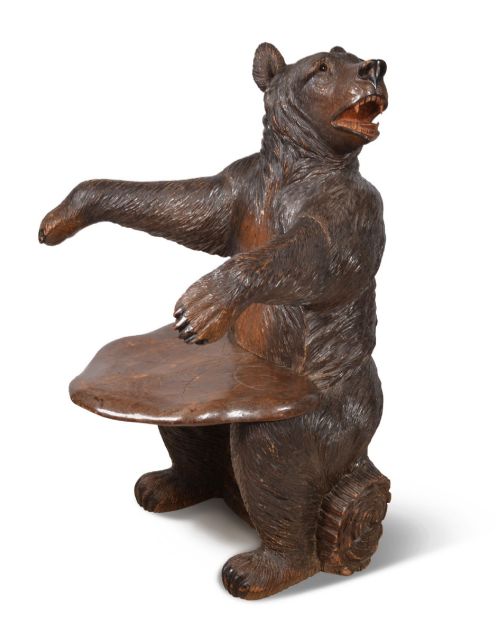
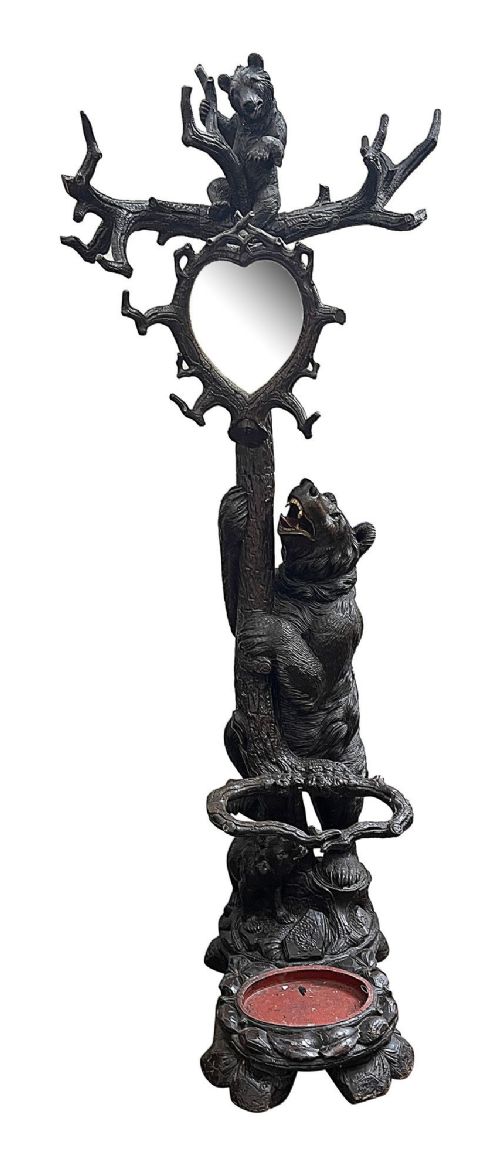
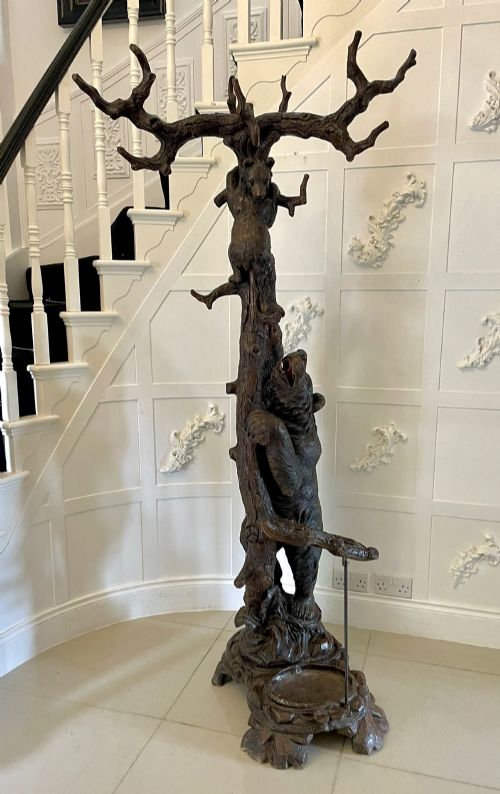
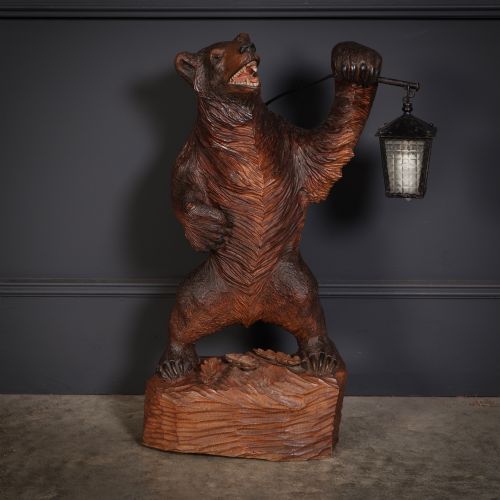
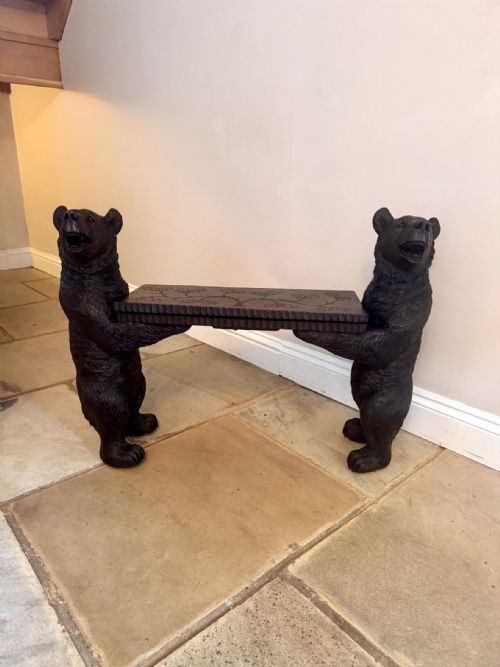
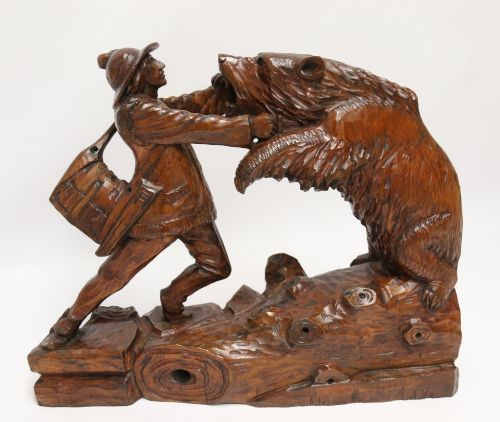
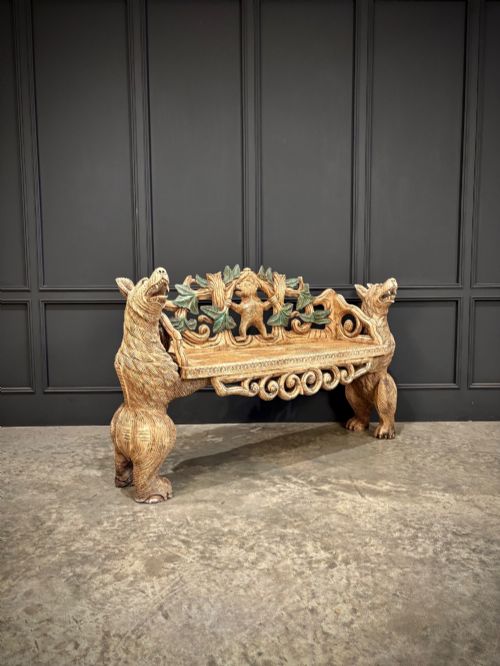
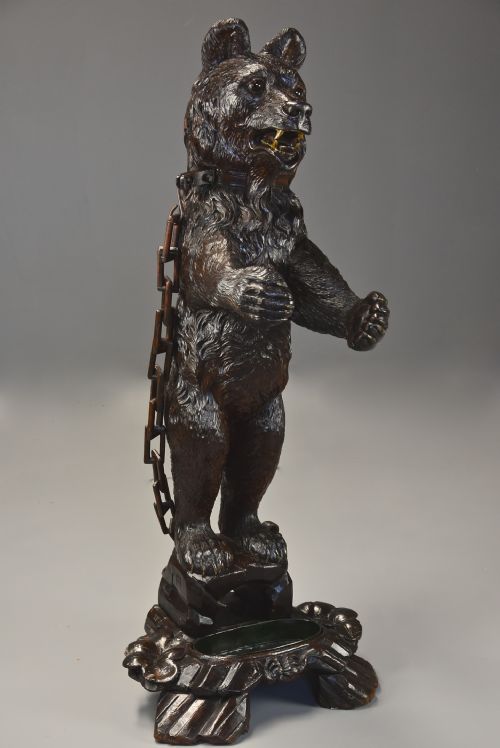
When you search for an antique wood bear, you encounter carved sculptural objects ranging from small desk accessories to large hall stands and benches. The most frequent examples belong to the Black Forest tradition, originating in Switzerland and Germany during the nineteenth and early twentieth centuries.
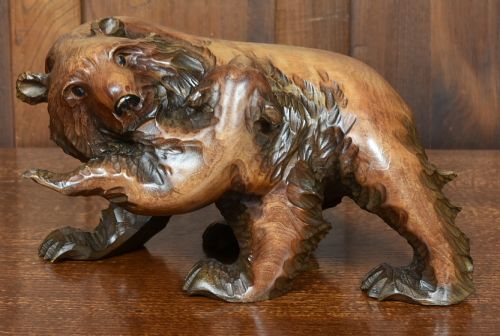
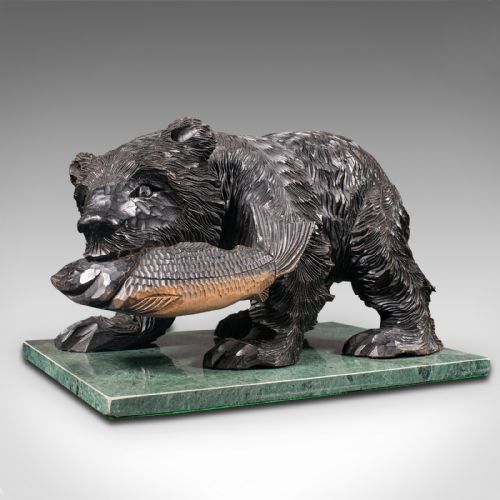
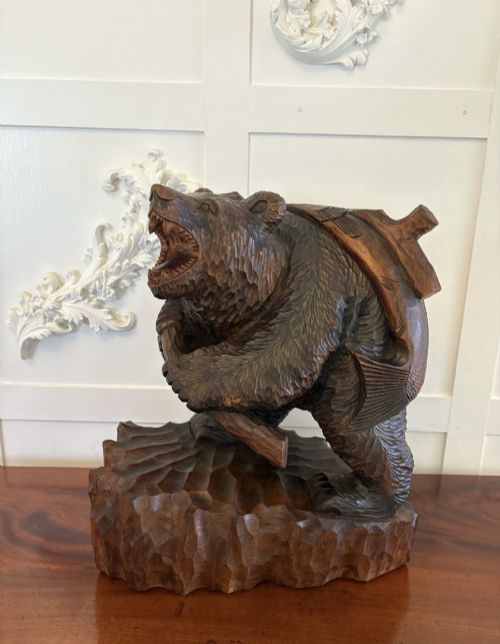
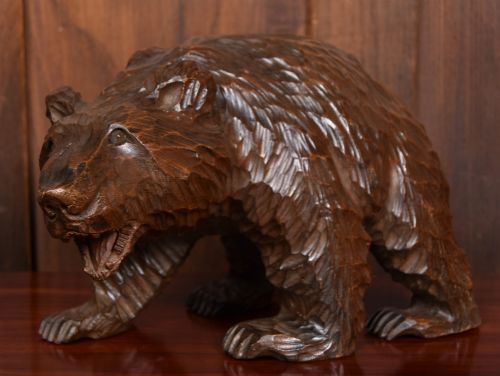
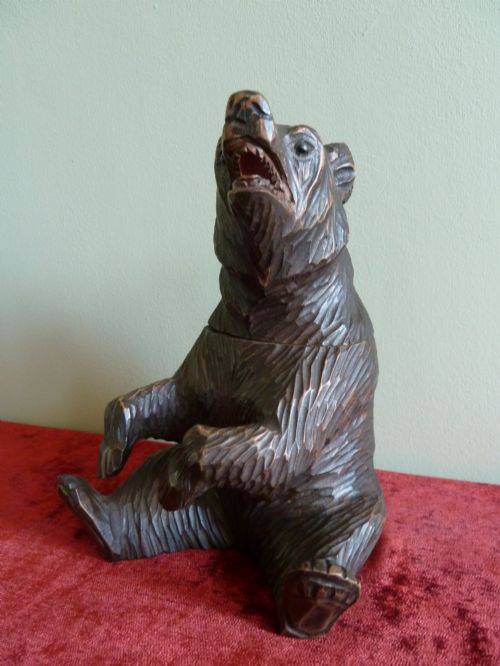
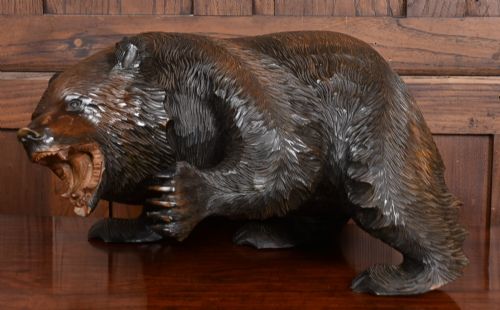
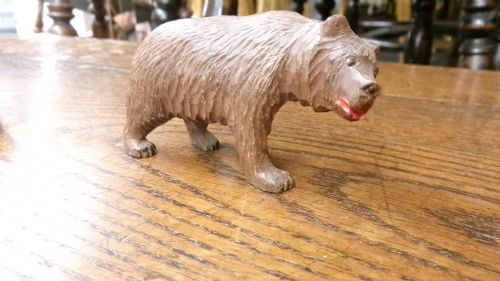
Carvings from this genre often depict bears performing human tasks, such as smoking, reading, or holding umbrellas, whilst Japanese folk art examples present naturalistic interpretations like the Kibori Kuma. Functional pieces integrate the carved animal form directly into everyday items including stick stands, inkwells, and musical seats.
Pieces span the nineteenth century through the Edwardian period, capturing both European alpine workshops and Japanese regional carving traditions in solid timber.
Materials and Carving Methods
Carvers predominantly utilised linden wood, walnut, and cedar for their grain properties and suitability for intricate detail. Linden wood allowed carvers to achieve deep relief and smooth texturing without excessive splitting during the drying process.
Hand tools such as gouges and chisels shaped the fur, facial expressions, and anatomical postures from solid blocks or assembled sections of timber. Glass eyes frequently appeared in higher-grade pieces to provide a lifelike gaze, contrasting with the dark stained or polished wood surfaces.
Antique Wood Bear Retail Price Guide 2026
Typical asking prices for wood bear among the pieces listed under this phrase on Sellingantiques today, from the lower quarter to the upper quarter. They describe what is for sale here now, not the wider market.
Functional forms in the selection include musical seats, hall stands, umbrella stands, tobacco holders, table lamps, and bookends.
Assessing Craftsmanship and Proportion
Quality separates through the anatomical accuracy and the depth of expression in the carving, alongside the crispness of the fur detailing. Stronger examples display balanced proportions and complex poses, whereas simpler items rely on flat, repetitive tool marks.
The integration of function also dictates distinction, separating standard shelf ornaments from large exhibition pieces such as hall stands incorporating multiple bears and functional drip pans.
The Antique Wood Bear Glossary
- Black Forest
- A style of wood carving originating in Central Europe during the nineteenth century, known predominantly for animal subjects and rustic furniture. These works often utilised linden wood and dark finishes.
- Kibori Kuma
- A style of Japanese wooden bear carving originating from Hokkaido, often created as folk art. These pieces typically emphasise realistic textures and natural postures.
- Humidor
- A specialised container designed to keep tobacco moist, occasionally carved in the form of a seated bear with a hinged compartment. The interior often featured fitted wooden linings.
- Inkstand
- A desktop accessory combining an inkwell, pen tray, and sometimes a sander, frequently modeled as a bear interacting with a log or rock. Glass inserts held the liquid ink securely within the carved wooden housing.
- Linden Wood
- A pale, fine-grained hardwood favored by nineteenth-century carvers for its uniform density and lack of pronounced grain. It allowed artisans to execute deep, complex undercut details without splintering.
Antique Wood Bear: Frequently Asked Questions
What is a Black Forest bear carving?
A Black Forest bear carving is a wooden sculpture or functional object originating from Swiss and German alpine regions during the nineteenth century. These pieces typically depict bears in realistic or anthropomorphic poses.
Craftsmen carved them from solid timber, such as linden wood or walnut, creating items ranging from small inkwells to large hall stands and benches.
How were antique wood bears used?
Antique wood bears served both decorative and functional purposes in Victorian and Edwardian interiors. Many acted as umbrella stands, hall trees, tobacco boxes, and musical seats.
Smaller examples functioned as desk accessories, including bookends, inkwells, and condiment figures, bringing utility into domestic spaces.
What is Kibori Kuma?
Kibori Kuma refers to traditional Japanese wooden bear carvings created as folk art, particularly from the Hokkaido region. These carvings emerged in the early twentieth century and often show bears carrying fish or moving naturally.
They utilise native timbers like cedar and display distinct carving techniques compared to European alpine work.
How do I date an antique wood bear?
Dating relies on stylistic clues, construction methods, and materials recorded across nineteenth-century and Edwardian examples. Nineteenth-century pieces often feature darker staining and complex mechanical functions like musical movements.
Later Edwardian and 1920s pieces frequently include items like table lamps and simplified hall stands, reflecting changing interior fashions.