






Antique Wood Bank
An antique wood bank brings utility and character into a room, offering modular storage crafted in mahogany, walnut, oak, and pine.
Antique Wood Bank
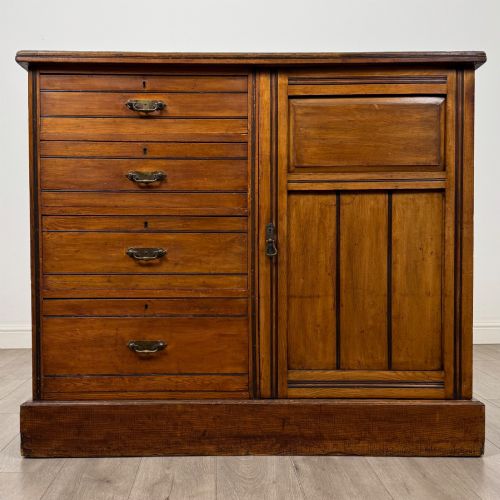
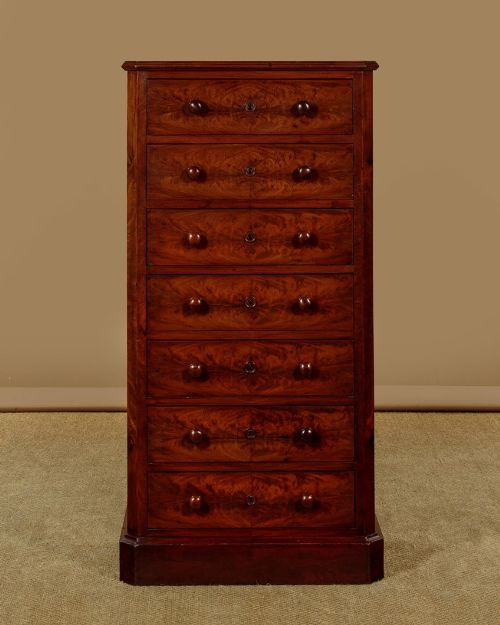
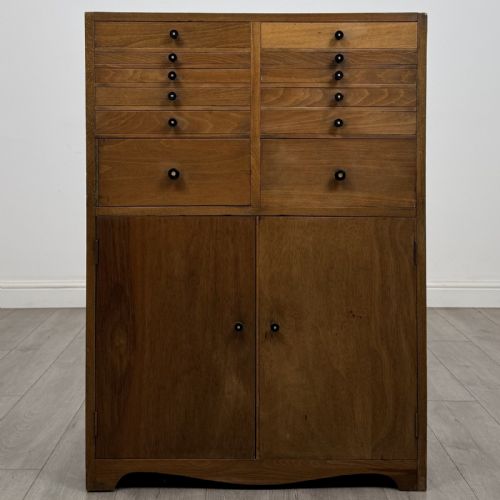
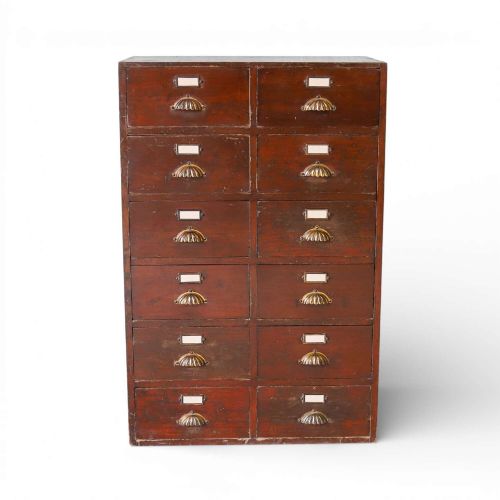
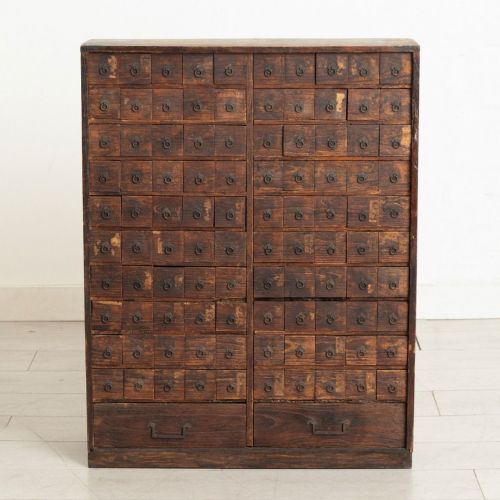
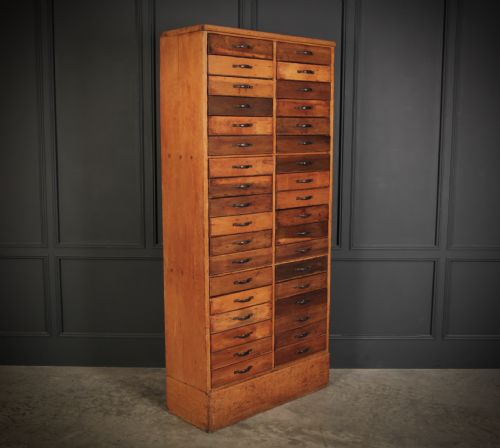
When searching for an antique wood bank, buyers encounter multi-drawer storage units originally used in shops, offices, and workshops. These pieces appear in forms such as apothecary cabinets, drapers' drawers, shop counters, and filing cabinets.
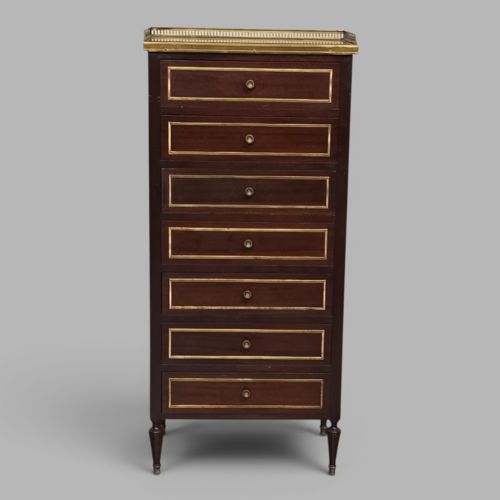
The selections available span periods from the eighteenth century through the Edwardian era and the early twentieth century. Common materials include mahogany, walnut, oak, pine, and fruitwood, shaped into banks of numerous small drawers or fitted storage cabinets.
Buyers are most likely to meet utilitarian workshop pieces and shop counters from the nineteenth and early twentieth centuries. These items serve modern interiors as practical storage units with distinctive patination and period details.
Materials and construction methods
Cabinetmakers utilised dense timbers like mahogany, walnut, and oak to withstand the heavy daily use required by shops and offices. Hardwoods provided the structural integrity needed for banks featuring ten or more graduated drawers.
Secondary timbers such as pine appeared in internal drawer construction and carcase backs. Drawers frequently incorporate original brass drop handles, shell pulls, and label holders that indicate their commercial origins.
Antique Wood Bank Retail Price Guide 2026
Typical asking prices for wood bank among the pieces listed under this phrase on Sellingantiques today, from the lower quarter to the upper quarter. They describe what is for sale here now, not the wider market.
Factors determining quality
Quality in these multi-drawer units rests upon the integrity of the timber and the retention of original hardware. Examples retaining their brass pull handles, label holders, and working locks command greater interest from collectors.
The scale of the piece and the complexity of the drawer configuration influence desirability. Larger banks with numerous graduated drawers or specialised pigeonhole fittings demonstrate superior cabinetmaking skill compared to plain utilitarian boxes.
G. Bartholomew & Co·Amberg
The Antique Wood Bank Glossary
- Bank of drawers
- A modular cabinet containing multiple small compartments or drawers, originally designed for filing or commercial stock.
- Apothecary cabinet
- A specialised storage unit featuring numerous small drawers once used by chemists for herbs and medicines.
- Haberdashery chest
- A wide, shallow-drawered cabinet historically utilised in drapery shops to display textiles and ribbons.
- Shell pull
- A pressed or cast brass handle shaped like a scallop shell, commonly found on nineteenth-century filing furniture.
- Graduated drawers
- A vertical series of drawers decreasing in depth from bottom to top, creating a balanced visual progression.
Antique Wood Bank: Frequently Asked Questions
What is an antique wood bank?
An antique wood bank is a multi-drawer storage unit or cabinet built for commercial, office, or workshop use during the eighteenth, nineteenth, and early twentieth centuries.
These pieces range from chemists' apothecary chests and drapers' drawer units to workshop filing cabinets constructed in mahogany, oak, and walnut.
How were these cabinets used?
Merchants, apothecaries, and clerks utilised these multi-drawer banks to organise stock, documents, hardware, and small goods efficiently.
The numerous small compartments kept items sorted and accessible in busy Victorian and Edwardian shops and commercial premises.
How do I date an antique wood bank?
Dating relies on examining the timber selection, construction techniques, hardware, and overall style of the piece. Georgian and Victorian examples display specific dovetailing methods and handle types distinct from Edwardian and 1920s industrial items.
The presence of patent labels, such as letter file systems, also helps narrow down the manufacturing decade.
How do I incorporate one into a home?
These pieces provide practical storage for modern living rooms, studies, and kitchens while adding historical texture to an interior. The shallow drawers suit the organisation of stationery, collections, or kitchen accessories.
Placing a workshop bank against a plain wall allows the aged timber grain and original brass pulls to become a focal point.