





Antique Wire Door Cabinet
These antique wire door cabinet pieces offer practical storage with visible charm, bringing period timber and metal meshwork into modern interiors.
Antique Wire Door Cabinet
When searching for an antique wire door cabinet, buyers encounter a variety of forms primarily originating from the eighteenth, nineteenth, and early twentieth centuries. The selection spans distinct historical periods, featuring items constructed during the Regency, Georgian, William IV, and Edwardian eras.
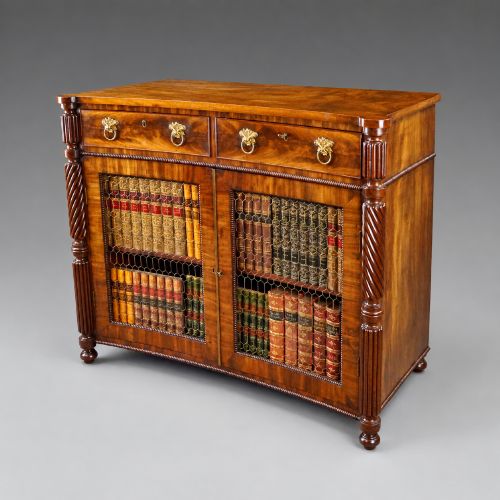
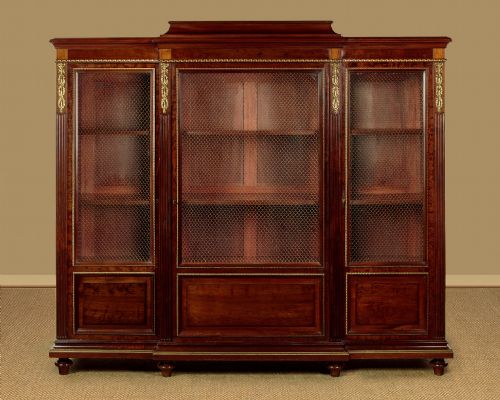
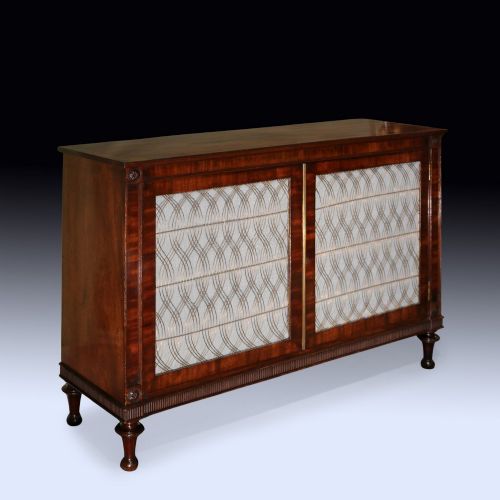
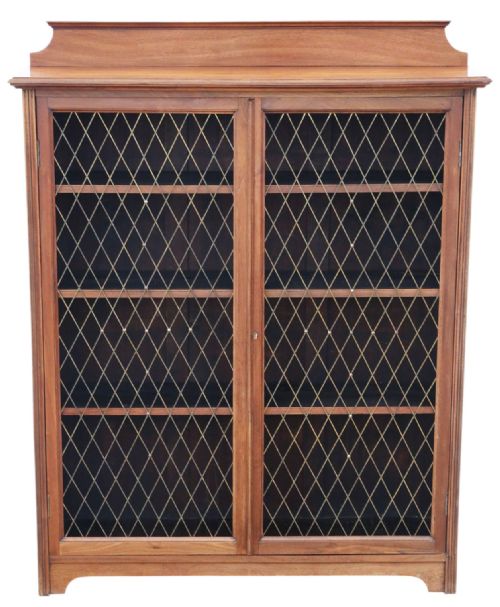
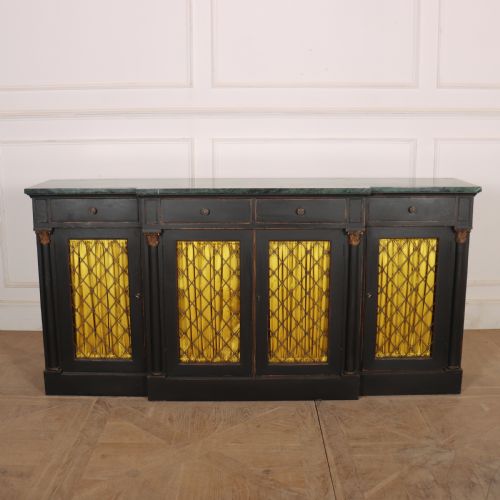
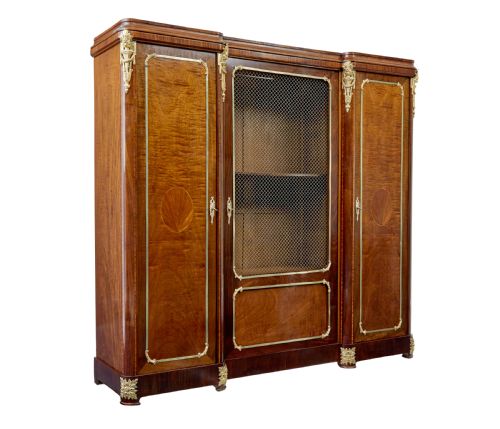
The objects themselves appear under multiple functional headings, including side cabinets, bookcases, chiffoniers, sideboards, and breakfront bookcases. Many pieces integrate brass grilles or wire mesh panels into their doors, allowing visibility into the interior shelving.
Origin and styling vary across the inventory, with English cabinet work sitting alongside French Louis XV style, French Empire influenced pieces, and country house designs. Mahogany remains the most common primary timber, accompanied by walnut, satinwood, rosewood, and painted finishes.
Construction and Materials
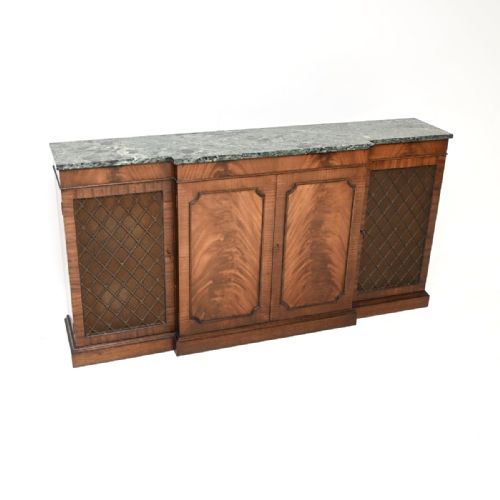
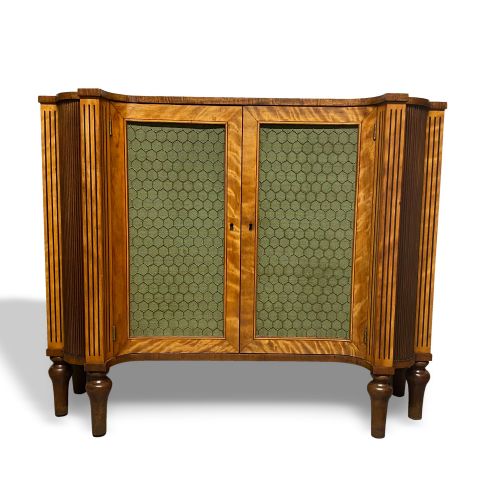
Surface detailing incorporates brass inlay work and marble tops on select sideboards and cabinets. Mesh and fabric elements are integrated into door frames to provide ventilation or veiled display space while maintaining the integrity of the wooden housing.
The listings span the eighteenth to the early twentieth centuries, featuring Regency, Georgian, William IV, and Edwardian aesthetic influences.
Quality Factors
The standard of a piece rests upon the selection of timber veneers, the precision of brass mountings, and the finesse of the joinery within the carcase. Pieces described with exhibition quality or fine quality display superior proportion and more intricate detailing in the mouldings and grille work.
Variations also emerge in the integration of functional elements, such as adjustable display shelves within bookcases and the matching of grain patterns across multiple doors. Simpler country house or provincial pieces contrast with elaborately styled Neoclassical, Regency, and French Empire examples.
The Antique Wire Door Cabinet Glossary
- Grille
- A lattice of metal wire or brass fitted into cabinet doors to enclose the interior while maintaining visibility and air circulation. This feature is frequently seen on bookcases and side cabinets.
- Breakfront
- A piece of furniture where the central section projects forward from the flanking wings. This architectural arrangement adds depth and visual rhythm to large bookcases and sideboards.
- Chiffonier
- A low cabinet or sideboard developed in the nineteenth century, typically equipped with doors enclosing shelves and sometimes surmounted by a small shelf tier or mirror.
- Satinwood
- A durable, lustrous timber native to India and Ceylon, prized for its pale yellow colour and grain. It is often used for fine cabinet veneers and stringing.
- Seige
- Not applicable.
Antique Wire Door Cabinet: Frequently Asked Questions
What is an antique wire door cabinet?
An antique wire door cabinet is a piece of storage furniture featuring doors inset with metal mesh or brass grilles rather than solid wood or plain glass. These items encompass bookcases, side cabinets, and chiffoniers produced during the eighteenth and nineteenth centuries.
Such furniture was traditionally utilised in libraries, dining rooms, and drawing rooms to store books, porcelain, or linens while permitting ventilation and partial visibility of the contents.
How do I date an antique cabinet?
Dating a cabinet involves examining the primary timber, hardware, construction methods, and stylistic influence. Pieces from the Georgian and Regency periods often employ solid mahogany or rosewood with specific classical motifs, whereas later Edwardian or 1900s examples show different proportions and veneer techniques.
Matching the object type - such as a William IV chiffonier or a French Louis XV style bookcase - to known design periods helps narrow the manufacturing era.
Where were wire door cabinets used?
These cabinets served primarily in domestic reception rooms, libraries, and country house dining spaces. Their enclosed yet ventilated interiors made them suitable for protecting valuable volumes, table linens, and delicate provisions.
Today, they integrate well into living rooms, kitchens, and studies as functional display furniture that conceals everyday clutter behind decorative metal mesh.
How do I care for mahogany and rosewood?
Maintaining antique timber requires keeping pieces away from direct heat sources and fluctuating humidity to prevent wood movement and veneer lifting. Regular dusting with a soft, dry cloth preserves the polished surface without the buildup of heavy silicone polishes.
Brass grilles and mounts benefit from gentle cleaning using non-abrasive methods to maintain their natural metal patina over time.