




Regency Brass Lattice Cabinet
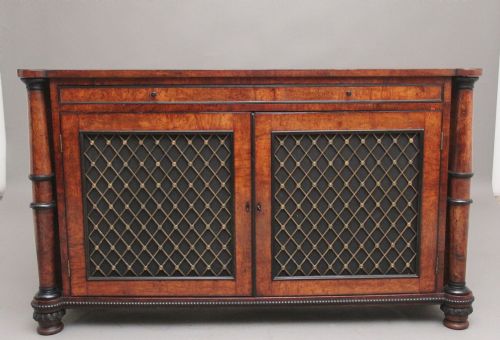
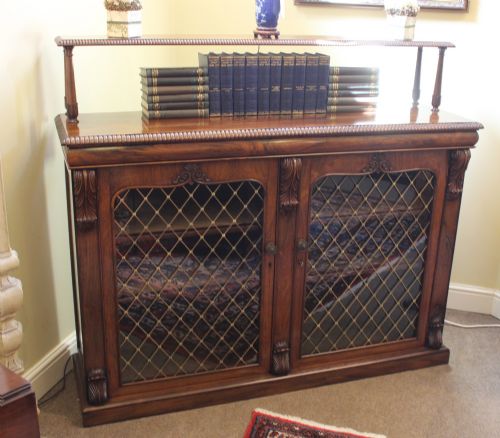
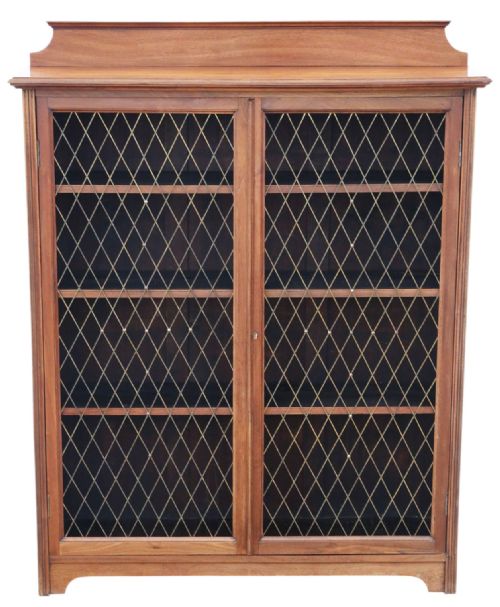
These regency brass lattice cabinet pieces bring architectural refinement to a room while offering practical display space.
Regency Brass Lattice Cabinet
A regency brass lattice cabinet or related side piece draws the eye with its disciplined geometry and polished metal details. Buyers exploring this category encounter side cabinets, bookcases, and chiffoniers spanning the Regency, William IV, and Victorian periods.
The selection ranges from early nineteenth-century originals in mahogany and rosewood to later revivals from the Edwardian era and nineteen-twenty. Most examples serve as dwarf bookcases or chiffoniers, often featuring glazed or grille doors that reveal the volumes or objects stored within.
Materials and Construction
Cabinet makers relied on dense tropical timbers such as mahogany and rosewood, frequently complemented by pollard oak, walnut, and ebony for contrast and border work. These woods were selected for their rich grain patterns and stability over time.
Fine brass work defines the genre, integrated as delicate lattice grilles, stringing, and hardware. Glass panels and fabric linings appear behind the metalwork to protect the interior contents from dust while maintaining visual transparency.
Materials across the selection range from dark mahogany and pollard oak to rich rosewood accented with brass grille doors.
Judging Quality
The distinction between standard and superior pieces rests on the crispness of the timber selection and the precision of the brass inlay or fretwork. Richly figured rosewood veneers and well-matched mahogany indicate a higher workshop standard.
Proportion and scale also dictate worth, particularly in neat-sized chiffoniers and dwarf bookcases designed to sit beneath dado height. Pieces exhibiting restrained classical motifs and integrated shelving demonstrate the maker's confidence.
John McClean
The Regency Brass Lattice Cabinet Glossary
- Chiffonier
- A low sideboard or cabinet featuring shelves or enclosed storage, commonly topped with a raised superstructure or mirror back in nineteenth-century interiors.
- Dwarf Bookcase
- A low open or glazed bookcase designed to stand below window height, popular in Regency and Victorian drawing rooms.
- Pollard Oak
- Timber taken from trees that were pollarded, producing a dense wood marked by clustered knots and a highly decorative, mottled grain.
- Stringing
- Thin inlaid lines of contrasting timber or metal used to outline panels, drawers, and cabinet doors.
- Breakfront
- A cabinet or sideboard whose central section projects forward from the flanking wings, creating architectural depth.
Regency Brass Lattice Cabinet: Frequently Asked Questions
What is a regency brass lattice cabinet used for?
These cabinets were originally designed for the neat storage and display of valued books, ceramics, and small decorative objects in formal entertaining rooms. The enclosed lower cupboards also provided concealed space for household items.
Today, they serve a similar purpose in modern interiors, functioning as low display bookcases or accent storage units in living spaces and hallways.
How do I date a nineteenth-century cabinet?
Dating relies on observing the primary timbers, construction methods, and hardware styles associated with specific decades. Regency pieces typically show lean classical proportions and fine brass stringing, while later nineteenth-century examples may incorporate heavier mouldings or walnut veneers.
Secondary woods inside drawers and the patination of the timber surface provide further clues to the workshop origin and exact period.
Are these cabinets suitable for small rooms?
Many examples found in this category are built to a compact, neat scale, specifically tailored for limited wall space. Dwarf bookcases and low chiffoniers occupy minimal floor area while offering functional surface space on top.
Their shallow depth ensures they do not crowd a narrow hallway or a modest sitting room.
How should I care for rosewood and mahogany?
Historic timbers respond best to stable indoor humidity and protection from direct sunlight, which can fade rich rosewood and mahogany finishes over time. Dusting with a soft, dry cloth preserves the polish without introducing moisture.
Occasional application of traditional wax helps nourish the wood and maintain its natural lustre.