

Antique Windsor Carver
An antique windsor carver combines sturdy local timber with generous proportions, offering a comfortable seat shaped by centuries of English vernacular design.
Antique Windsor Carver
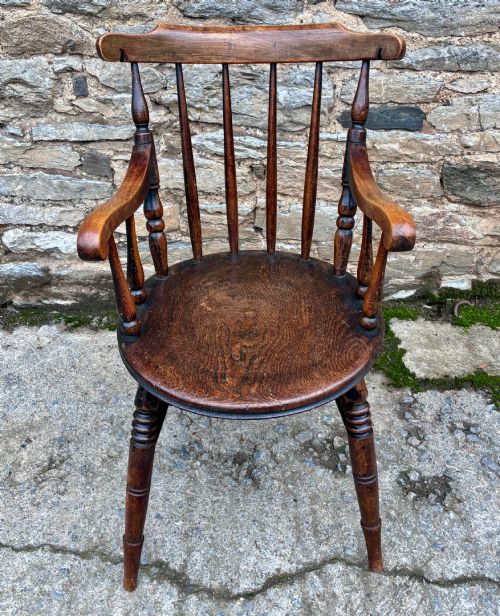
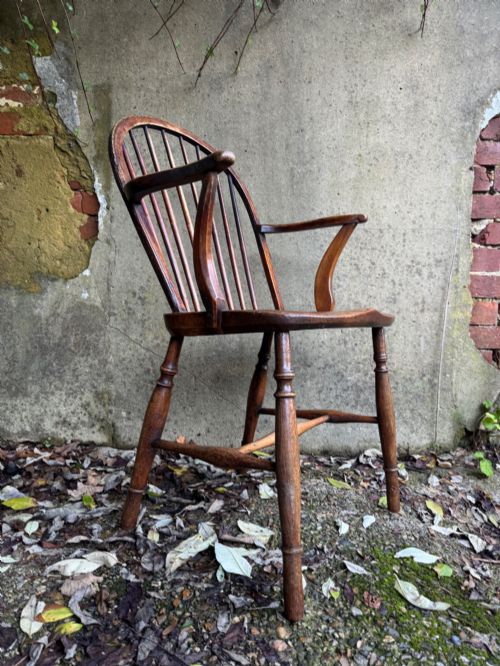
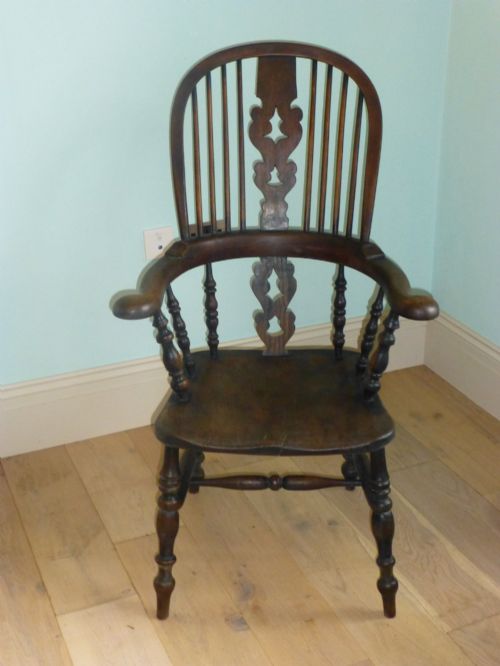
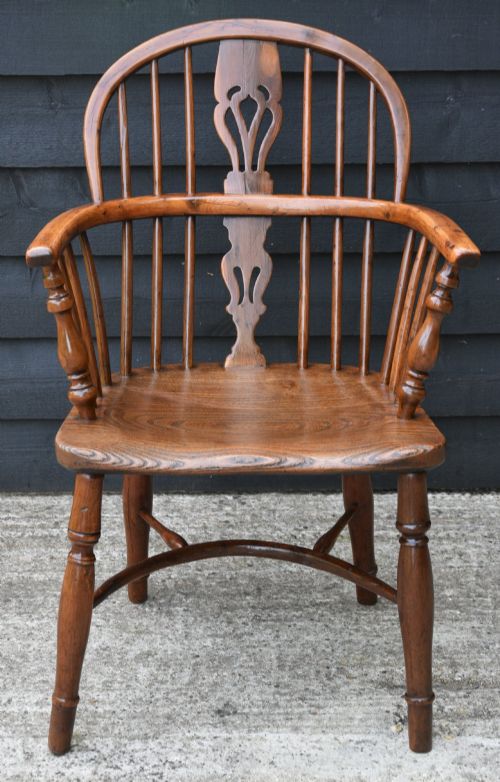
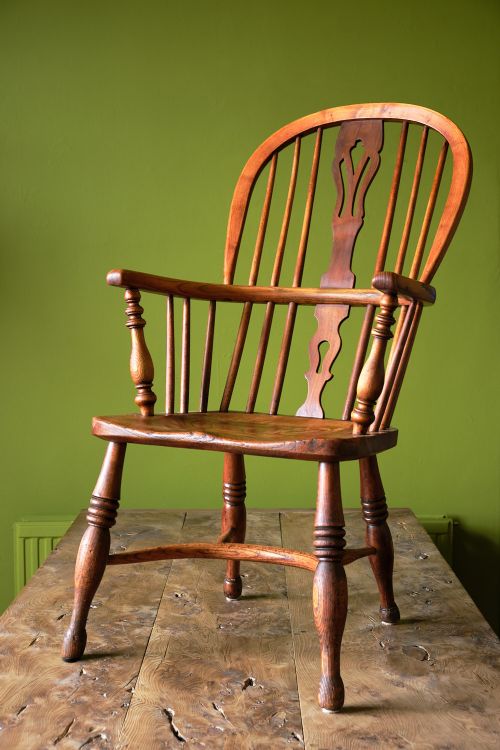
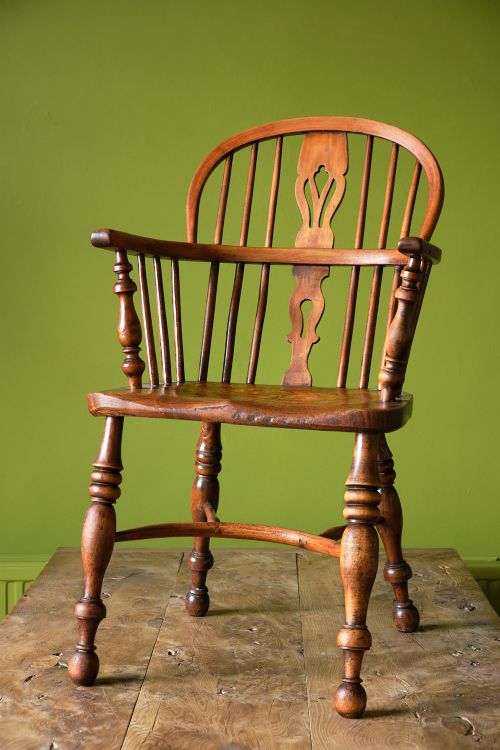
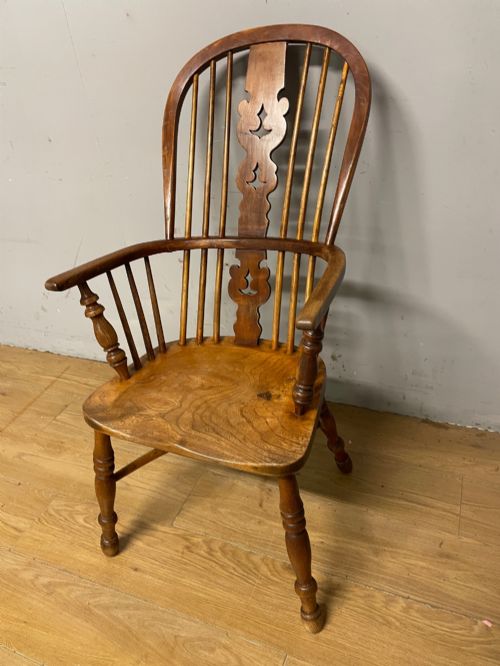
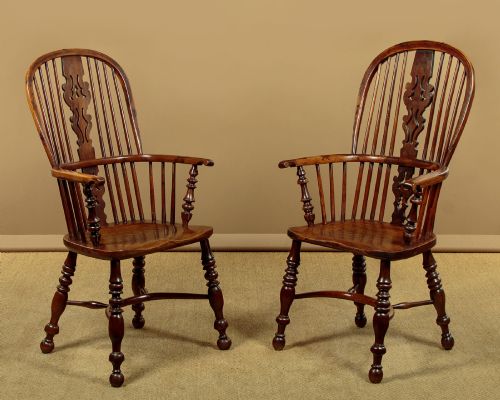
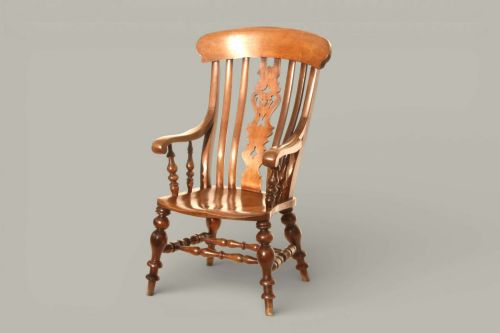
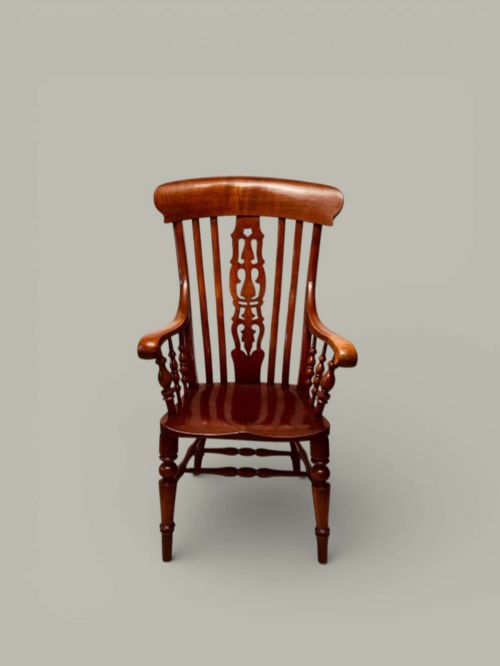
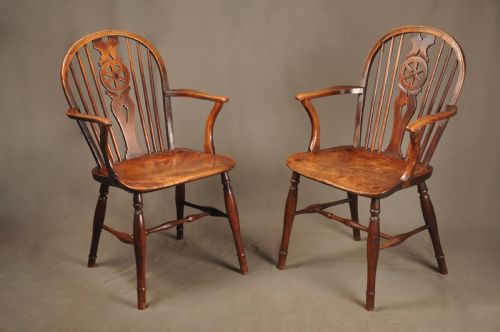
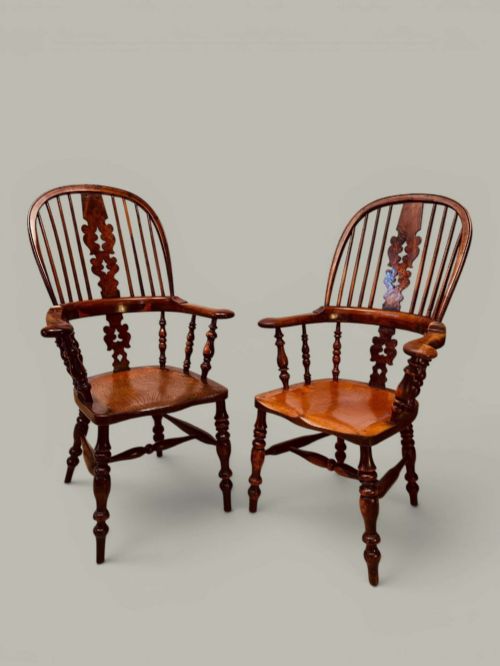
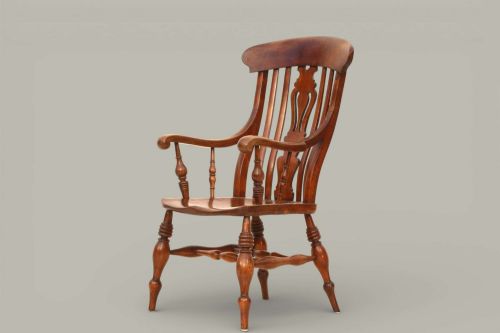
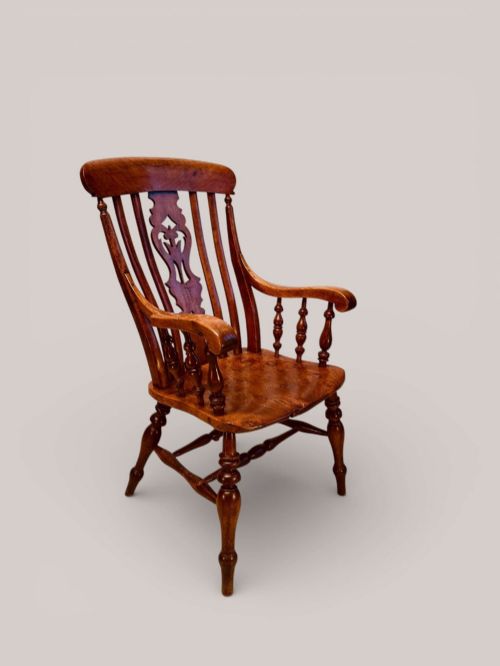
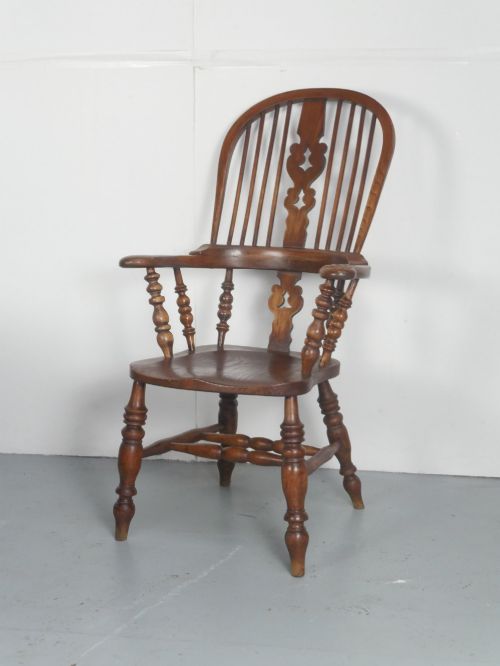
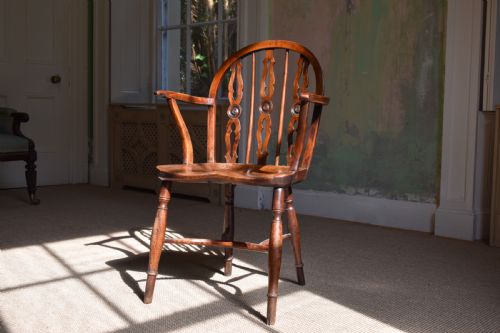
An antique windsor carver is a wooden armchair featuring a solid saddle seat into which the legs, back and arms are independently wedged or secured. These elbow chairs appear in various regional forms, including wheelback, comb back, bar back and stick back configurations.
The versions most commonly met on this page span the eighteenth, nineteenth and early twentieth centuries, rooted in English country and Victorian farmhouse traditions. They served as primary seating in kitchens, parlours and farmhouse dining rooms.
Makers shaped these chairs using vernacular principles, prioritising practical strength and ergonomic comfort over rigid uniformity. Regional variations trace back to distinct production hubs such as Lincolnshire, Nottinghamshire and Mendlesham.
How they were made
Craftsmen built these chairs using a combination of woods chosen for specific structural tasks, pairing durable elm seats with flexible ash, beech or yew for the steam-bent hoops and spindles. Fruitwood and oak also appear, reflecting local timber availability across different English counties.
The construction relies on socket and wedge joints, where turned spindles and legs pass directly through drilled holes in the thick plank seat and remain locked in place. Comb backs and hoop backs utilise steam bending to shape continuous wooden rails without weakening the grain.
Antique Windsor Carver Retail Price Guide 2026
Typical asking prices for windsor carver among the pieces listed under this phrase on Sellingantiques today, from the lower quarter to the upper quarter. They describe what is for sale here now, not the wider market.
Some nineteenth century examples retain subtle carpenter's bench marks and adze marks hidden beneath the seat.
What varies in quality
The standard of a windsor carver often rests upon the sculpting of the elm seat, where deeper, more pronounced saddle dishing signals greater time spent shaping the timber for the sitter. Thinner, flatter seats suggest a more utilitarian or later production.
Material selection and figuring in the wood dictate the visual presence of the piece, particularly where rich yew timber or well-matched elm and ash grain patterns are employed. Simpler beech and elm combinations remain robust but present a more uniform, plain surface.
The Antique Windsor Carver Glossary
- Carver
- An armchair designed with elbow rests, traditionally used at the head of a dining table or as a fireside seat.
- Saddle seat
- A thick wooden seat plank carved into a concave shape to fit the contours of the body for improved comfort.
- Crinoline stretcher
- A curved metal or wooden brace linking the legs of a chair in a continuous loop, providing additional structural rigidity.
- Comb back
- A chair back design where vertical spindles rise to support a horizontal top rail, resembling the teeth of a dressing comb.
- Wheelback
- A Windsor chair variation featuring a pierced wooden splat in the centre of the backrest carved into the shape of a spoked wheel.
Antique Windsor Carver: Frequently Asked Questions
What is a windsor carver?
A windsor carver is a wooden armchair featuring a solid saddle seat into which independent turned legs and back spindles are tenoned directly.
These armchairs provided sturdy seating for dining rooms and farmhouses, distinguished by their combination of bentwood hoops and solid timber seats.
How do I date an antique windsor chair?
Dating relies on observing construction methods, timber choice, and the evolution of back designs like wheelbacks, comb backs or stick backs.
Earlier pieces from the eighteenth century frequently display rich yew wood and deep comb backs, whilst late Victorian examples often utilise beech and elm with simpler stick back or bar back forms.
Were these chairs used for dining?
Carvers served as the principal armchairs at the head of a dining table, whilst matching simpler side chairs completed the set.
Their robust construction made them equally suited for use in farmhouse kitchens and studies where durable daily seating was required.
How do I care for antique elm and yew wood?
Maintain the timber by keeping chairs away from direct heat sources and sudden temperature shifts that cause wood to dry and split.
Apply occasional natural wax polish to nourish the grain and preserve the historic patina developed over centuries of use.