


Antique Windmill Art
Antique windmill art captures the enduring appeal of traditional mills through nineteenth-century oils and watercolours.
Antique Windmill Art
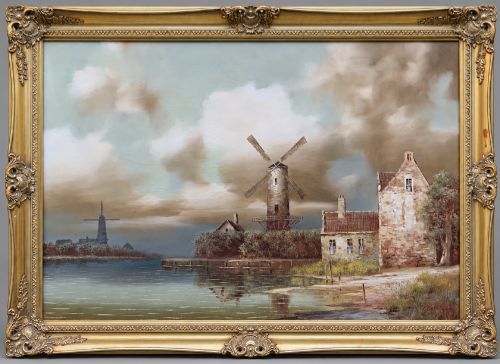
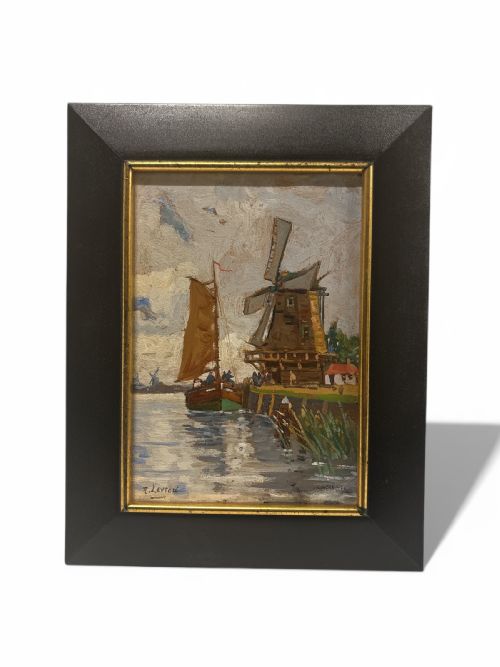
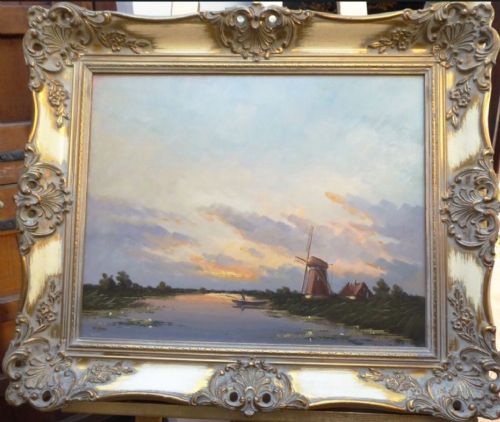
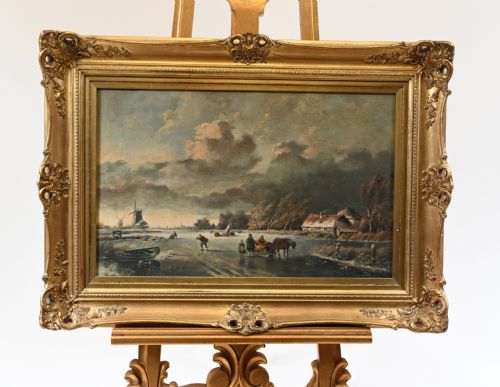
When searching for antique windmill art, buyers encounter a diverse selection of paintings, watercolours, and framed works depicting rural and coastal mills. These pieces span periods from the mid-nineteenth century through to the mid-twentieth century, capturing Dutch landscapes, English river scenes, and snowy vistas. The selection includes works by named artists alongside naive topographical views and atmospheric impressionist scenes.
The most common formats on this page are oil paintings and watercolours on paper, canvas, or wood panel. Subjects range from frozen canals and sunset river landscapes to working windmills in Norfolk, Sussex, and Holland. Buyers frequently find framed paintings that reflect regional British and Dutch artistic traditions from the Victorian, Edwardian, and later periods.
Works of antique windmill art serve primarily as wall art that brings historical landscape traditions into domestic interiors. Collectors seek these pieces for their topographical interest, atmospheric depiction of light, and connection to historical rural industries. The variety ensures options ranging from delicate watercolours to substantial oil paintings.
Materials and methods
The primary mediums recorded in these listings are oil paint and watercolour applied to paper, canvas, or wood panels. Artists of the nineteenth and early twentieth centuries utilised traditional pigments, occasionally incorporating gold leaf to enhance specific details within the composition. Support materials range from stretched canvas to prepared wood panels and heavy watercolour paper.
Framed works often utilise glass protection for watercolours on paper, while oil paintings on canvas or wood remain unglazed in traditional wooden frames. Technique varies from the detailed precision of Dutch realism and topographical recording to the looser brushwork of impressionist and Norwich School landscapes. These physical components define the structural nature of each piece across the recorded periods.
The inventory includes regional British scenes alongside Dutch landscapes from the nineteenth and twentieth centuries.
Distinctions in quality
Quality in antique windmill art is determined by the skill of brushwork, the handling of light and atmospheric perspective, and the condition of the medium. Works by established regional artists or named painters demonstrate a superior command of composition and spatial depth compared to anonymous folk art or naive topographical pieces. The preservation of the original paint surface or watercolour pigment directly influences the visual impact of the landscape.
The integration of the mill within its surrounding flatland, river, or coastal environment indicates the artist's draftsmanship and understanding of structural proportion. Finer examples maintain crisp architectural detail in the sails and tower alongside harmonious tonal grading in the sky and water. Material stability, such as the absence of heavy cracking in oil layers or fading in watercolours, further separates superior works from standard decorative pieces.
R Leyton·T Bergman·Thomas Bush Hardy·James Orrock·Ernest Uden·Charles Harmony Harrison·Jan van Couver·John D Walker·William Tatton Winter·Frederick William Jackson·Edward Seago·Pieter Cornelis Dommersen·John Holland Snr·Kershaw Schofield
The Antique Windmill Art Glossary
- Topographical
- Depicting a specific real-world location with accuracy. These views document actual landscapes and identifiable mills rather than purely imaginative scenes.
- Norwich School
- A regional group of artists inspired by the Norfolk landscape and Dutch painting traditions. Their works frequently feature local waterways, skies, and windmills.
- Dutch School
- A stylistic tradition focused on realistic lighting, flat horizons, and maritime or agricultural subjects. This influence appears strongly in coastal and canal windmill paintings.
- Watercolour
- A paint consisting of water-soluble pigments applied to paper. This medium allows for transparent washes that capture shifting weather and atmospheric conditions.
- Wood Panel
- A rigid wooden support used by artists instead of canvas. Panel paintings from the nineteenth century offer a stable surface for detailed oil application.
Antique Windmill Art: Frequently Asked Questions
What periods do these paintings come from?
The listed items originate primarily from the nineteenth and early twentieth centuries, spanning Victorian, Edwardian, and later periods. Artists active during these eras recorded both British and continental European landscapes.
Specific dates within the evidence range from mid-nineteenth-century works up to mid-twentieth-century watercolours and oils. This timeline reflects shifting artistic styles from traditional realism to impressionist approaches.
How should I hang watercolour windmill art?
Watercolours on paper require protection from direct sunlight to prevent the pigments and paper support from fading over time. Standard framing with glass helps shield the delicate medium from atmospheric dust and moisture.
Placement on interior walls away from direct heat sources ensures the paper and frame remain stable. Proper hanging preserves the visual integrity of nineteenth-century and early twentieth-century works.
What subjects appear alongside the windmills?
Common companion subjects include frozen canals, river landscapes, coastal shores, and flatland marshes. Scenes frequently feature rural cottages, fishing boats, and figures engaged in daily agricultural activities.
Topographical views often document specific regions such as Norfolk, Sussex, and Dutch waterways. These elements provide context to the central milling structures depicted in the art.
How do I identify Dutch style paintings?
Dutch style works typically emphasise wide horizons, expansive skies, and low-lying waterways surrounding the central mill. The palette often utilises muted natural tones to capture atmospheric maritime or rural conditions.
Many pieces reflect the influence of the Dutch School or nineteenth-century realism, focusing on accurate depiction of local topography and working structures.