


Antique Whippet Ornaments
Antique whippet ornaments capture the lean agility and sleek muscular lines of the breed through Victorian pottery and continental bronze.
Antique Whippet Ornaments
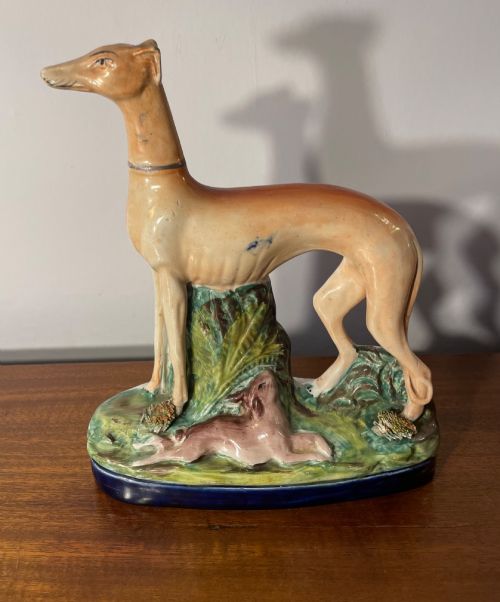
When you search for antique whippet ornaments, you encounter a selection of canine figures spanning the nineteenth and early twentieth centuries. These pieces encompass Staffordshire pottery pairs, French animalier bronzes, and porcelain models.
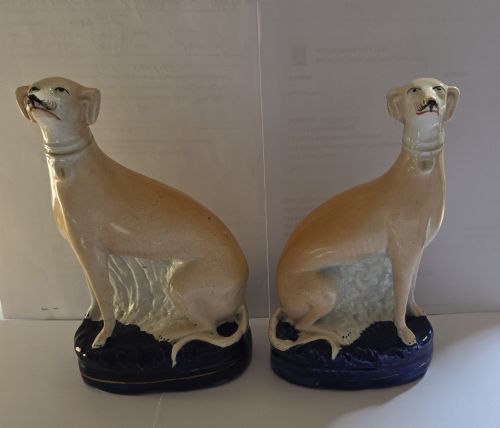
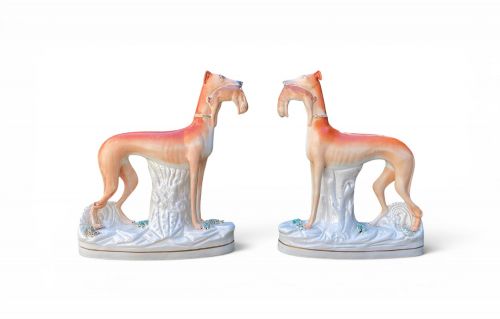
The most common version met on this page is the Victorian Staffordshire pottery dog, frequently modelled as seated pairs or functional quill holders. Collectors also find nineteenth-century bronze sculptures capturing the athletic form of greyhounds and whippets.
Originating primarily from British potteries and French foundries, these decorative figures serve both as mantel ornaments and desk accessories. The selection bridges utilitarian desk items and pure sculptural art.
How they were made
Pottery figures take shape through earthenware moulds, finished with lead glazes and enamel paint to render the markings of the dogs. Staffordshire potters often applied gold leaf accents to collars and bases during the Victorian era.
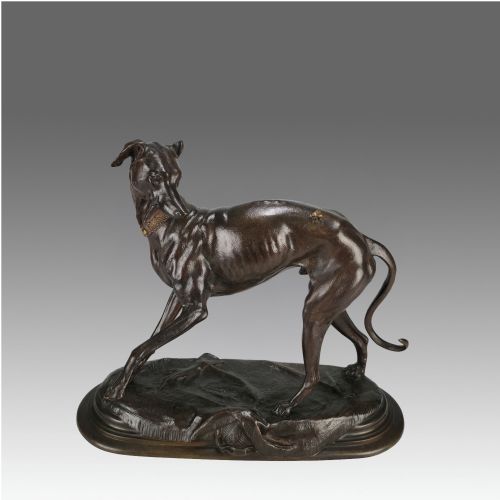
Bronze sculptures utilise the lost-wax casting technique, capturing fine anatomical details in metal before receiving patination. French animalier founders and German porcelain manufacturers employed specialised firing and casting methods to achieve realistic textures.
Listings feature Victorian earthenware alongside bronze sculptures from the nineteenth and early twentieth centuries.
What varies in quality
The finesse of the modelling distinguishes superior sculptures from simpler factory output, particularly in the rendering of musculature and facial expression. Bronzes reveal quality through the crispness of the chase work and the richness of the patina.
In pottery pieces, the clarity of the enamel painting and the uniform coverage of the glaze indicate the skill of the original maker. Matched pairs with even wear and minimal restoration hold greater appeal for serious collectors.
Alfred Barye·Pierre Jules Mene·Thomas Parr·Joseph Francois Victor Chemin·Rosenthal
The Antique Whippet Ornaments Glossary
- Animalier
- A nineteenth-century artistic movement focused on the realistic depiction of animals, particularly prominent in French bronze sculpture. Artists in this tradition studied anatomy closely to capture movement and tension.
- Staffordshire
- A term for pottery produced in the industrial region of England known as the Potteries, famous for mantel dogs and figural groups. These earthenware pieces defined Victorian domestic interiors.
- Quill Holder
- A desk accessory featuring a modelled figure alongside a trough or rest designed for writing feathers. They combine practical utility with decorative canine sculpture.
- Patina
- The surface sheen and colour developed on bronze through age and chemical treatment. A well-preserved patina enhances the depth of metal sculptures.
- Earthenware
- A porous pottery body fired at lower temperatures, commonly used for nineteenth-century British figures. It requires a glaze to achieve waterproof surfaces.
Antique Whippet Ornaments: Frequently Asked Questions
What are whippet quill holders?
Whippet quill holders are desk accessories produced by nineteenth-century potteries, combining a decorative dog figure with a built-in tray for writing feathers. They sat on Victorian writing desks as both ornament and utility.
These pieces reflect the Victorian preference for functional art in the study. The dog typically reclines or sits beside the ink or pen rest.
What is animalier bronze?
Animalier bronze refers to nineteenth-century sculptures depicting animals with anatomical accuracy, largely developed by French artists. Foundries cast these works using traditional methods to capture realistic textures and poses.
These sculptures focus on the natural movement and musculature of hounds and other animals. They stand apart from decorative ceramics through their metal medium and fine detail.
How do I display pottery dogs?
Staffordshire whippets look best displayed in pairs on mantelpieces, bookshelves, or side tables where their symmetry can be appreciated. Keeping them out of direct sunlight preserves the enamel paint.
Grouping them with other nineteenth-century ceramics creates a cohesive period display. Stable, flat surfaces protect these ceramic figures from accidental tipping.