

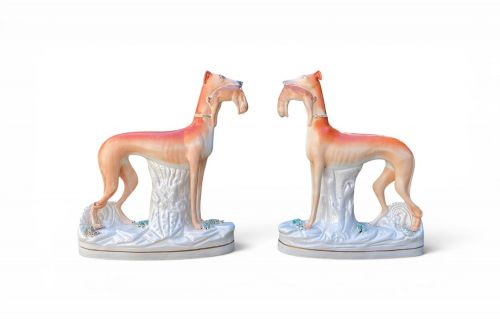


Antique Whippet Figures
Antique whippet figures capture the slender grace of hounds in bronze, earthenware and porcelain from the nineteenth and early twentieth centuries.
Antique Whippet Figures
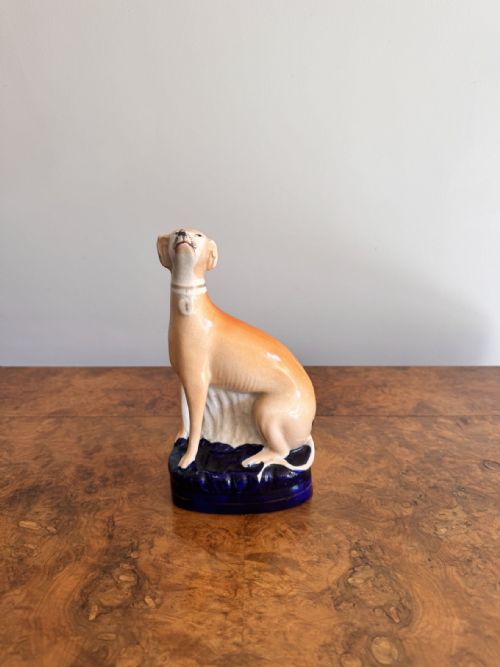
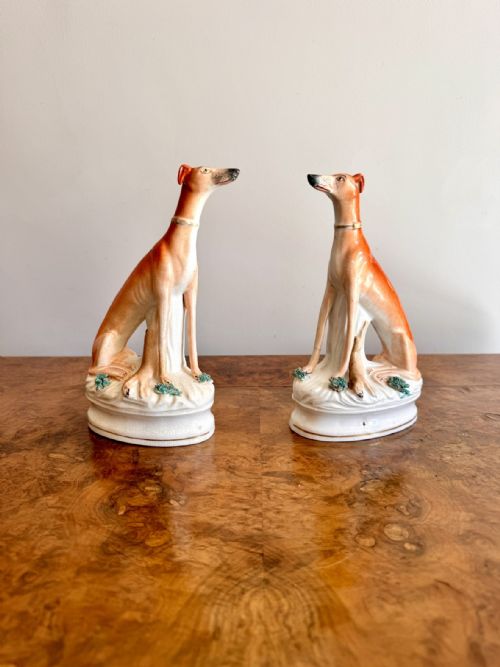
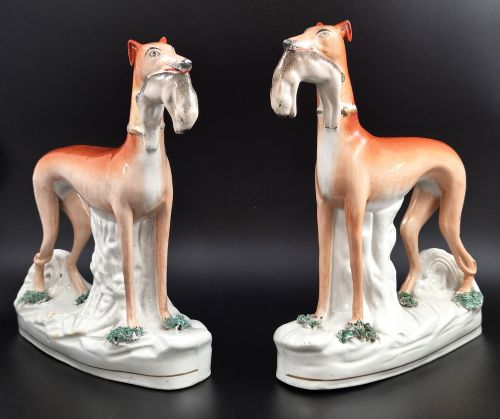
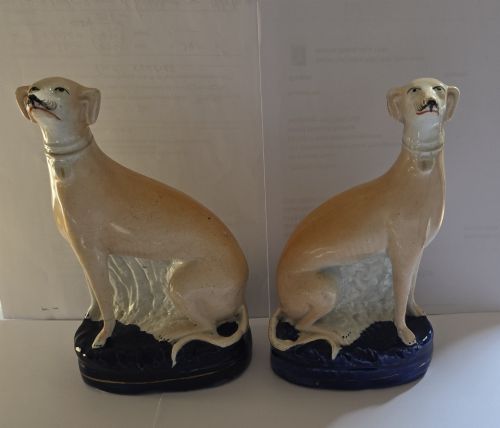
When you search for antique whippet figures, you encounter a distinct blend of Victorian Staffordshire pottery and nineteenth-century French animalier bronzes. The ceramic examples frequently appear as pairs of seated dogs, sometimes incorporating practical elements such as inkwells or quill holders.
The material record also spans early porcelain and spelter, moving from mid-nineteenth-century country pottery into the sleek lines of Art Deco sculpture. These pieces portray the hounds either in repose or paired with hares, reflecting both domestic mantelpiece ornament and naturalistic animal studies.
How they were made
Pottery figures are shaped from earthenware and finished with lead glaze and enamel paint, occasionally accented with gold leaf. These ceramics rely on press-moulding techniques common to Staffordshire workshops, capturing the musculature and collar details through applied colour before firing.
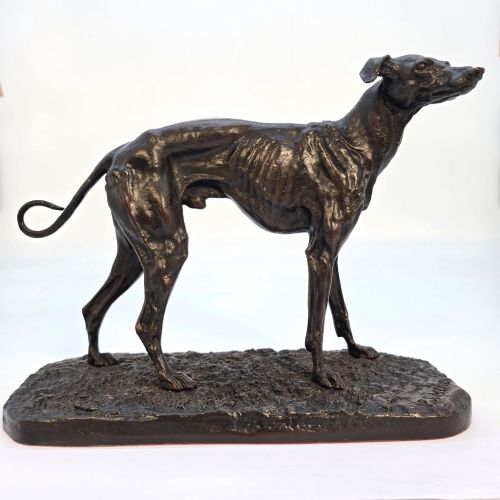
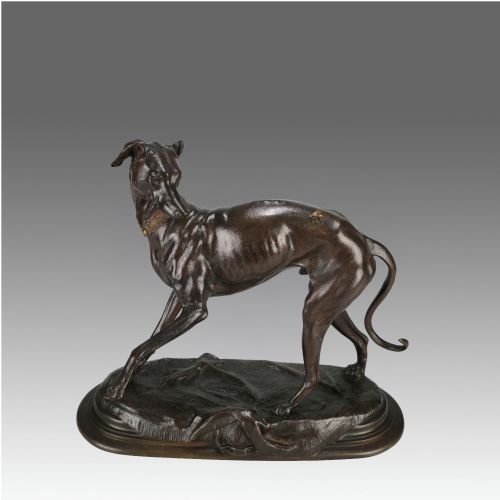
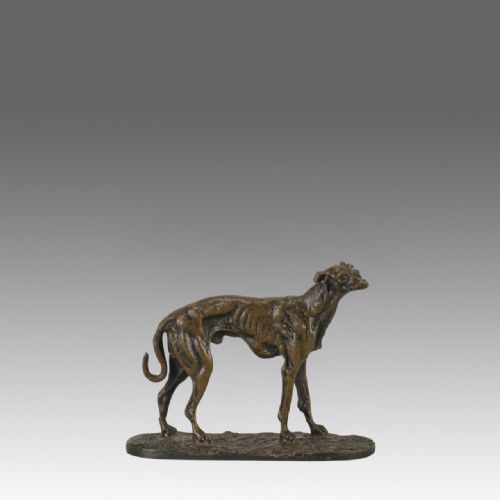
Bronze sculptures utilise the lost-wax casting method to render anatomical precision in metal. Casts receive various patinations, from dark bronze tones to silvered surfaces, capturing the taut posture characteristic of sighthounds.
Antique Whippet Figures Retail Price Guide 2026
Typical asking prices for whippet figures among the pieces listed under this phrase on Sellingantiques today, from the lower quarter to the upper quarter. They describe what is for sale here now, not the wider market.
Listings combine Victorian earthenware pottery with nineteenth-century French animalier bronzes and twentieth-century Art Deco silvered metal sculptures.
What varies in quality
The standard of modelling defines the upper tier of these sculptures, distinguishing generic factory output from pieces bearing the distinct hand of notable founders or modellers. Anatomical accuracy, particularly in the tension of the limbs and the alertness of the expression, separates routine casts from masterworks.
In pottery, the crispness of the underglaze enamel painting and the preservation of original gilding dictate the grade of the piece. Bronzes depend upon the clarity of the chasing work following the cast, where fine tool marks articulate the texture of the coat.
P. J. Mène·Alfred Barye·Thomas Parr·Joseph Francois Victor Chemin·Christophe Fratin·Karl Hagenaur
The Antique Whippet Figures Glossary
- Animalier
- A nineteenth-century artistic movement dedicated to the realistic depiction of animals, particularly predators and hounds. Sculptors in this tradition studied live subjects extensively in menageries.
- Spelter
- A zinc alloy frequently utilised as a less expensive alternative to bronze during the nineteenth and early twentieth centuries. It accepts patination readily to simulate heavier metals.
- Staffordshire
- A major pottery-producing area in England responsible for earthenware figures and mantle ornaments. These ceramics were typically slip-cast or pressed in moulds and hand-painted.
- Lead glaze
- A glossy coating applied to earthenware pottery before firing to provide a smooth surface. It deepens the tone of underlying enamel paints.
- Quill holder
- A desk accessory featuring a modelled figure with built-in channels or slots designed to support writing implements. These functional ceramics often double as mantelpiece ornaments.
Antique Whippet Figures: Frequently Asked Questions
What periods do these figures date from?
The listings span from the early nineteenth century through the Victorian era and into the Art Deco period of the 1920s and 1930s.
Most ceramic examples cluster around the Victorian mid-century, while the bronze animalier studies extend across the second half of the nineteenth century.
Were these figures purely decorative?
Many served as mantelpiece ornaments or paperweights, but several ceramic variations incorporated functional uses.
It is common to find pieces designed specifically as inkwells, quill holders or paired mantel dogs intended to sit symmetrically at either end of a fireplace.
How do pottery and bronze figures differ?
Pottery versions are principally earthenware figures produced in Staffordshire with hand-painted enamel details and lead glazes.
Bronzes originate primarily from French animalier sculptors who captured the muscular tension of the hounds through metal casting.
How do I identify a Staffordshire whippet?
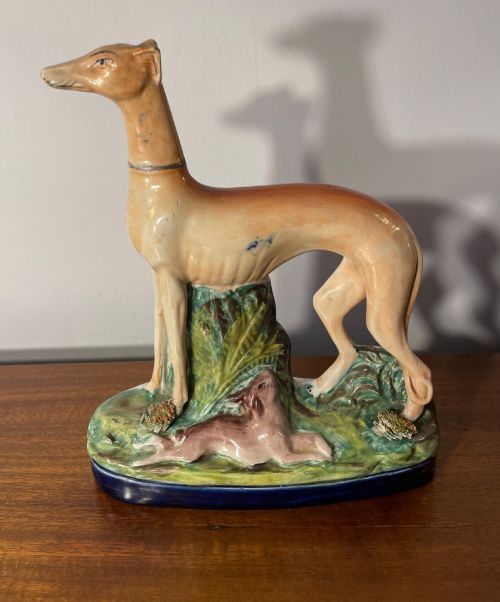
Staffordshire pieces typically present as earthenware ceramics featuring seated greyhounds or whippets often posed alongside hares.
They frequently display distinct painted collars, harness details and underglaze painting characteristic of nineteenth-century pottery production.