




Antique Welsh Oak Clock
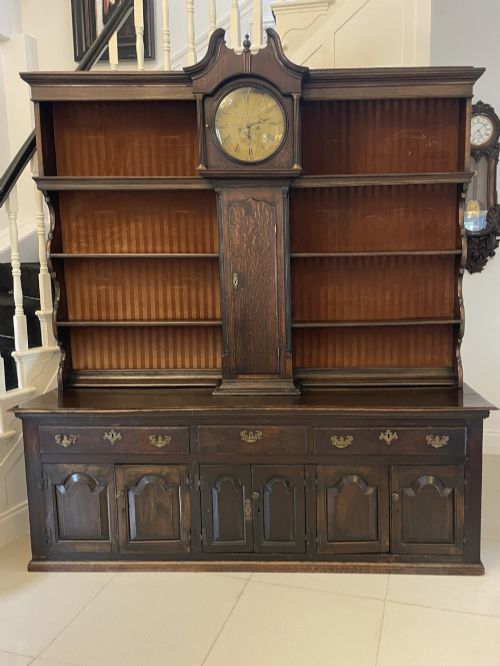
An antique welsh oak clock offers a robust timekeeper built from local timber by regional makers during the eighteenth and nineteenth centuries.
Antique Welsh Oak Clock
The antique welsh oak clock category encompasses tall timekeepers that appear alongside related furniture forms such as dressers and clock dressers. These pieces originate predominantly from the eighteenth and nineteenth centuries, spanning periods from the Georgian era through to the Victorian age.
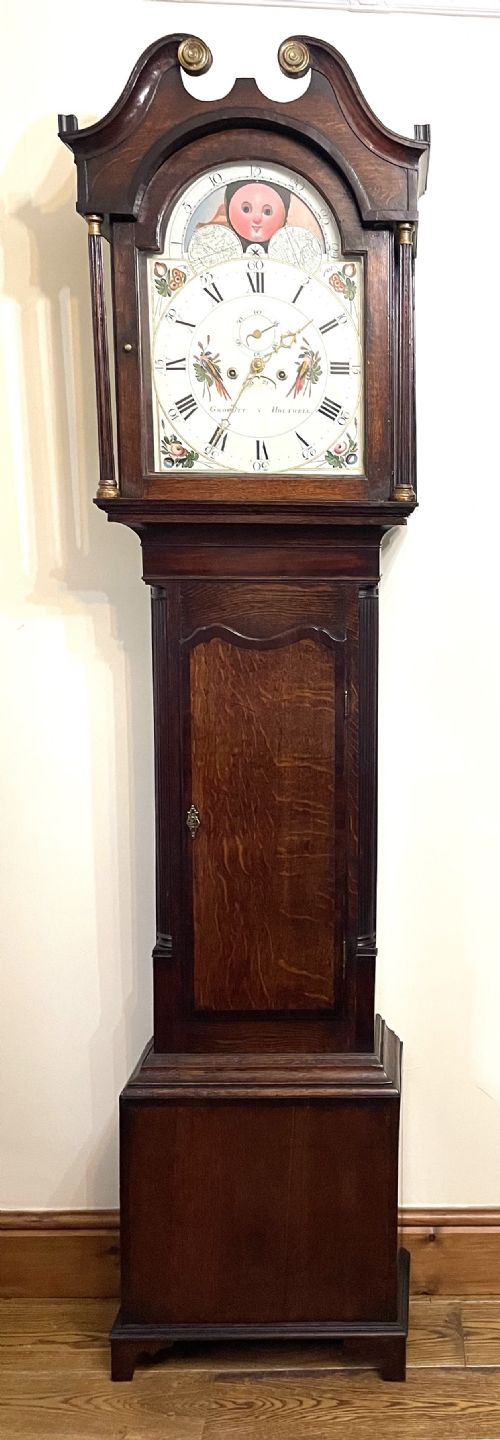
Most examples take the form of longcase clocks or grandfather clocks housed in timber cases. Makers utilised native oak, often combined with mahogany or burr oak veneer, to construct these substantial floor-standing pieces for domestic interiors.
Regional variations emerge through the recorded makers and towns inscribed on the dials, including centres such as Llanrwst, Holywell, Ruthin, and New Quay. Buyers encounter both brass dials and painted iron arch dials fitted with eight-day movements.
How they were made
Cabinet makers built the tall cases using solid oak timbers, occasionally incorporating mahogany or applying burr oak veneer for decorative contrast on the door and trunk. Regional workshops constructed these tall housings to protect the delicate brass and iron gear trains within.
Horologists fitted the clocks with mechanical movements, featuring either brass dials or painted iron arch dials that indicate the passage of time. Master clockmakers inscribed their names and Welsh working locations directly onto the dial faces.
One regional clock includes a star-burst in the door, adding a subtle flash of geometry to the plain timber grain.
What varies in quality
The sophistication of the dial work distinguishes simpler thirty-hour models from elaborate eight-day arch dial versions bearing regional signatures. Details such as rolling moon mechanisms or star-burst inlays on the trunk door elevate the visual interest of a piece.
The choice of cabinet woods and decorative veneers alters the overall presence of the clock. Selected burr oak veneers and contrasting mahogany details show greater cabinet-making ambition than plain solid oak constructions.
Thomas Webbe of New Quay·Grocott Holywell·Rob Parry Pwllheli·Watkin Owen Llanrwst·M Thomas Caernarfon·Joyce Ruthin·Owen of Llanrwst
The Antique Welsh Oak Clock Glossary
- Longcase clock
- A tall pendulum clock enclosed in a wooden case that stands directly on the floor. These items are also frequently termed grandfather clocks.
- Arch dial
- A clock face featuring a semicirculated curved section at the top above the main chapter ring. This upper space often displays maker details or mechanical complications.
- Rolling moon
- A mechanical display behind the dial face that tracks the lunar cycle through painted phases. This feature appears on select regional timepieces.
- Burr oak veneer
- Thin slices of decorative timber cut from knotted growths on an oak tree and applied over a stable base wood. This material provides rich grain patterns on the clock door.
Antique Welsh Oak Clock: Frequently Asked Questions
How do I wind an eight day clock?
An eight-day movement requires winding every week using a specialised key to raise the internal weights suspended inside the trunk. Owners insert the key into the winding holes on the dial face and turn it steadily until the weights reach the top.
Care must be taken not to overwind the mechanism, stopping as soon as resistance is felt. Ensuring the weights are drawn up evenly keeps the pendulum swinging at a consistent rate.
Where were these clocks made?
These timepieces originated in various Welsh towns and communities where regional clockmakers operated local workshops. Inscriptions on the arch dials often record specific locations such as Llanrwst, Ruthin, Pwllheli, and Holywell.
Cabinet makers and horologists worked closely together within these communities to produce the complete tallcase pieces. The timber used typically reflected available regional oak resources.
What is an arch dial?
An arch dial refers to a clock face shape that includes a rounded semi-circular section rising above the square primary dial. This upper curved area provides space for the maker's signature, town of origin, or painted moon phases.
Clockmakers during the eighteenth and nineteenth centuries frequently adopted this layout for their better quality eight-day movements. It gives the upper hood of the longcase a distinct regional character.
How do I care for an oak clock case?
Protecting the solid oak and veneered surfaces involves keeping the clock away from direct heat sources and dramatic humidity fluctuations. Stable environmental conditions prevent the timber from warping and protect the older joints.
Applying a traditional beeswax polish occasionally helps maintain the lustre of the wood without building up heavy residues. Dusting the carved hood and trunk with a soft cloth preserves the finish.