




Antique Watercolour Bird Prints
Antique watercolour bird prints bring delicate natural history observation into a room, offering the fine brushwork and soft tones that collectors prize in ornithological art.
Antique Watercolour Bird Prints
When you search for antique watercolour bird prints, you encounter original painted studies and hand-finished works that capture British and exotic species in precise detail. These pieces originate from periods spanning the Georgian era through the Edwardian years and into the mid-twentieth century.
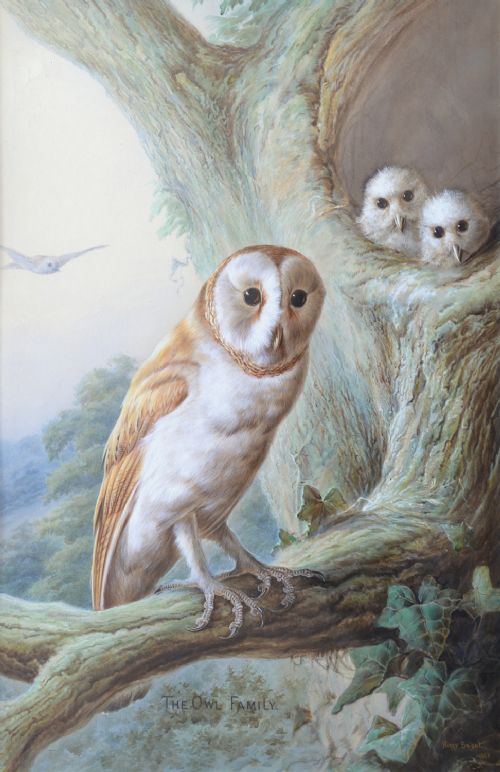
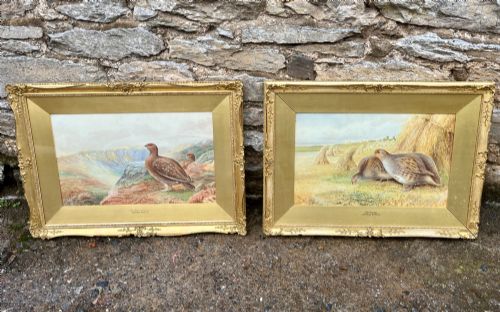
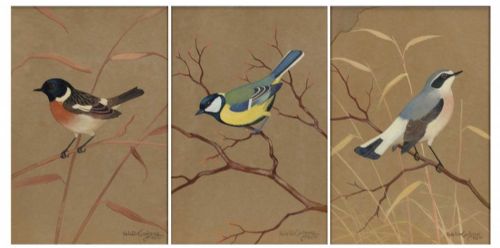
The selections on this page appear in various formats, including individual framed paintings, matched pairs of game birds, and small sets depicting garden species or waterfowl. Creators rendered these works on paper using watercolour paint, frequently augmented with gouache to build texture on feathers and foliage.
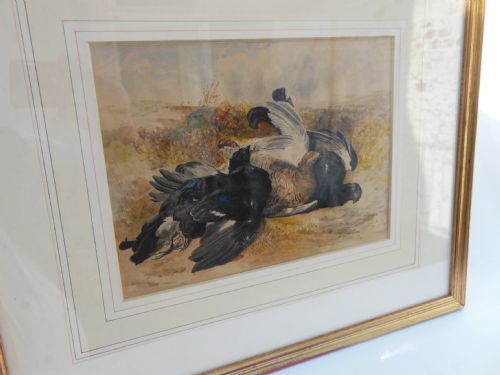
Framing forms an integral part of these pieces, with many examples presented behind glass in ebonised wood frames featuring deep giltwood mounts. Collectors find works signed by notable animal artists alongside unsigned studies that reflect the wider Victorian natural history tradition.
Materials and technique
Artists executed these works on paper using water-soluble pigments, often combining transparent watercolour washes with opaque gouache highlights to give depth to plumage and botanical elements. This technique allowed painters to achieve both the soft blending required for a mossy bank and the sharp definition needed for an avian eye.
Makers housed these works in wooden surrounds, frequently employing ebonised frames paired with giltwood mounts to enhance the contrast of the painted surface. Glazing with glass protected the delicate pigments from dust and moisture over the decades.
Antique Watercolour Bird Prints Retail Price Guide 2026
Typical asking prices for watercolour bird prints among the pieces listed under this phrase on Sellingantiques today, from the lower quarter to the upper quarter. They describe what is for sale here now, not the wider market.
Some feathered sitters pose quietly beside primroses on mossy banks, immortalised by artists who must have worked with very cold fingers.
Assessing quality and execution
The distinction between standard decorative studies and superior works rests on the precision of the draughtsmanship and the artist's ability to render anatomical structure accurately. Finer examples display meticulous attention to feather patterning and the natural posture of the subject.
The preservation of the paper and the vibrancy of the pigments determine the visual impact of a piece, as watercolours are susceptible to fading from light exposure. Original framing components, such as period giltwood mounts and ebonised wood mouldings, add to the integrity of the object.
George Rankin·Ralston Gudgeon·Arthur Wardle·John Sherrin·Archibald Thorburn
The Antique Watercolour Bird Prints Glossary
- Gouache
- An opaque watercolour paint containing white pigment, used by artists to create solid highlights and dense areas of colour on paper.
- Giltwood
- Wood carved and treated with a thin layer of gold leaf, frequently utilised for decorative mounts and interior frame mouldings.
- Ebonised
- Wood stained or treated to resemble ebony, providing a dark, uniform finish popular in period framing.
- Natural history
- The scientific study of animals and plants, which inspired detailed artistic illustration throughout the Victorian and Edwardian periods.
Antique Watercolour Bird Prints: Frequently Asked Questions
How do I hang these watercolours safely?
Keep these framed works away from direct sunlight to prevent the watercolour pigments and gouache from fading over time.
Ensure the room humidity remains stable to protect the historic paper supports and wooden frames from warping.
Are these works original paintings?
The selection includes hand-painted watercolours on paper, alongside a small number of framed engravings depicting birds.
Signatures from listed artists appear on several watercolours, while other pieces remain anonymous natural history studies from the period.
What periods do these pieces represent?
The available works span from the Georgian period around eighteen hundred through the Victorian and Edwardian eras.
Later pieces extend into the early decades of the twentieth century, including mid-century British art examples.
How are the pieces framed?
Many examples are presented behind glass in ebonised wood frames, often complemented by deep giltwood mounts.
These period enclosures protect the fragile paper surfaces while providing a traditional aesthetic suitable for the artwork.