



Antique Water Jugs Set
These antique water jugs set choices range from washstand basins to silver plated tea services, offering functional utility and period charm.
Antique Water Jugs Set
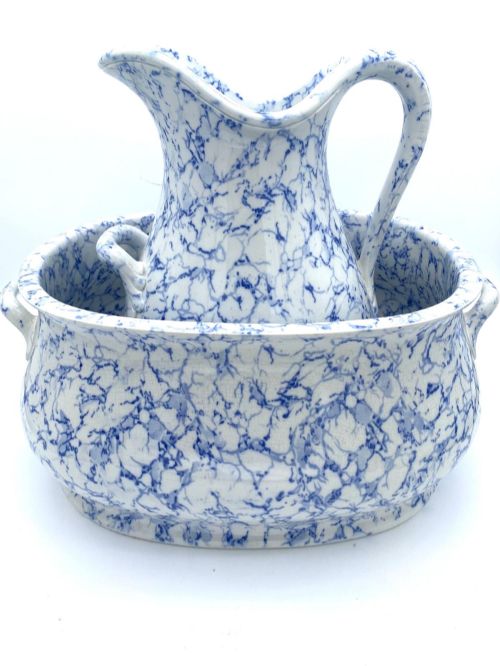
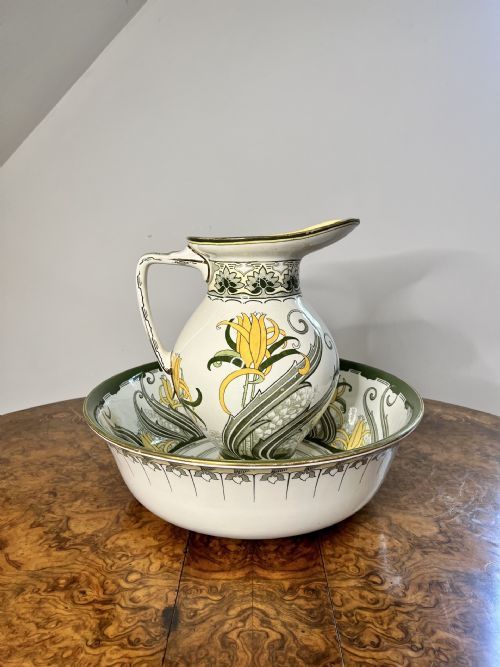
An antique water jugs set brings together coordinated vessels designed for daily washing, tea service, or drink pouring. Buyers searching this phrase encounter large washstand sets containing a basin and jug alongside tea services, graduated jugs, and drinks sets.
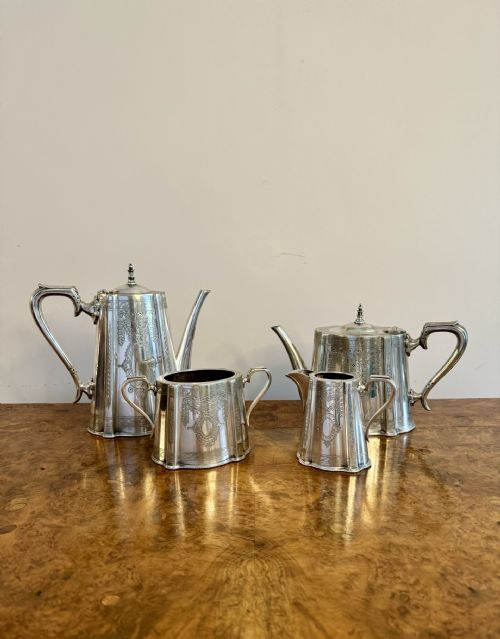
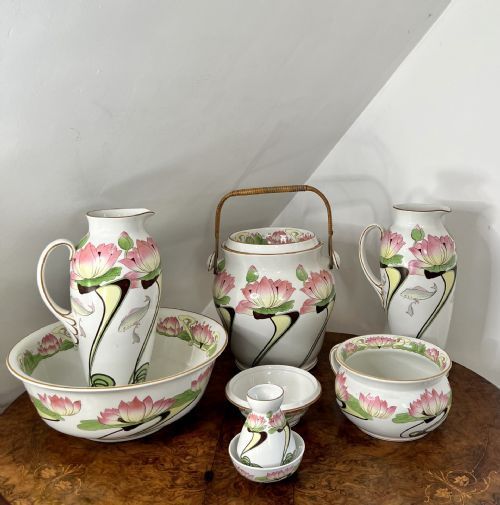
The most frequent version on this page is the Edwardian or Victorian ceramic jug and bowl set, often complemented by matching bathroom pieces. Alongside ceramics, silver plated sets and glass drinking services appear frequently across 19th-century and early 20th-century periods.
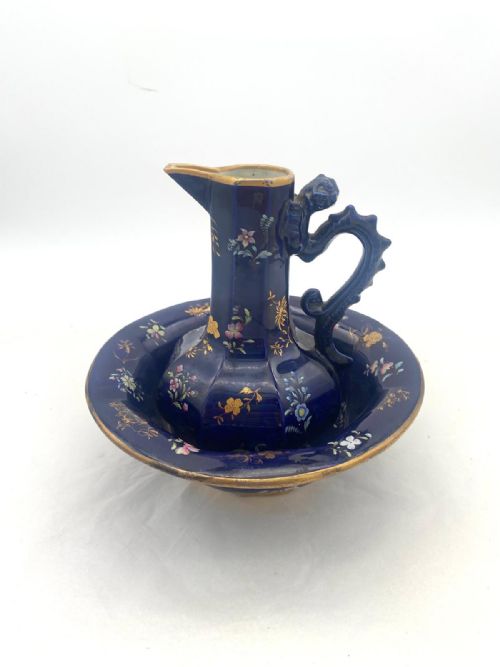
Forms vary from octagonal ironstone pitchers and graduated groupings of three to complete multi-piece beverage services. Each grouping reflects the domestic routines of the Regency, Victorian, Edwardian, and Art Deco eras.
Distinctions in standard and execution
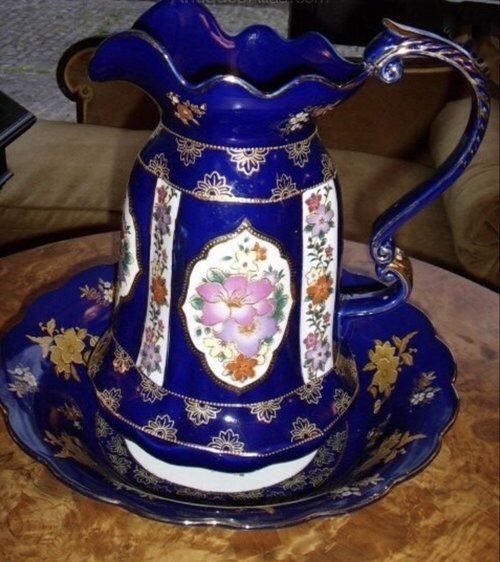
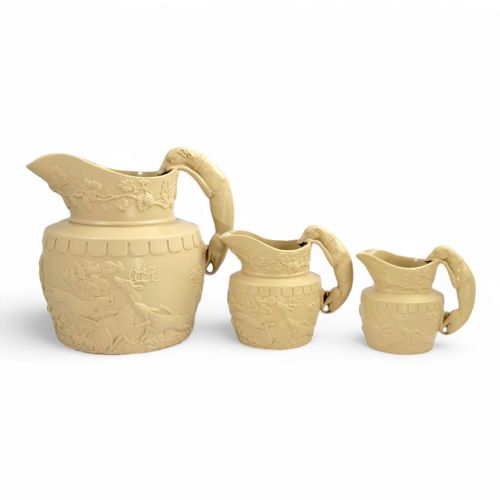
Quality rests upon the crispness of moulded details, such as the hound handles on yellow ware pitchers or the relief work on Parian jugs. Defined transfer printing, clean cobalt or flow blue glazes, and well-preserved gold leaf indicate superior craftsmanship.
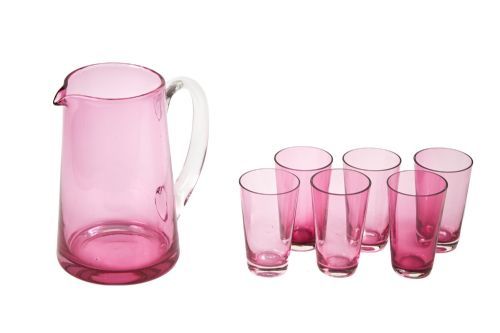
In silver plated sets and glass services, the weight of the metal, precision of intaglio glass cutting, and integrity of matching components determine the grade. Complete graduated sets or matching multi-piece services demonstrate higher original design ambition.
Hound handles on Regency pitchers offer a firm grip shaped like a hunting dog's neck.
Minton·Doulon Burslem·Masons Ironstone·Walker and Hall·Webb Corbett·Davenport·Harrison Brothers and Howson·Phillips and Bagster·Christofle·Copeland Spode·Ridgway
The Antique Water Jugs Set Glossary
- Ironstone
- A heavy, durable type of earthenware patented in the 19th century. It resists chipping and served as a robust material for kitchen and washstand ceramics.
- Flow blue
- A cobalt blue transfer printing style where the colour bleeds slightly into the white glaze during firing. This technique creates a misty, painterly effect popular on Victorian earthenware.
- Parian
- A fine white ceramic developed in the 19th century to imitate carved marble. It is typically left unglazed to highlight sculptural relief details.
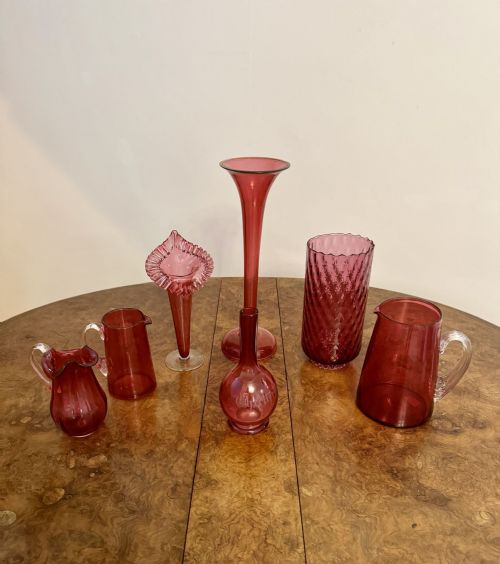
- Cranberry glass
- A rich pinkish-red glass produced by adding gold chloride to the molten glass batch. It appears frequently in Victorian tableware and drinking sets.
- Intaglio
- A glass decoration technique where designs are carved into the surface rather than raised. This method creates a frosted, recessed pattern found in fine Edwardian glassware.
Antique Water Jugs Set: Frequently Asked Questions
What were washstand sets used for?
Washstand sets provided the primary means for personal hygiene in bedrooms before indoor plumbing became standard. The large jug held water for washing, while the deep basin contained it.
Servants filled these jugs daily so occupants could wash their faces and hands without visiting a bathroom. The sets often included smaller matching vessels for soap and toothbrushes.
How do I date a ceramic jug and bowl set?
Dating relies on stylistic markers, pottery backstamps, and the manufacturing materials used. Victorian and Edwardian pieces often bear registry marks or factory names on the base.
Heavier ironstone and flow blue transfer prints typically point to the 19th century. Lighter pastel glazes and simpler forms often indicate Edwardian or later 20th-century production.
Are silver plated tea sets safe to use?
Silver plated tea sets can serve beverages if the underlying base metal remains completely covered by silver. Regular gentle cleaning preserves the remaining plating.
Many collectors prefer to display these sets rather than use them daily. Inspecting the interior of pots and spouts ensures no corrosion has occurred over the decades.
What is the difference between ironstone and porcelain?
Ironstone is a dense, opaque earthenware designed for everyday durability and heavy household use. It absorbs less impact than standard pottery.
Porcelain is a finer, vitrified ceramic that often appears translucent when held to the light. Porcelain tea sets were reserved for more formal entertaining than robust ironstone wash sets.
How should I clean antique cranberry glass?
Antique cranberry glass requires gentle washing in warm water with mild soap. Avoid abrasive sponges or harsh chemical detergents that can scratch the surface.
Sudden temperature changes can crack old glass, so water should remain lukewarm throughout the process. Air drying on a soft cloth prevents chipping the rims.