




Antique Washstand Jug
An antique washstand jug is a practical Victorian or Edwardian water vessel that anchors a traditional bedroom washing set.
Antique Washstand Jug
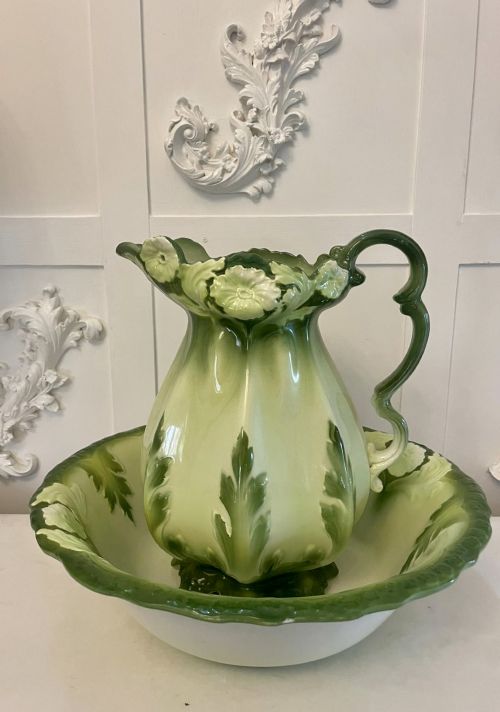
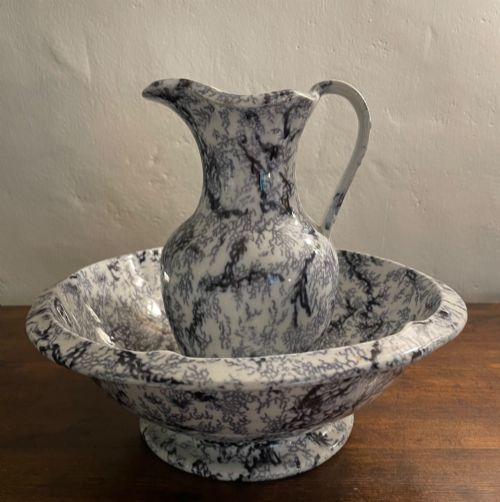
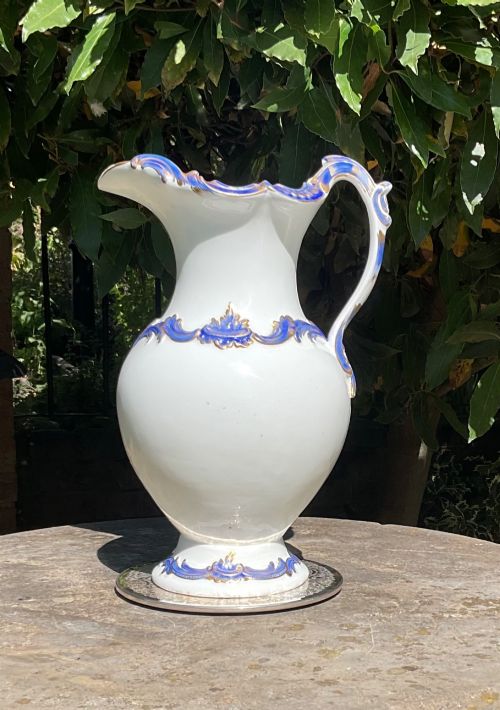
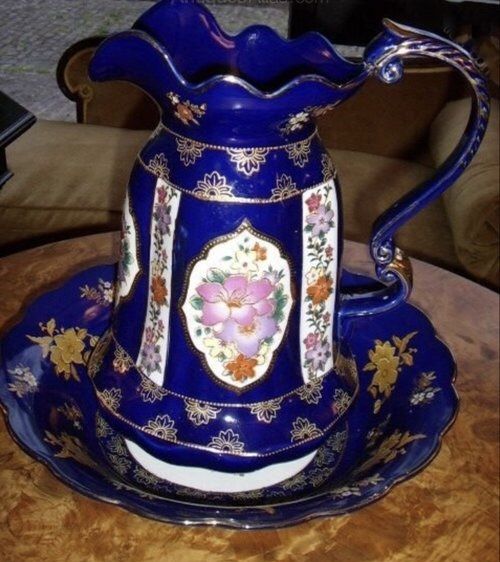
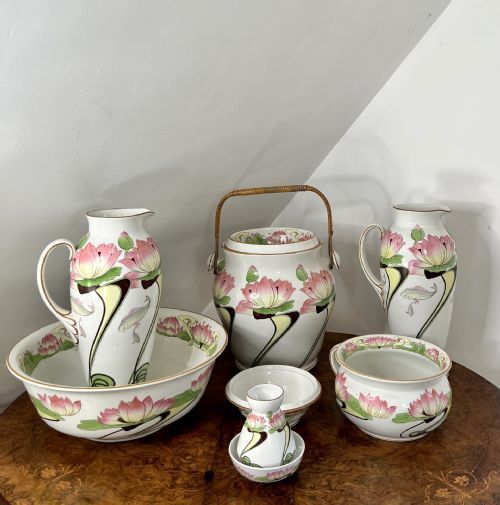
When you search for an antique washstand jug, you encounter large ceramic vessels designed to hold washing water on a bedroom washstand. These pieces typically appear alongside matching basins as complete bathroom sets, though individual pitchers also survive from the nineteenth and early twentieth centuries.
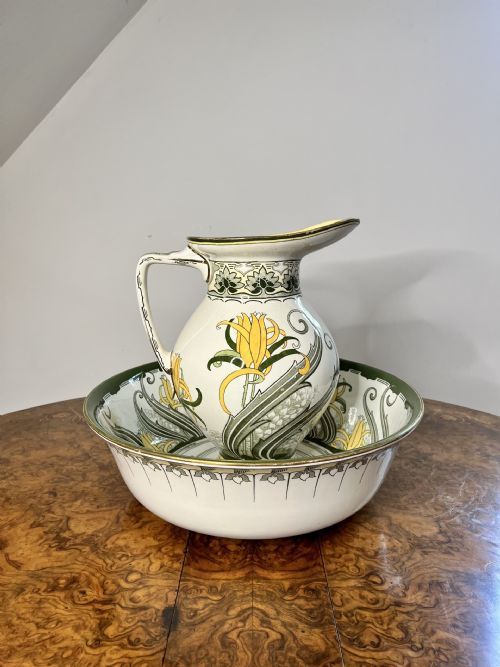
The versions you meet most frequently on this page date from the Victorian and Edwardian eras, spanning earthenware and ironstone bodies decorated with transfer printing or floral motifs. Earlier examples from the nineteenth century often display rich blue and white patterns, whilst later Edwardian sets reflect the refined tastes of the early twentieth century.
Forms vary from standard washstand sets and jug and bowl combinations to specialised pitchers associated with pine vanity tables or corner wash stands. You will also find distinct stylistic influences ranging from classical Regency designs to flowing Art Nouveau contours.
Materials and construction methods
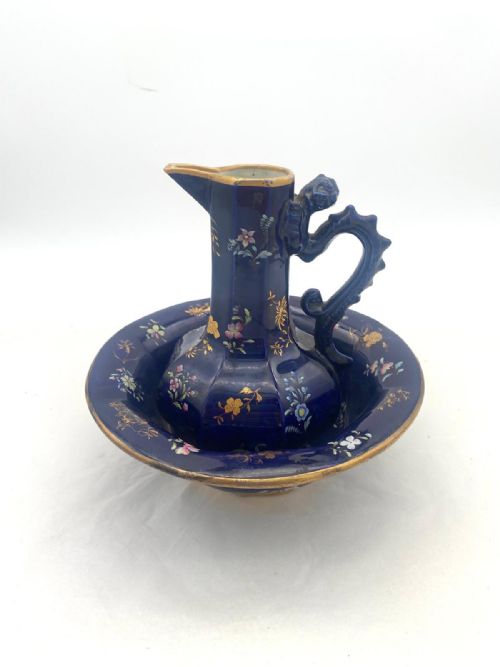
Potters constructed these jugs using durable ceramic bodies such as earthenware, porcelain, and heavy ironstone, which withstood the daily demands of nineteenth-century domestic hygiene. Manufacturers applied smooth glazes to seal the porous clay, often incorporating cobalt blue pigments, enamel colours, or delicate touches of gold leaf and gilt detailing.
Decoration relied heavily on transfer printing techniques to transfer intricate patterns onto the ceramic surface before firing. Certain makers enhanced their large water jugs with moulded octagonal shapes or integrated structural details like those found on Masons ironstone pieces and Doulton Burslem bathroom sets.
Antique Washstand Jug Retail Price Guide 2026
Typical asking prices for washstand jug among the pieces listed under this phrase on Sellingantiques today, from the lower quarter to the upper quarter. They describe what is for sale here now, not the wider market.
The inventory spans Victorian, Edwardian, Art Nouveau, and Regency styles, encompassing complete washstand sets as well as standalone pitchers.
Distinguishing quality across periods
Quality in an antique washstand jug is determined by the crispness of the transfer print, the depth of the glaze, and the precision of the ceramic moulding. Finer pieces demonstrate superior weight, balanced proportions, and cleanly applied hand-painted or gilt highlights that remain sharp across the handle and rim.
The distinction between standard domestic ware and superior examples often lies in the maker's mastery of kiln firing and clay refinement. Well-preserved pieces retain their original surface lustre without heavy crazing, showcasing the distinct artistic ambitions of periods ranging from early nineteenth-century Staffordshire production to Edwardian bathroom suites.
Doulton Burslem·Masons Ironstone·Minton·Shelley·Mark Jones And Sons
The Antique Washstand Jug Glossary
- Ironstone
- A dense, durable type of earthenware patented in the nineteenth century to imitate Chinese porcelain. It provided a robust body for heavy jugs and basins.
- Transfer printing
- A decoration method where an engraved copper plate transfers a design onto tissue paper, which is then applied to the ceramic biscuit before glazing. This technique enabled intricate blue and white patterns on Victorian wash sets.
- Flow blue
- A nineteenth-century transfer printing style where the blue cobalt pigment intentionally blurred slightly during firing into the surrounding white glaze. It created a soft, misty aesthetic popular on Staffordshire jugs.
- Chinoiserie
- A decorative style reflecting European interpretations of Chinese artistic motifs. It appears on select nineteenth-century jug and basin sets.
- Glaze
- A glassy coating fused to the ceramic body through kiln firing to make the vessel waterproof. It protects the underlying earthenware or porcelain from moisture.
Antique Washstand Jug: Frequently Asked Questions
What is an antique washstand jug used for?
These large jugs were originally filled with water and placed upon bedroom washstands to provide personal washing facilities before modern indoor plumbing became standard.
Today, they serve primarily as decorative display pieces or large flower vases in traditional interiors.
How do I date an antique washstand jug?
Dating relies on identifying stylistic markers, ceramic materials, and transfer printing techniques characteristic of specific nineteenth and early twentieth-century periods. Victorian pieces often feature robust ironstone bodies, whilst Edwardian sets display lighter porcelain forms and softer floral aesthetics.
Maker marks stamped on the base of the ceramic provide the most reliable evidence for narrowing down the decade of production.
Are washstand jugs waterproof for daily use?
Most antique washstand jugs remain structurally sound and capable of holding water for display purposes or holding cut flowers. However, historical glazes can sometimes develop fine internal crazing over long periods.
Collectors generally treat these ceramic vessels with care to preserve their original glaze and nineteenth-century surface decoration.
How do I display a washstand jug at home?
Washstand jugs make a strong visual statement when displayed alongside their original matching basins on sturdy wooden furniture like pine vanity tables. They also work well placed individually on large sideboards or floor stands to highlight their height and decorative handles.