



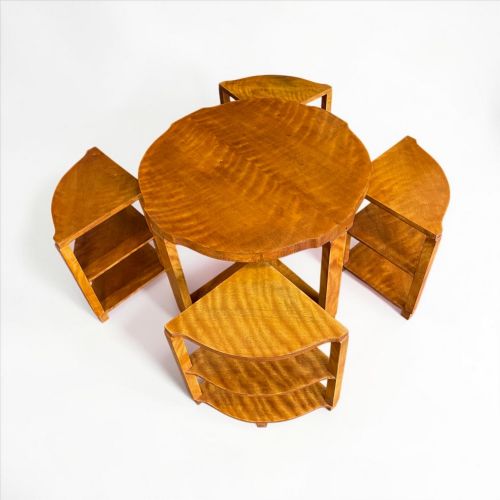


Antique Walnut Nest
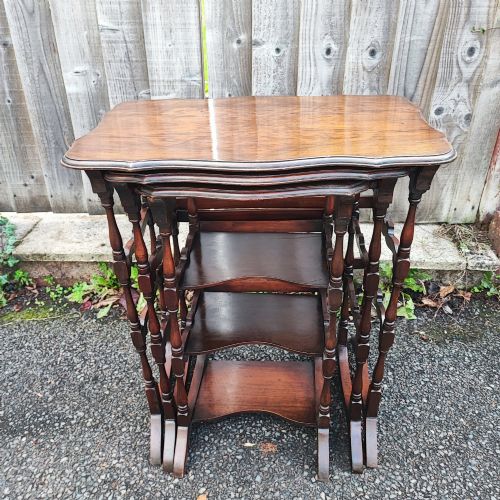
An antique walnut nest brings together graduating surfaces in rich timber, offering multiple tabletops that tuck away neatly when floor space matters.
Antique Walnut Nest
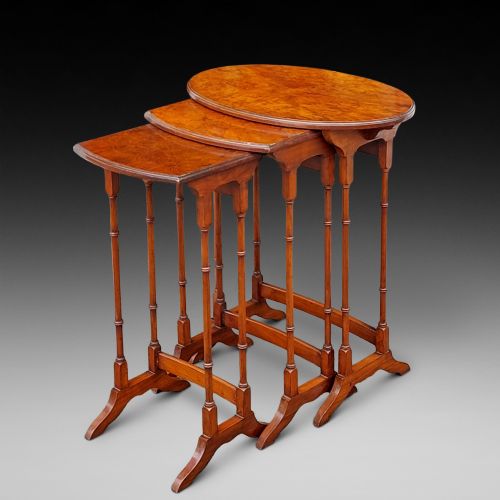
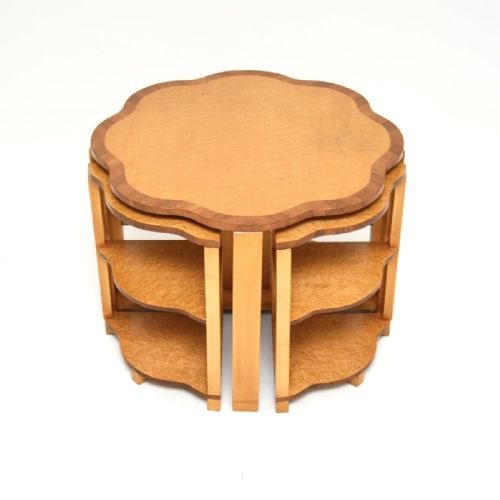
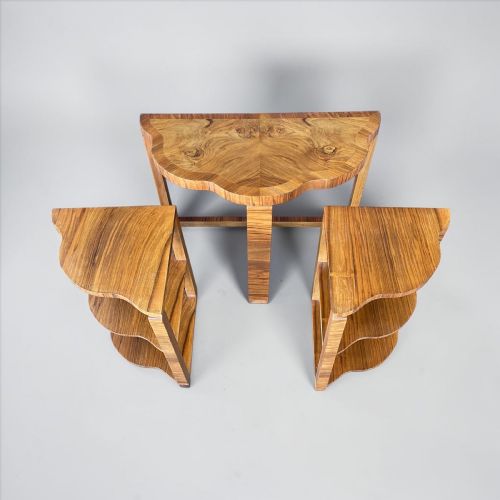
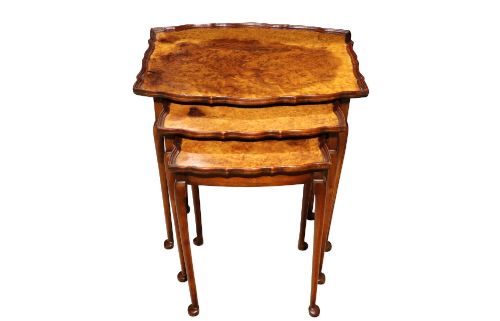
An antique walnut nest comprises sets of graduating occasional tables designed to slide neatly beneath one another. Buyers search for these items to combine practical surface space with compact storage in traditional and period interiors. The selection spans from Edwardian quartetto sets to Art Deco designs with varying table counts.
Most examples encountered here feature three or four tables, though five-table quartetto or quintetto sets also appear. Construction dates stretch from the late nineteenth century through the Edwardian era into the nineteen-thirties. Formats range from traditional rectangular shapes to circular coffee and side tables.
Materials and construction
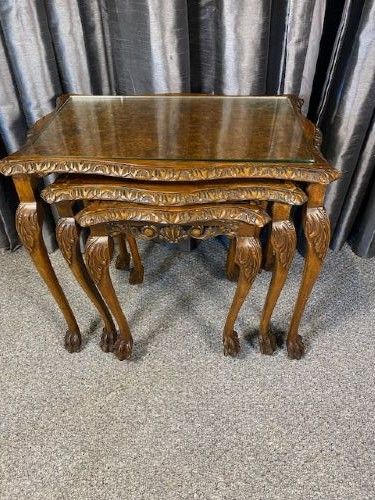
Cabinet makers utilised walnut timber, frequently selecting burr walnut or figured wood for its distinct grain patterns on the main tabletops. Satinwood veneer and floral parquetry inlay add decorative contrast to the primary surfaces of certain pieces. Hardwood frames support these tabletops, sometimes incorporating glass or specialised specimen woods.
Workshop methods combined traditional joinery with precise veneering techniques to ensure each smaller table slides smoothly into the frame of the next. Parquetry tops demonstrate exact geometric wood placement, while floral inlays require careful hand-cutting of contrasting veneers.
Antique Walnut Nest Retail Price Guide 2026
Typical asking prices for walnut nest among the pieces listed under this phrase on Sellingantiques today, from the lower quarter to the upper quarter. They describe what is for sale here now, not the wider market.
Materials recorded across the selection include walnut, burr walnut, glass, hardwood, parquetry, and satinwood veneer.
Distinguishing quality across the range
Quality reveals itself in the selection of the timber veneer and the complexity of the grouping, such as sets comprising four or five tables rather than three. The visual impact of burr walnut figures and the precision of parquetry or floral inlay separate standard utility items from finer workshop productions. Maker attribution, such as pieces by Heal's or Emile Gallé, elevates the standing of an individual set.
The architectural harmony when the tables nest completely together indicates the care taken during initial construction. Cohesion in the grain pattern across graduating surfaces demonstrates a higher level of material planning by the cabinet maker.
Heal's·Emile Gallé
The Antique Walnut Nest Glossary
- Quartetto
- A set of four graduating occasional tables designed to fit together. This term often appears in Edwardian descriptions.
- Burr walnut
- A prized timber harvested from walnut tree growths, featuring swirling, knotty grain patterns. Cabinet makers deploy it on prominent tabletops for visual depth.
- Parquetry
- Geometric mosaic woodwork formed by small veneer pieces laid down in repeating patterns. It creates decorative surfaces on table tops.
- Quintetto
- A matching set of five graduating tables that stack into a single footprint. These larger sets provide substantial surface area while remaining compact.
Antique Walnut Nest: Frequently Asked Questions
How do I choose the right table count?
Consider how much daily surface area you require versus how tight your storage space is. Sets range from three graduating pieces up to expansive five-table quartetto and quintetto arrangements.
Larger configurations take up slightly more floor space when fully nested, so measure your intended corner or beside a sofa before deciding on a size.
Where do these tables work best?
These tables excel in living rooms, studies, and reception spaces where flexible surface area is an advantage. Pull individual tables out for drinks or books, then slide them back together when finished.
Their compact footprint makes them particularly useful beside armchairs or sofas without overcrowding a smaller room.
How do I identify an Edwardian set?
Edwardian examples often lean toward lighter proportions, sometimes designated as quartetto tables with refined legs and subtle stringing. They reflect the revival styles popular at the turn of the twentieth century.
Look for traditional construction methods and timber characteristics typical of the period, such as figured walnut or subtle inlay work.
What defines an Art Deco design?
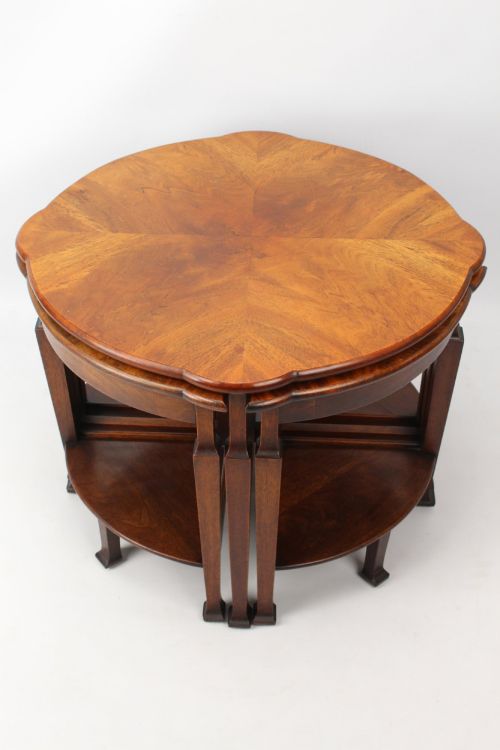
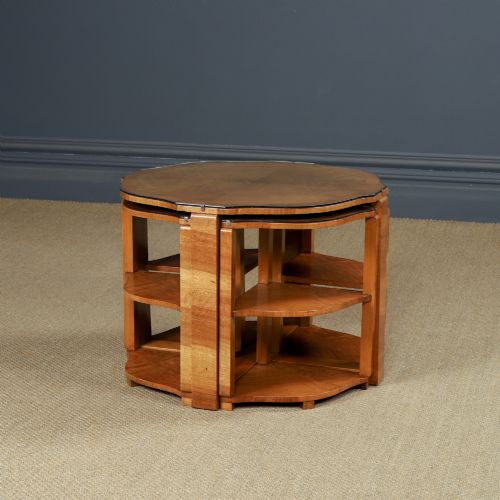
Art Deco pieces from the nineteen-thirties favor geometric forms, circular tabletops, and bold burr walnut veneers. They showcase cleaner lines compared to earlier revival styles.
Such sets frequently include four or five tables, prioritizing streamlined stacking alongside striking grain patterns.