


Antique Walnut Fireplace
These antique walnut fireplace items bring rich timber grain and period character to hearthside schemes, spanning Victorian overmantels to Edwardian coal boxes.
Antique Walnut Fireplace
When you search for an antique walnut fireplace, you find a collection of hearthside furnishings and architectural surrounds rather than a single category of object. The selection centres heavily on overmantel mirrors alongside fireside storage and screens.
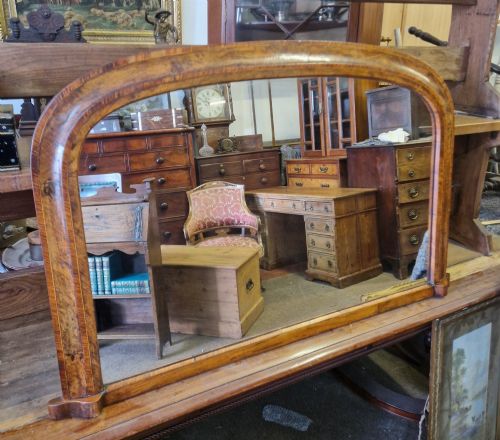
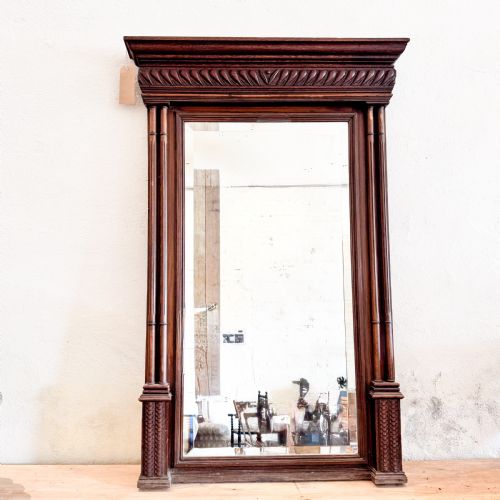
Overmantel mirrors dominate the pieces on this page, appearing in Victorian, Edwardian and later variations with arched crests, inlaid details and brass fittings. These frames were designed to sit directly above the mantelpiece to reflect light and fill the chimney breast wall.
Beyond mirrors, the selection includes coal scuttles, purdoniums, peat buckets and fire screens that complete the functional needs of a period fireplace. These items utilise the deep tones of walnut timber to anchor the hearth within the room.
Materials and construction methods
Makers utilised solid walnut and figured burr walnut veneers over secondary timbers, exploiting the rich grain patterns for decorative impact. Surfaces often incorporate wood inlay, parcel gilding or ebonised details to catch the firelight.
Metalwork played a structural and decorative role, with brass mounts, hinges and handles appearing frequently on coal containers and mirror frames. Bronze fittings and etched glass also emerge in specialised fire screens from the nineteenth century.
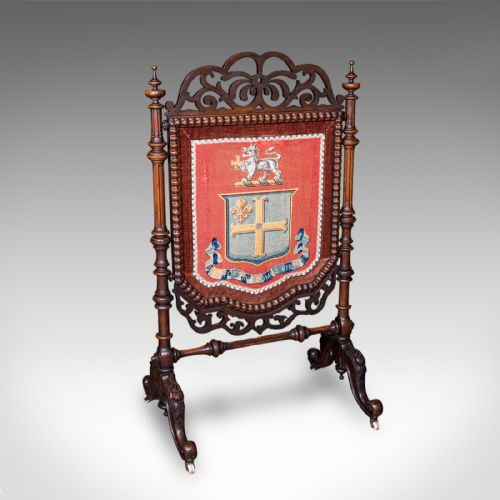
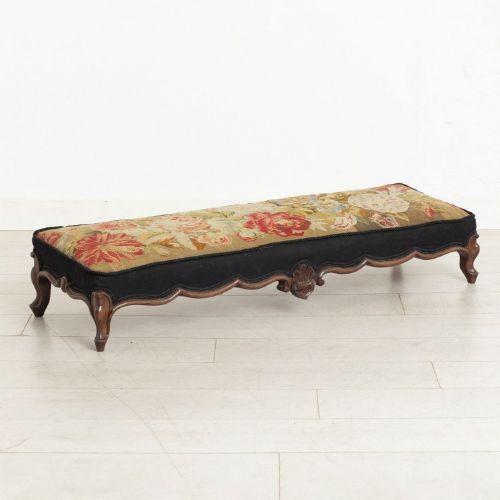
Textiles form an integral part of the fireside screen and footstool categories. Hand-woven needlepoint, woolwork panels and embroidered tapestries are framed securely within walnut surrounds to protect sitters from radiant heat.
Tea stoves and peat buckets double as surprisingly chic places to hide remote controls by the hearth.
Distinctions in quality and execution
The refinement of the timber preparation distinguishes standard production from exceptional examples. Finer pieces display carefully matched burr walnut veneers and intricate wood inlay that demand high carpentry skill.
Hardware and secondary materials indicate the level of workshop attention. Heavy brass mountings, robust coopered construction on peat buckets, and original mirror glass elevate the integrity of the piece.
Decorative ambition separates utilitarian accessories from statement items. Carved crests, turned walnut supports and specialised elements like adjustable bronze doors or detailed needlepoint panels show greater maker investment.
The Antique Walnut Fireplace Glossary
- Overmantel mirror
- A large looking glass designed specifically to hang on the wall directly above a mantelpiece. These frames often match the width of the fireplace below and incorporate carved walnut or gilded detailing.
- Coal purdonium
- A specialised fireside box or cabinet designed to store coal neatly beside the grate. They typically feature a hinged front flap and brass carrying handles.
- Fire screen
- A decorative vertical panel placed in front of an unused fireplace to block draughts or hide the grate. Many examples house needlepoint woolwork or embroidered textile panels.
- Burr walnut
- A specialised timber cut from the warted growths of walnut trees, yielding highly swirling and decorative grain patterns. It was favoured for high-status Victorian overmantel frames and decorative panels.
- Peat bucket
- A traditional coopered wooden container used to hold peat fuel for hearths. These cylindrical vessels often incorporate brass bands and liners.
Antique Walnut Fireplace: Frequently Asked Questions
How do I style an overmantel mirror?
Position the frame centrally above your mantelpiece, leaving a balanced gap between the bottom edge and the shelf. This allows small decorative objects to sit on the shelf without obscuring the glass.
Ensure the mirror is securely anchored to the wall to support its weight, particularly with large Victorian walnut and gilt framed editions.
What is a coal purdonium used for?
A coal purdonium functions as an enclosed storage box for solid fuel kept beside a working fireplace. The sloping front door drops forward to reveal a metal liner that holds the coal.
These pieces kept domestic hearths tidy while displaying decorative walnut grain and polished brass handles in the living space.
Where did fire screens go in rooms?
Fire screens stood directly in front of the fireplace opening during warmer months when fires were not lit. They blocked dark hearth openings and added colour via embroidered woolwork panels.
During winter evenings, people positioned them close to seating areas to deflect excessive radiant heat from the blazing fire.
How do I identify Victorian walnut pieces?
Examine the timber for deep brown tones, often enhanced by burr figuring or inlaid details. Victorian pieces frequently employ substantial walnut framing combined with brass mounts and needlepoint elements.
Check the construction methods and mirror backing to confirm nineteenth-century origins matching styles like Aesthetic Movement or Gothic Revival.