


Antique Wall Weather Glass
An antique wall weather glass measures atmospheric pressure to predict atmospheric shifts, bringing practical historical science and timber craftsmanship into a room.
Antique Wall Weather Glass
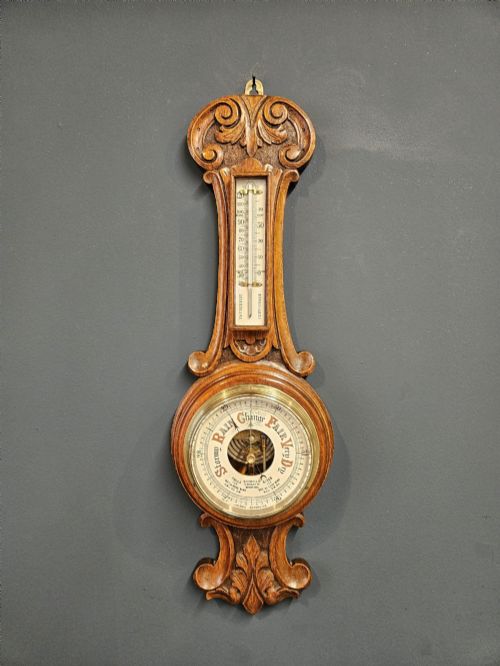
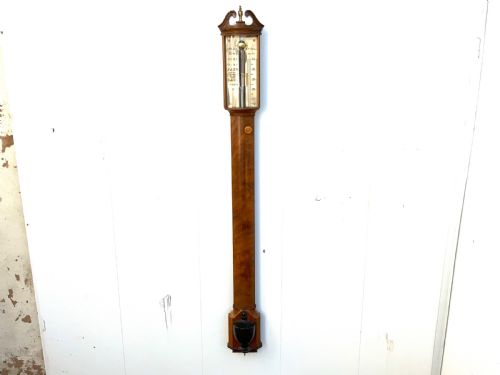
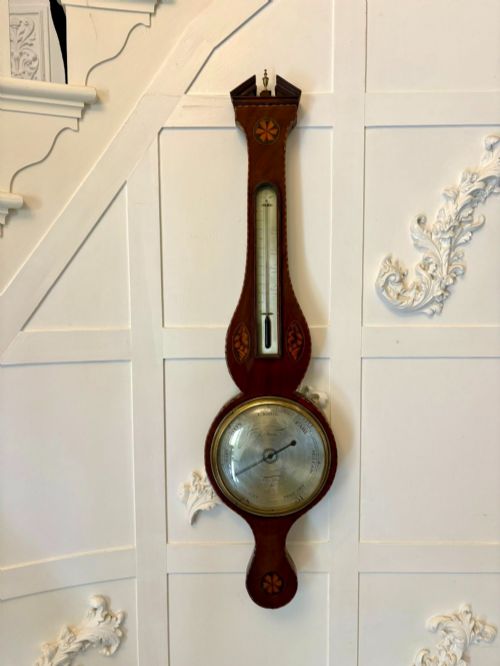
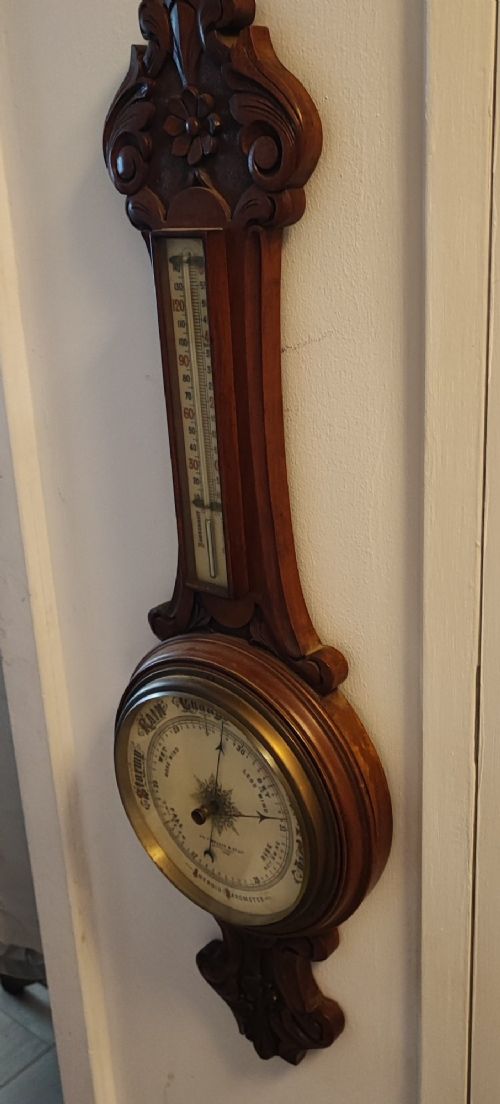
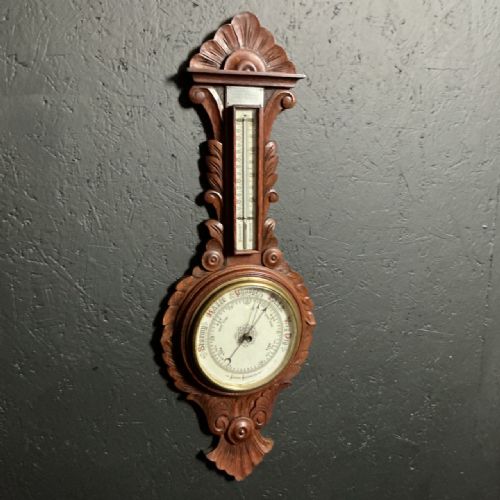
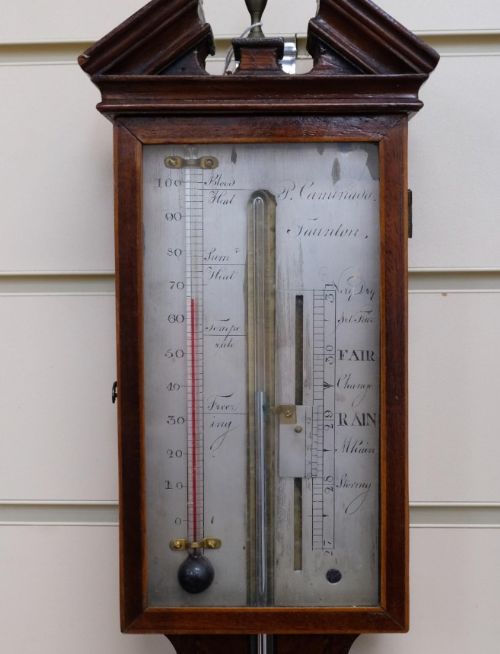
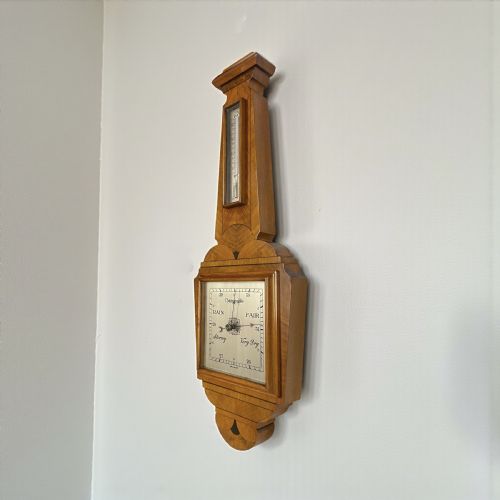
When buyers search for an antique wall weather glass, they encounter wall-mounted instruments designed to record atmospheric changes for domestic use. The selection spans Georgian, Regency, Victorian, and Edwardian eras, predominantly taking the form of stick barometers, wheel barometers, and banjo barometers.
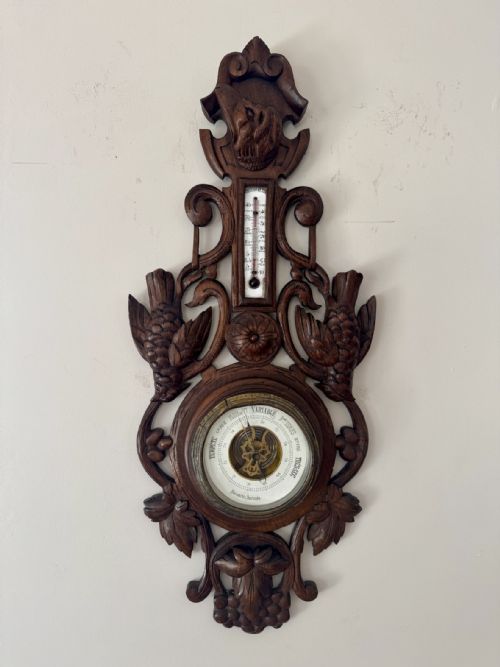
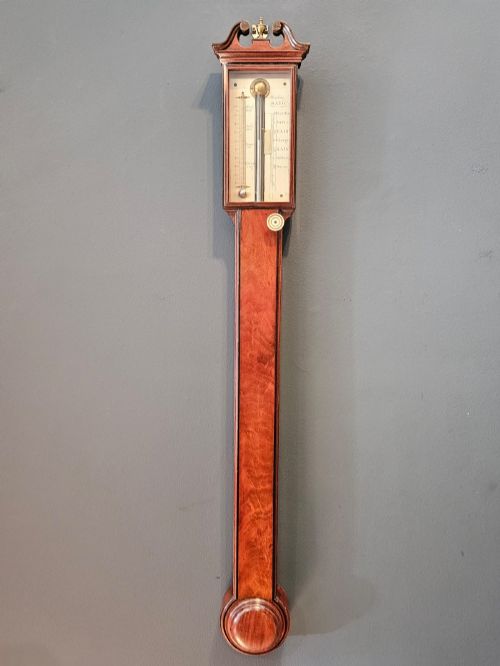
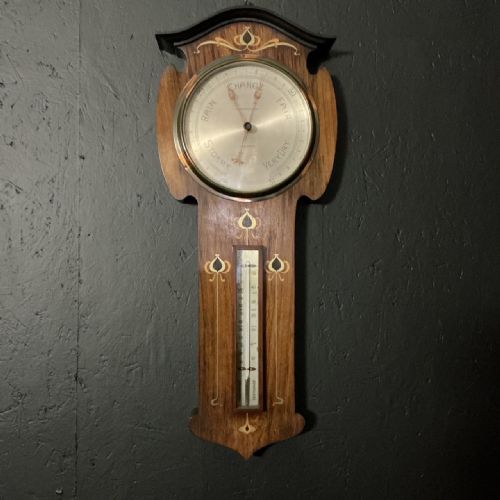
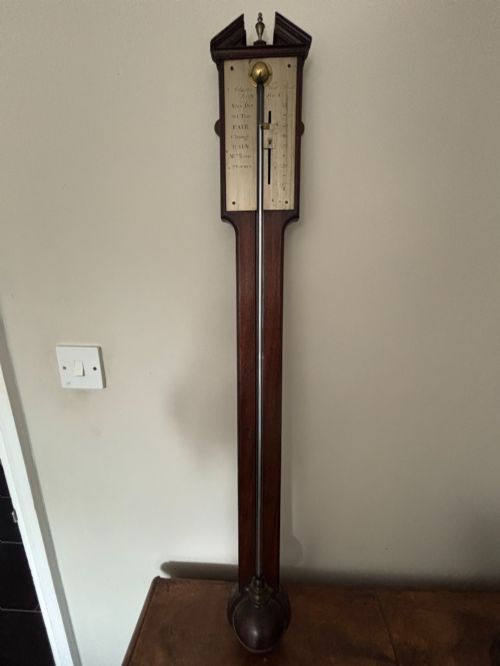
The versions most frequently met on this page include mahogany stick barometers from the Georgian and Regency periods, alongside carved oak aneroid barometers and rosewood banjo barometers from the Victorian and Edwardian periods.
Makers recorded in the evidence range from provincial cabinetmakers to notable London opticians and instrument makers, establishing a tradition of domestic meteorological recording that combines utility with period decorative arts.
Materials and construction
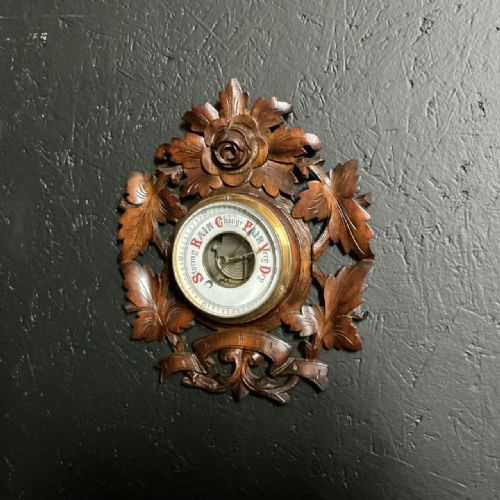
Cases rely heavily on dense timber framing, utilising mahogany, oak, walnut, and rosewood selected for stability and grain figure. Timber components are frequently shaped through carving, as seen in Black Forest examples, or detailed with shell inlay, stringing, and mother-of-pearl accents.
Internal mechanical assemblies incorporate glass tubes filled with mercury in stick barometers, or brass aneroid dials that translate pressure variations onto marked card or metal faces. Bone scales and inset thermometers often accompany the primary register to track temperature alongside barometric pressure.
Listings feature mahogany, oak, walnut, and rosewood cases housing aneroid and mercury mechanisms across Georgian, Victorian, and Edwardian periods.
Distinctions in craftsmanship
The upper tier of these barometers is distinguished by the crispness of timber carving, the depth of shell or mother-of-pearl inlay, and the precision of the engraved register plates signed by established makers. Simpler workshop pieces utilise plainer timbers and straightforward joinery with minimal surface embellishment.
Proportion and case architecture dictate the visual balance of the instrument, where slender stick barometers present a restrained vertical profile while banjo formats allow for broader decorated splats and swan-neck pediments.
Hyde & Sons Sleaford·P. Caminada Taunton·George Adams London·B. Besozzi of Weymouth·Elliott Brothers·Negretti & Zambra·G & L Guanziroli London·Blunt
The Antique Wall Weather Glass Glossary
- Aneroid barometer
- An instrument that measures atmospheric pressure using a flexible metal box rather than liquid mercury. It relies on internal mechanical levers to move an indicator needle across a visible dial.
- Stick barometer
- A vertical instrument containing an open-ended glass tube filled with mercury set against a calibrated scale. This form provides a direct reading of atmospheric height.
- Wheel barometer
- A dial-type instrument connected by a cord and pulley to a float inside a siphon tube of mercury. Pressure changes cause the float to move, turning the pointer around a circular face.
- Banjo barometer
- A wheel barometer housed within a case shaped like a banjo, featuring a bulbous lower section and a long narrow neck. This form became popular during the Georgian and Victorian periods.
- Chinoiserie
- A decorative style reflecting European interpretations of Chinese artistic motifs. It appears on painted or lacquered instrument cases from the Edwardian period.
Antique Wall Weather Glass: Frequently Asked Questions
How do stick barometers work?
A stick barometer uses a tall glass tube filled with mercury inverted over a cistern of the same liquid. Changes in outside air pressure push the mercury up or down the sealed tube.
Readings are taken from the engraved scale mounted alongside the glass column, showing shifts in weather patterns over hours.
What is an aneroid barometer?
An aneroid barometer contains a sealed corrugated metal capsule that expands or contracts as air pressure changes. A system of springs and levers transfers this movement to a dial indicator.
This design avoids the use of liquid mercury, allowing instruments to be built into compact or wall-hanging wooden frames.
Where were these barometers hung?
These instruments were traditionally hung in hallways, libraries, or drawing rooms where household members could check the forecast before going outside. Wall placement ensured stability for the sensitive internal mechanisms.
Placement away from direct heat sources and sunlight protected the wooden cases and maintained mechanical accuracy.
How do I identify the period?
Period identification relies on timber choice, dial design, and case silhouette. Georgian stick barometers feature clean mahogany lines, while Victorian wheel barometers often incorporate heavy carving or mother-of-pearl inlay.
Signatures from recorded makers help anchor specific pieces to active production decades during the nineteenth and early twentieth centuries.