

Antique Wall Thermometer
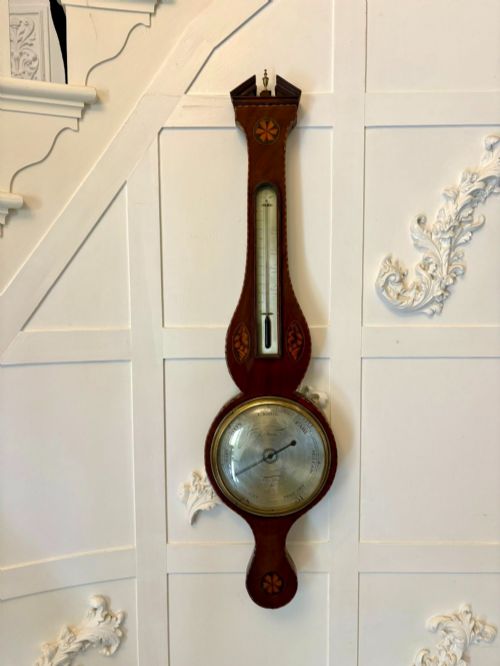
An antique wall thermometer measures atmospheric temperature with mercury or spirit within timber, brass or glass housings crafted across Georgian, Victorian and Edwardian periods.
Antique Wall Thermometer
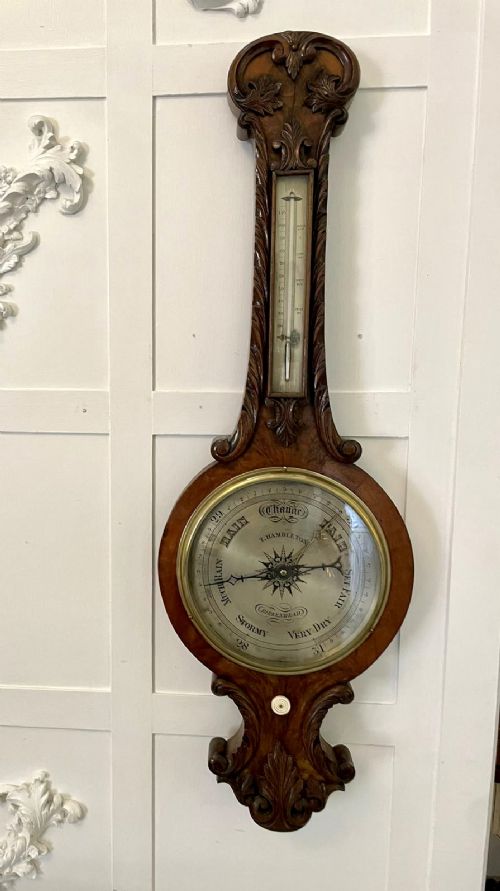
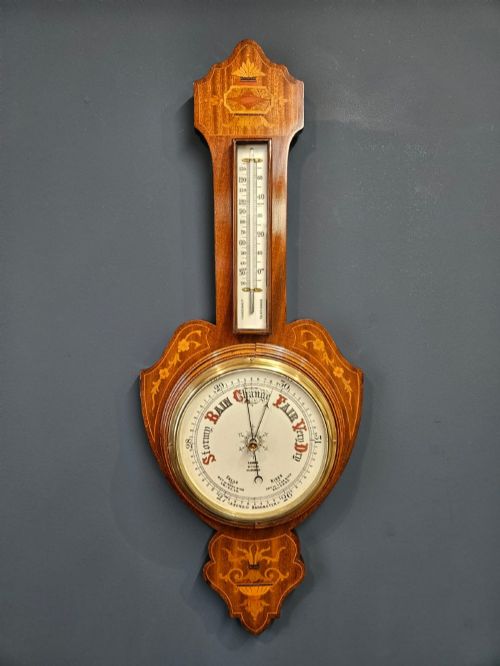
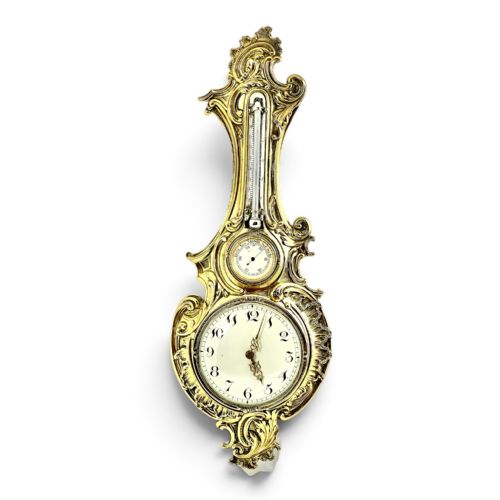
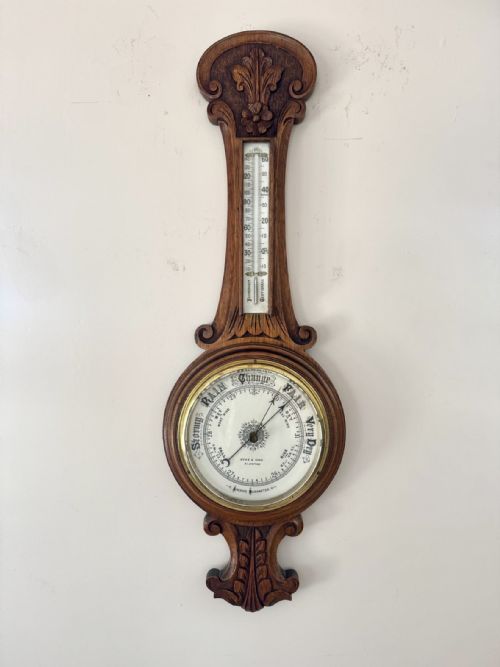
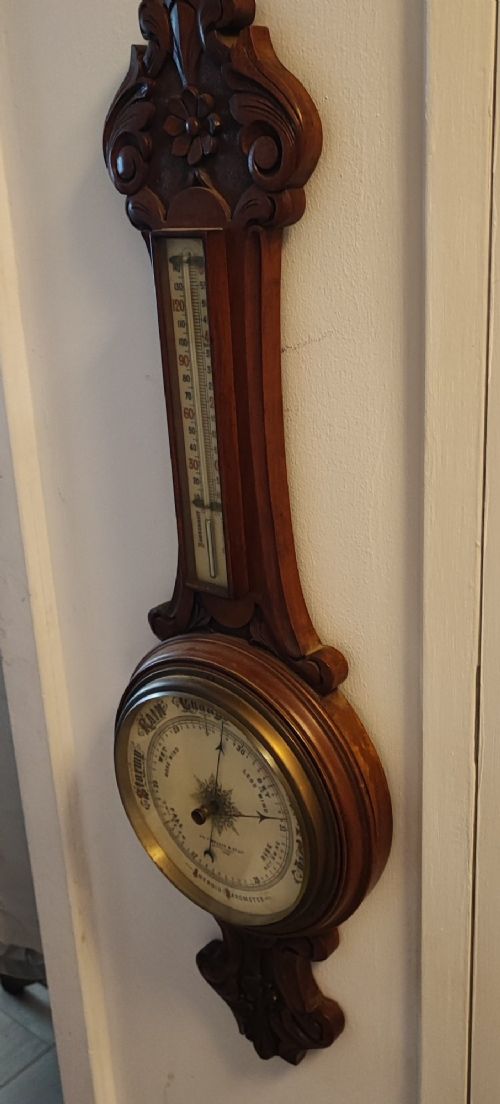
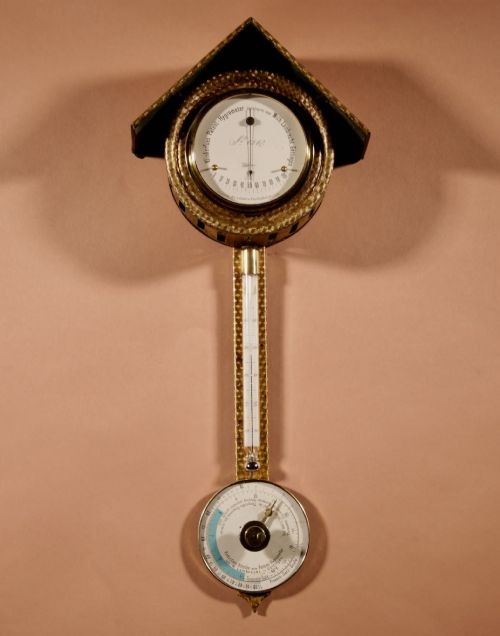
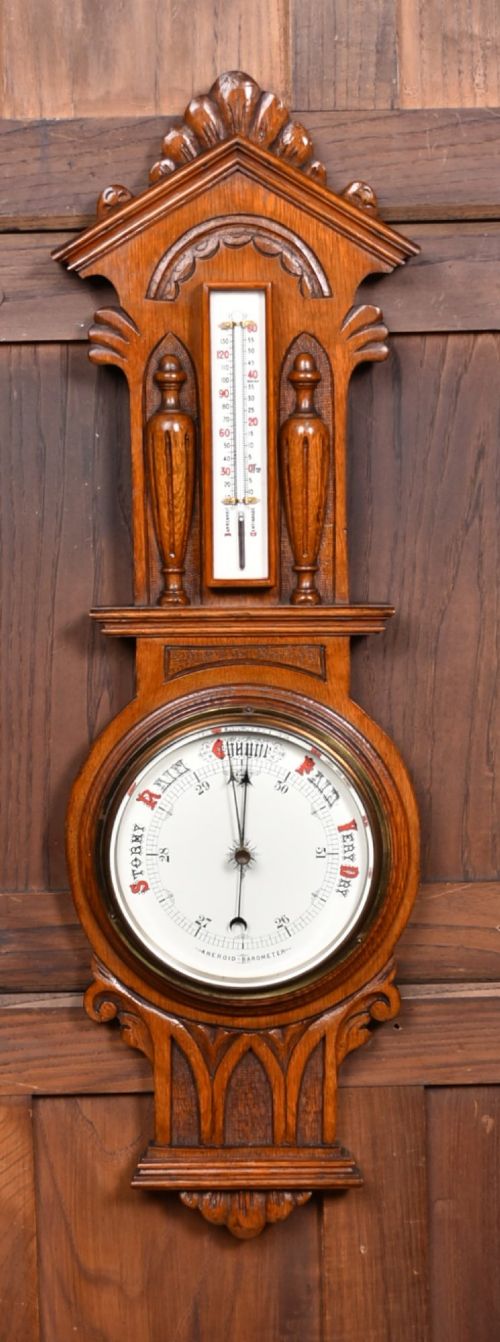
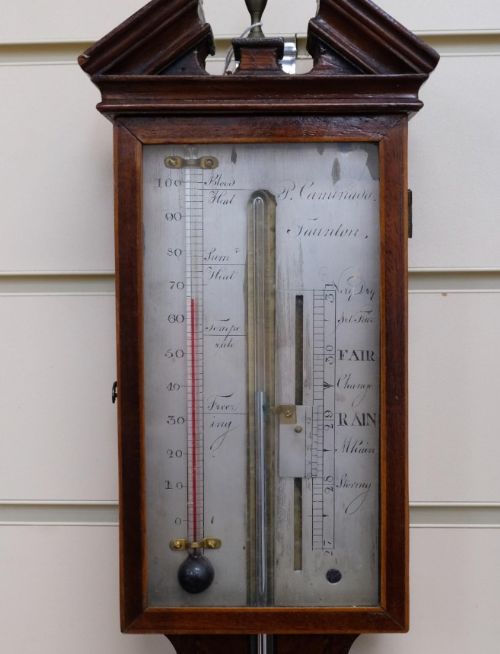
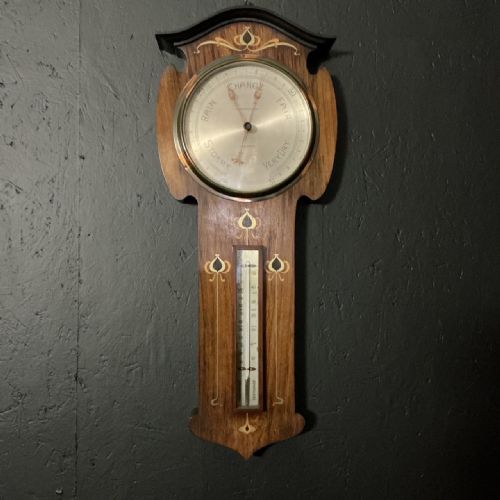
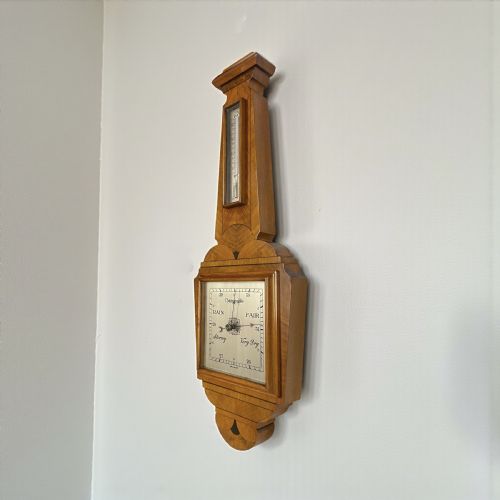
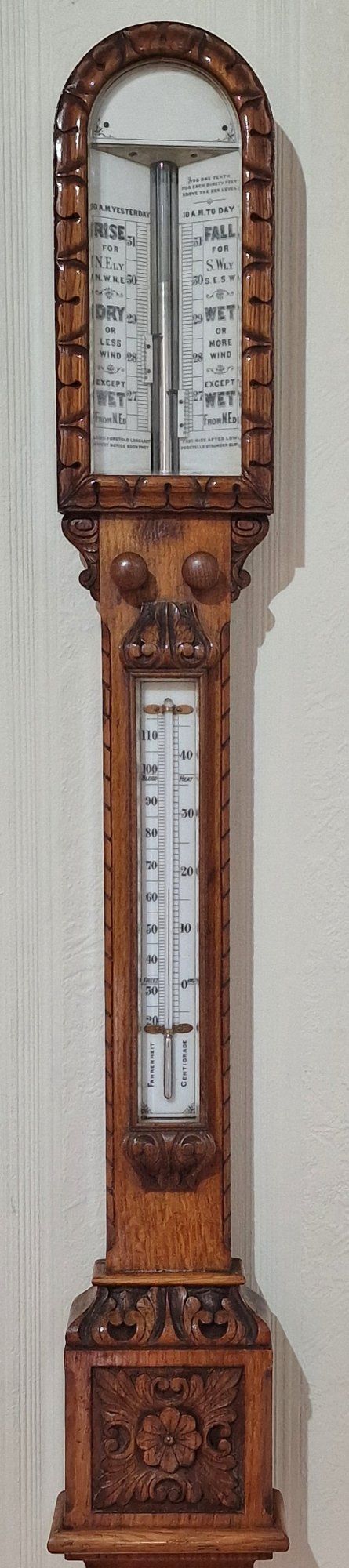
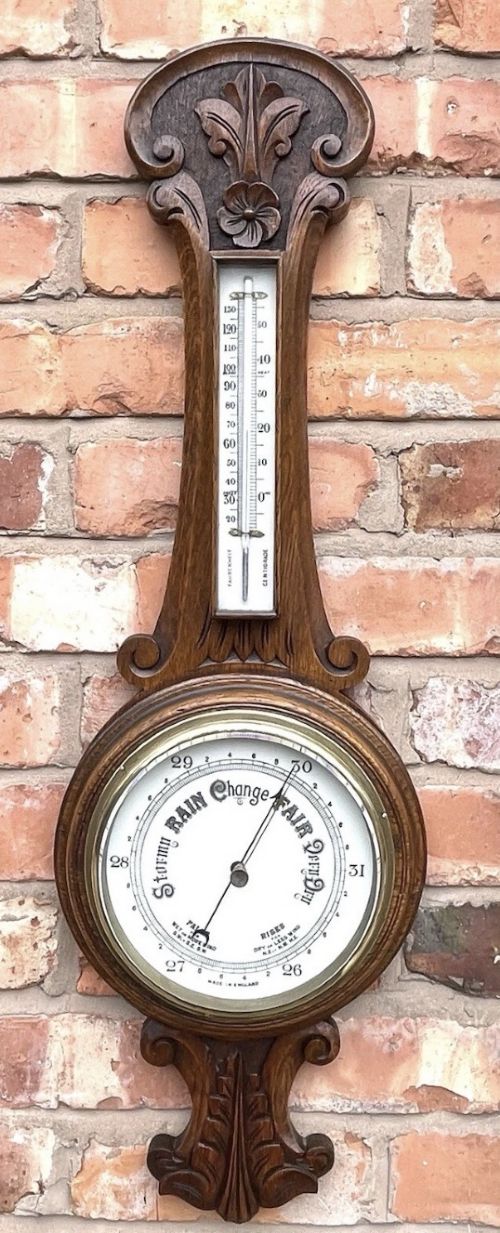
An antique wall thermometer is typically found integrated within larger weather instruments such as banjo barometers, wheel barometers, stick barometers, and combined clock and weather stations rather than standing entirely alone.
The pieces appearing on this page span the Georgian, Victorian, and Edwardian eras, alongside later Art Deco and 1930s examples, reflecting shifts in domestic interior utility and scientific display.
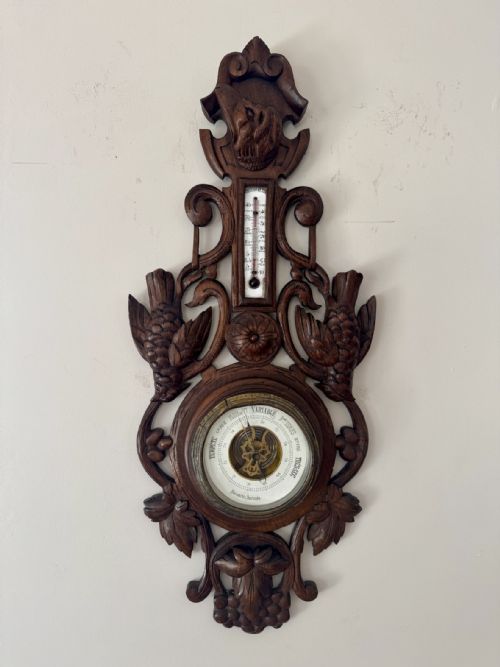
Buyers will encounter variations ranging from simple domestic wooden mountings to elaborate carved Black Forest designs and precision silver-gilt scientific apparatus.
Materials and construction methods
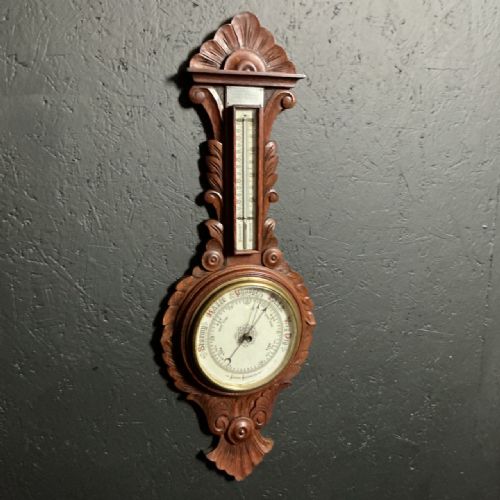
Cabinet makers utilised dense hardwoods including mahogany, oak, walnut, rosewood, and satinwood, frequently embellished with shell inlay, mother of pearl, or deep hand-carving.
Instrument faces paired brass scales and bezels with protective glass plates, housing mercury or spirit columns alongside delicate mechanical aneroid movements or hair hygrometers.
Certain Victorian weather stations feature carved wooden birds keeping permanent watch over the mercury column.
Distinctions in craftsmanship
Quality rests upon the crispness of the timber carving, the precision of cabinet joinery, and the legibility and engraving depth of the metal register scales.
Makers who signed their dials or incorporated complex combined functions such as clocks, hygrometers, and multiple weather indicators represent the higher tier of surviving pieces.
Hyde and Sons Sleaford·Wilh Lambrecht Gottingen·P Caminada Taunton·B Besozzi Weymouth·George Adams Fleet Street·G and L Guanziroli London·Negretti and Zambra
The Antique Wall Thermometer Glossary
- Aneroid barometer
- A barometer that measures atmospheric pressure by the expansion and contraction of a flexible metal box, avoiding the use of liquid mercury. This mechanism often operates the adjacent thermometer scale.
- Banjo barometer
- A household weather instrument shaped like a banjo, featuring a circular dial at the base and a long stem carrying the thermometer and humidity indicators.
- Stick barometer
- A tall, slender weather glass containing a vertical tube of mercury exposed to atmospheric pressure, designed for precise reading of barometric changes alongside the thermometer.
- Hygrometer
- An instrument used for measuring the moisture content or humidity of the air, frequently incorporated into complex nineteenth-century weather stations.
- Silver-gilt
- Silver that has been coated with a thin layer of gold, providing a lustrous and durable finish to interior dials, bezels, and decorative mounts.
Antique Wall Thermometer: Frequently Asked Questions
How do I read an antique wall thermometer?
Read the mercury or spirit column against the calibrated scale engraved onto the metal plate or mounted wood board. Ensure you note whether the scale registers in Fahrenheit or Celsius depending on the period of manufacture.
Compare the thermometer reading with the accompanying barometer needle if your piece is a combined weather station, as rising or falling pressure assists in interpreting weather trends alongside the temperature.
Where should I hang an antique wall thermometer?
Position the instrument on an interior wall away from direct sunlight, radiators, or draughty doorways to ensure stable and accurate temperature recording. Avoid damp rooms that might discolour wooden veneers or corrode internal brass mechanisms.
Secure the piece using appropriate wall fixings suited to the weight of solid oak, mahogany, or rosewood backboards, particularly for larger banjo barometers.
How do I tell a Victorian thermometer from a Georgian one?
Georgian pieces generally feature understated mahogany cases with delicate shell inlay and simple architectural lines. The thermometer scales are often hand-engraved on silvered brass plates.
Victorian and Edwardian examples tend towards heavier carved oak, walnut, or Black Forest styles, frequently combining the thermometer with aneroid barometers and clock movements.
Are mercury wall thermometers safe to own?
Contained mercury columns sealed within glass tubes remain entirely stable during normal domestic display and handling. The glass protects the liquid from exposure unless the instrument suffers severe physical impact.
Handle the instrument with care during relocation, keeping the piece upright where possible if it incorporates a traditional stick barometer tube alongside the thermometer.