


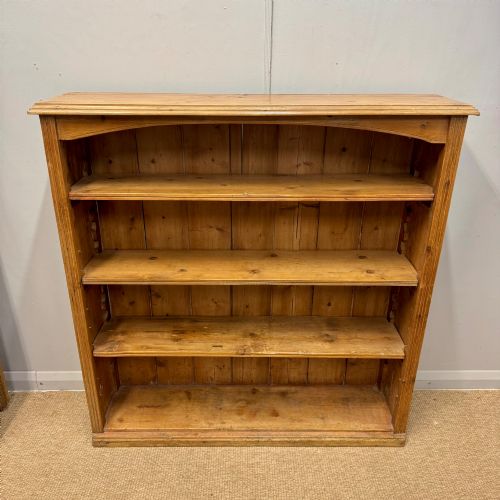
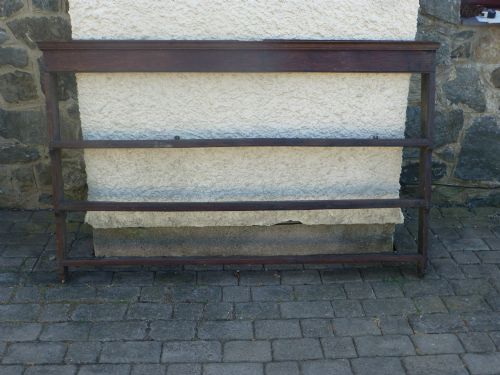
Antique Wall Shelving
Antique wall shelving brings order to a room through timber tiers and carved brackets designed to suspend your books and porcelain securely above the floor.
Antique Wall Shelving
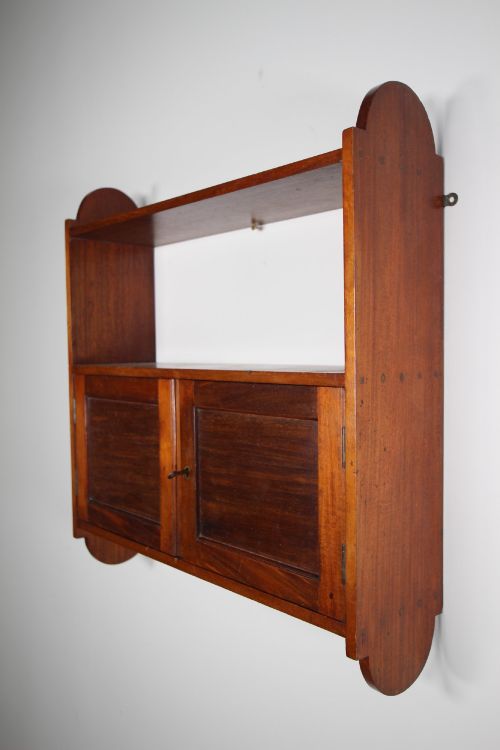
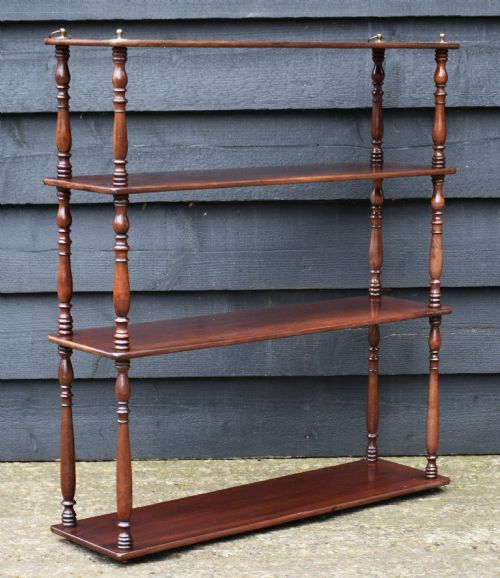
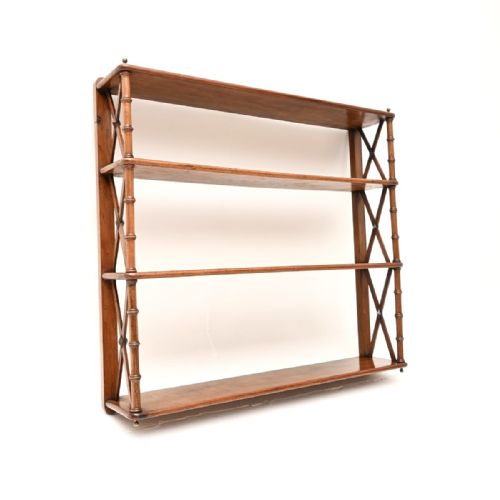
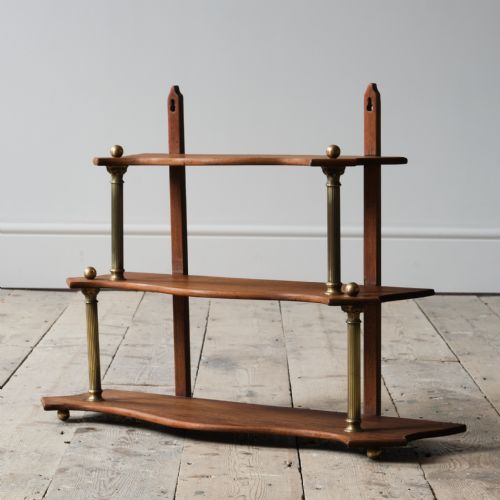
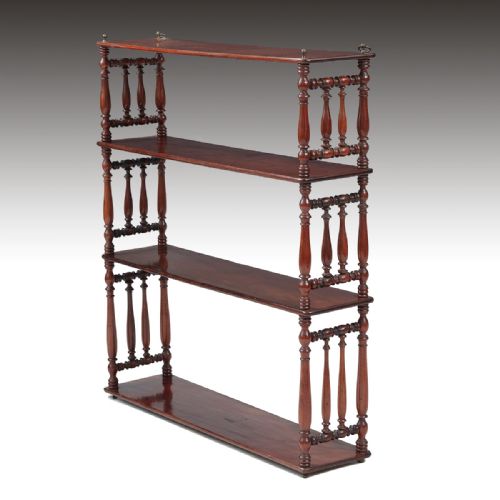
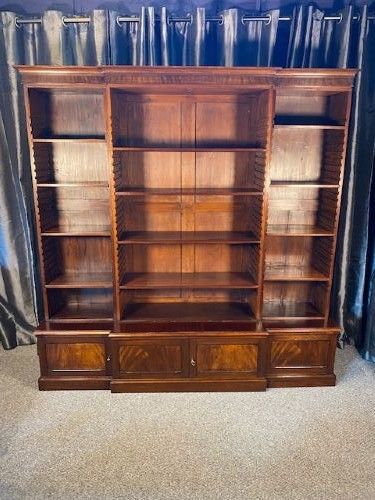
Antique wall shelving encompasses everything from simple hanging pine plate racks to elaborate mahogany bookcases and walnut display tiers. You are most likely to encounter Victorian and Georgian hanging shelves constructed to mount directly onto domestic walls.
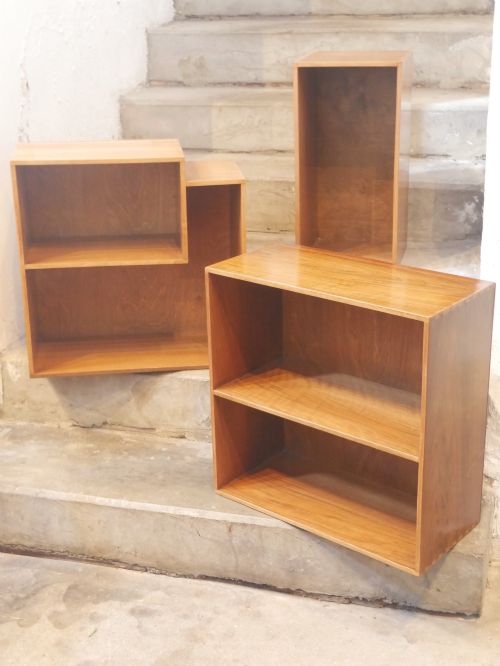
Makers produced these timber and giltwood fixtures in formats ranging from corner brackets to multi-tiered waterfall bookshelves. They served to display ceramics, hold heavy volumes or organise kitchen spaces without consuming precious floor area.
The pieces reflect the domestic priorities of the eighteenth and nineteenth centuries, combining practical utility with decorative carving and inlay. Surviving examples demonstrate how interior storage evolved from bespoke joinery to adaptable wall-mounted furniture.
Materials and construction
Joiners relied heavily on dense hardwoods such as mahogany, walnut, and oak to construct load-bearing shelves and structural brackets. Softer timbers like pine appeared frequently in utilitarian kitchen racks and country cupboards.
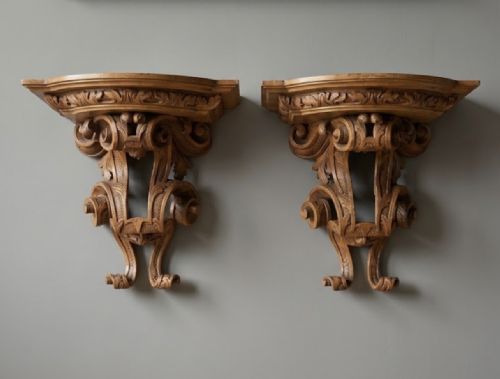
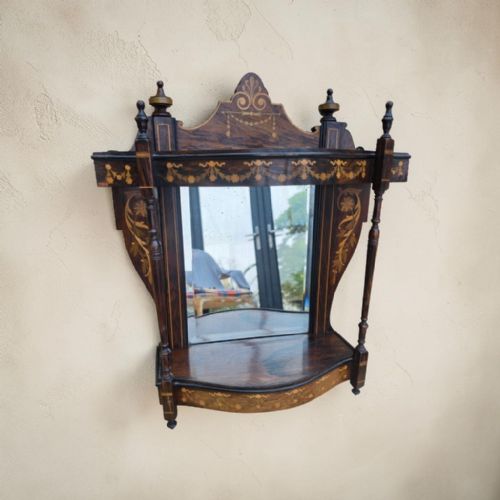
Cabinetmakers utilised dovetail joints, brass fixings, and hand-carved gesso details to finish ornamental pieces like girandoles and corbels. Decorative effects often included hand-painted surfaces, inlaid satinwood, and gilded terracotta.
Structural integrity depended on secure hanging mechanisms integrated into the backboards or robust wooden brackets designed to anchor the timber framework firmly to masonry or lath walls.
Materials span solid timber and glass alongside gilded terracotta, gesso, brass fixtures, and hand-painted decorative wooden surfaces.
Judging the work
Quality rests upon the crispness of the hand-carving and the selection of figured timber grain across prominent display surfaces. Superior pieces display thoughtful proportions and harmonious joinery rather than rushed assembly.
Finer items integrate subtle decorative elements, such as intricate Sorrento inlay or balanced proportions in graduating tiers, which elevate standard utility furniture into accomplished decorative art.
George Edmund Street·Cottier & Co.
The Antique Wall Shelving Glossary
- Bracket
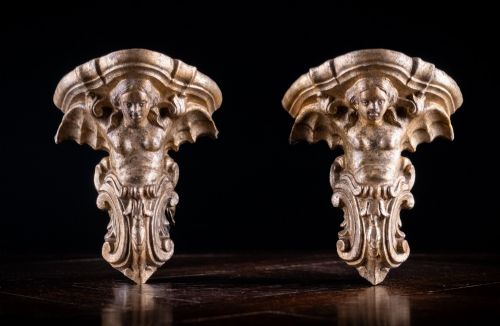
- A supporting structural member projecting from a wall to carry the weight of a shelf or display object. These elements often feature elaborate carving in styles ranging from Rococo Revival to Gothic.
- Corbel
- An architectural bracket jutting from the wall to support a heavy superstructure or shelf. They frequently appear in pairs moulded from terracotta, porcelain, or carved timber.
- Girandole
- An ornamental wall bracket holding candles alongside a mirror to reflect light into the room. This form combines display shelving with reflective glass surfaces.
- Waterfall bookshelf
- A set of open shelves that graduate in depth from top to bottom, following a stepped profile. This design appeared frequently in nineteenth-century satinwood and mahogany.
- Plate rack
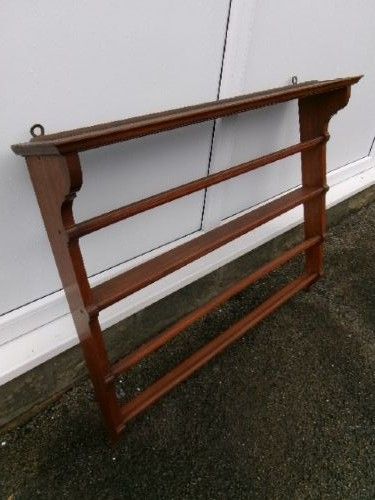
- A wall-mounted timber rack featuring vertical slats or plate rails designed to display ceramic tableware upright. They were staples of Georgian and Victorian domestic kitchens.
Antique Wall Shelving: Frequently Asked Questions
How do I hang antique wall shelving safely?
Heavy mahogany and oak shelves require robust fixings attached directly into wall studs or solid masonry using appropriate screws and rawlplugs. Distribute the weight of books or ceramics evenly across the tiers to prevent structural strain.
Consult a professional joiner if the antique mounting brackets lack contemporary screw holes or if the timber backing appears fragile. Securing the top rail properly ensures the piece bears the load without pulling away from the plaster.
Where were these shelves used in period homes?
Hanging shelves and corner cabinets appeared in libraries for holding leather-bound volumes, in dining rooms for displaying porcelain, and in kitchens for everyday plates and utensils. Smaller brackets and girandoles adorned hallways and drawing rooms to catch candle light.
Their placement depended entirely on practical household requirements and the need to maximise floor space in compact domestic interiors. They offered accessible storage in rooms where large freestanding bookcases would not fit.
How do I tell Victorian shelves from Georgian ones?
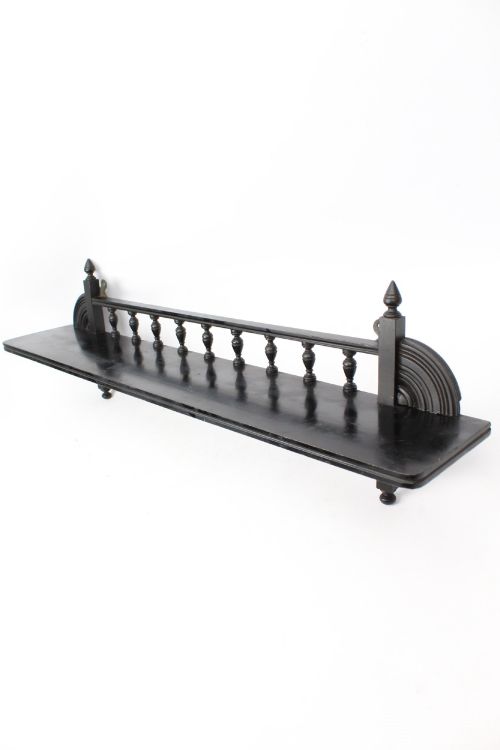
Georgian pieces typically feature dense mahogany or oak construction with restrained classical proportions and minimal applied ornament. Victorian examples often embrace revivalist aesthetics, incorporating ebonised finishes, Gothic tracery, or elaborate Aesthetic Movement designs.
Examining the timber preparation, tool marks on the reverse, and fixture types helps clarify the period of manufacture. Earlier pieces rely on hand-sawn boards and simpler jointing techniques compared to later factory-standard production.
Can antique shelves hold heavy books?
Sturdy eighteenth-century oak and mahogany wall bookcases or deep bracketed shelves can support substantial volumes if securely anchored to a solid wall. Lighter pine or delicate satinwood waterfall shelves suit lighter ornaments and small paperbacks.
Check the integrity of the wall fixings and the depth of the timber shelves before loading them with heavy reference books. Overloading delicate antique ledges risks warping the timber or straining the historical joints.