


Antique Wall Mirror Console
An antique wall mirror console pairs a matched timber table with a vertical glass plate to anchor a room.
Antique Wall Mirror Console
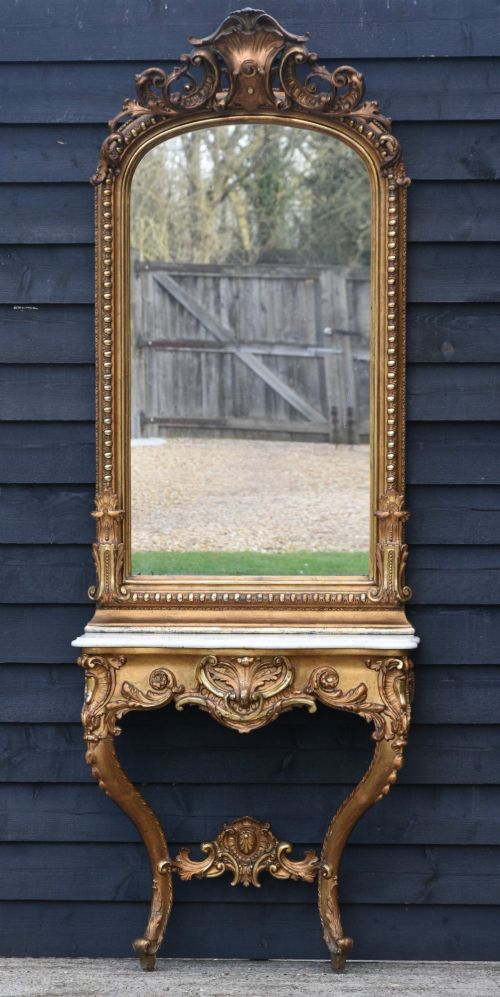
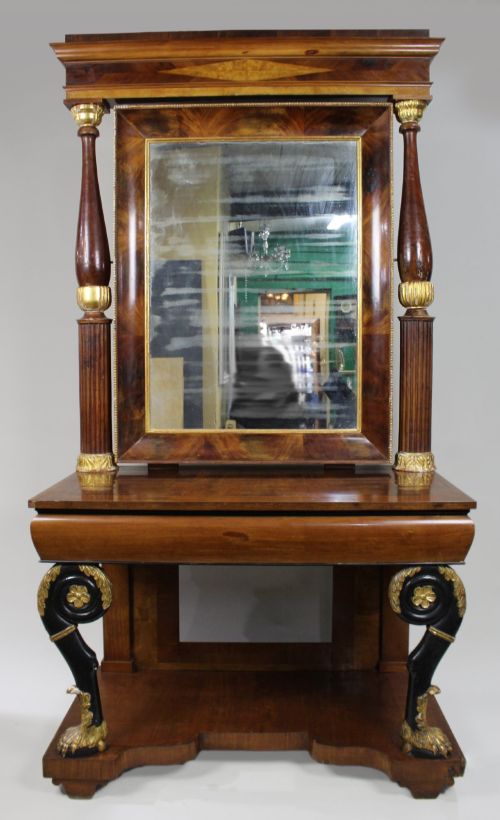
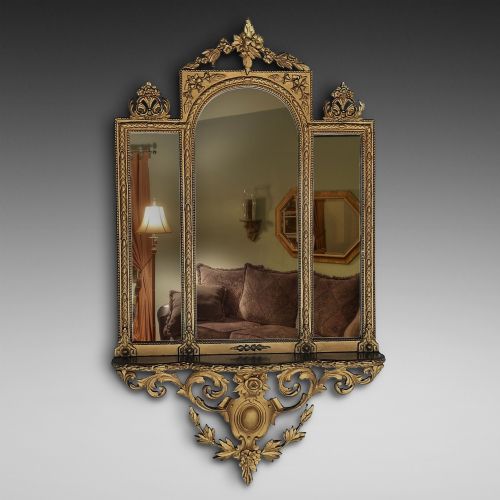
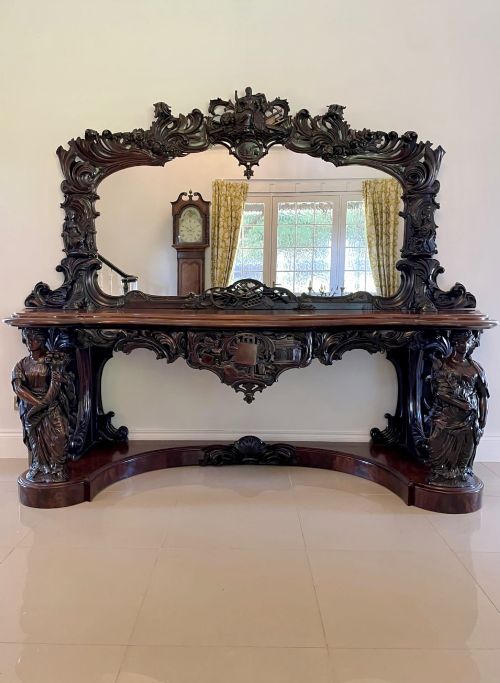
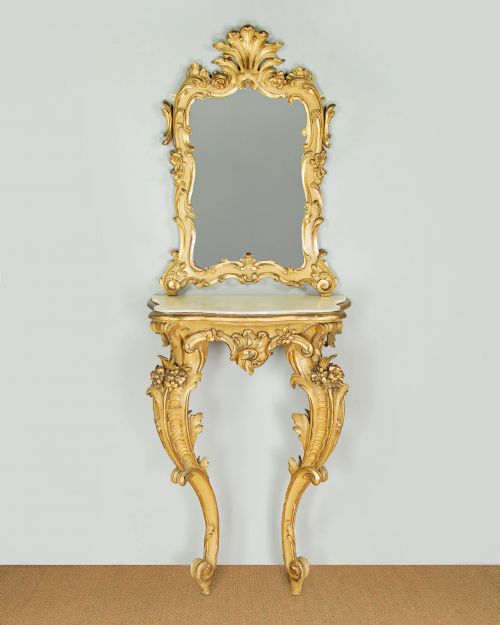
When you search for an antique wall mirror console, you encounter matched sets or pairs consisting of a support table and a vertical glass plate designed to sit flush against a room's interior wall. The table surface often meets a matching pier mirror or overmantel glass, sharing timber, giltwood, or gesso decorative schemes.
The forms span nineteenth century revival styles through to early twentieth century designs, frequently originating from French workshops or English country houses. Pier mirrors and tall console tables dominate the selection, intended to occupy the space between windows or below mantel heights.
Materials and construction methods
Craftsmen utilised dense hardwoods including mahogany, walnut, rosewood, and oak for the foundational console tables, sometimes applying satinwood inlay, ebonising, or parcel gilding. Marble tops appear frequently on tables designed for formal reception rooms, providing a heavy, durable surface.
Frames for the vertical glasses combined carved timber with gesso layers, which accepted gold leaf water gilding or paint finishes. Mirror plates of the period involved silvering techniques applied to glass, housed securely within heavy rebated frames to support the vertical weight.
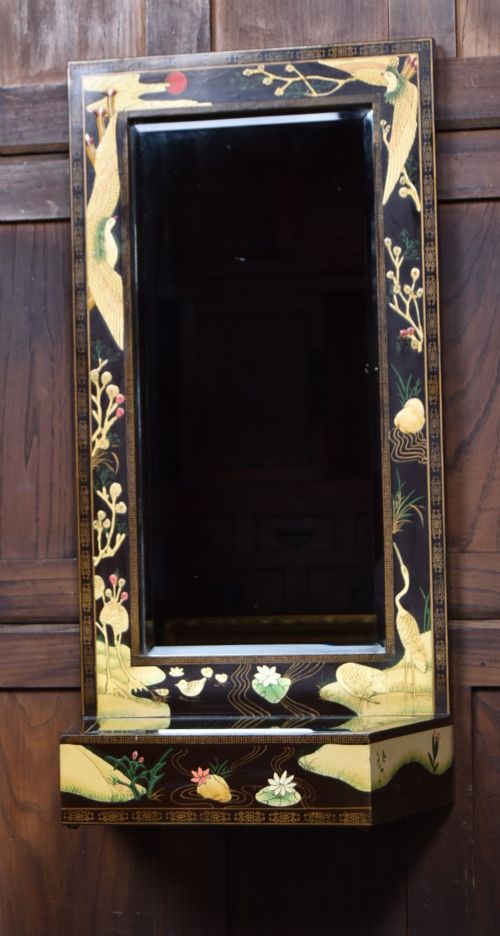
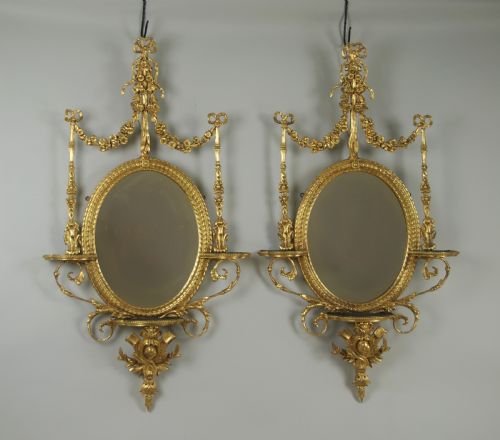
The inventory records French Rococo, Neoclassical, and Arts and Crafts design influences across the console tables and mirrors.
Distinctions in construction and design
The sophistication of the hand-carved gesso and giltwood details separates standard joinery from exhibition quality pieces, particularly within French Rococo and Neoclassical revival items. Crisp relief work in the wooden foliage and scrolls indicates superior workshop output.
The integration between table and glass dictates overall harmony, where matched sets share identical patination, timber grain, and gilding wear. Original marble slabs and intact mercury or early silvered mirror plates elevate the integrity of the ensemble.
The Antique Wall Mirror Console Glossary
- Pier Mirror
- A tall vertical mirror designed specifically to hang on the wall between two windows, often placed directly above a matching console table.
- Gesso
- A plaster-based mixture applied to wood frames to provide a smooth surface for subsequent gilding or painting.
- Trumeau
- A decorative wall panel incorporating a painted scene or mirror glass, frequently paired with a matching console table beneath.
- Console Table
- A table fixed to a wall or supported by front legs, designed to fit tightly against vertical surfaces in formal rooms.
- Water Gilding
- A traditional technique applying gold leaf over wet gesso and bole, allowing the metal to be burnished to a high shine.
Antique Wall Mirror Console: Frequently Asked Questions
How do I style a console table and mirror?
Position the console table firmly against a focal wall, securing the matching mirror directly above it at a balanced height. This creates a cohesive vertical axis suitable for entrance halls or reception rooms.
Utilise the table surface for small display items or lamps, allowing the mirror frame to reflect natural light and open up the surrounding space.
What is a pier mirror?
A pier mirror is a tall, narrow glass plate historically designed to hang on the narrow pier of wall between two adjacent windows. This placement maximised the reflection of natural daylight into gloomy period drawing rooms.
Over time, makers paired these mirrors with matching console tables positioned right below them to form a unified furnishing ensemble.
Are marble tops original to these tables?
Many formal console tables feature fitted marble slabs designed to handle heavy use and provide a cool, decorative surface. These slabs sit unattached or rebated directly into the timber frame.
Examining the underside and edges helps confirm whether the stone matches the age and wear patterns of the timber base.
How do I identify French revival styles?
French revival pieces incorporate curved lines, elaborate scrolling foliage, and asymmetric Rococo motifs executed in carved giltwood or parcel gilt mahogany. These designs draw heavily on eighteenth century aesthetics reinterpreted during the nineteenth century.
Look for deep relief carving and rich gilding that emulate the luxury of royal French chateaux.