



Antique Wall Display Rack
An antique wall display rack turns bare plaster into useful storage, holding plates and books where floor space runs thin.
Antique Wall Display Rack
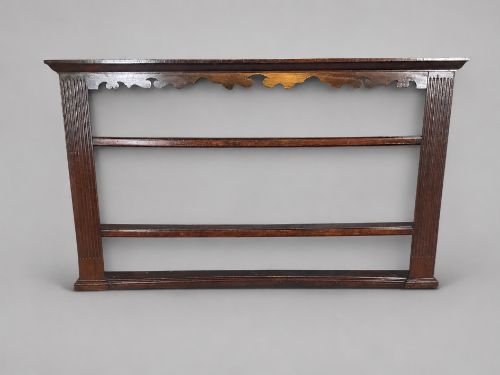
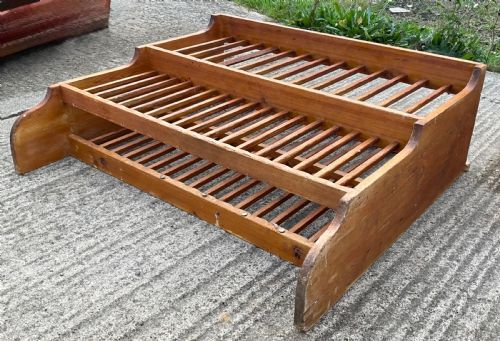
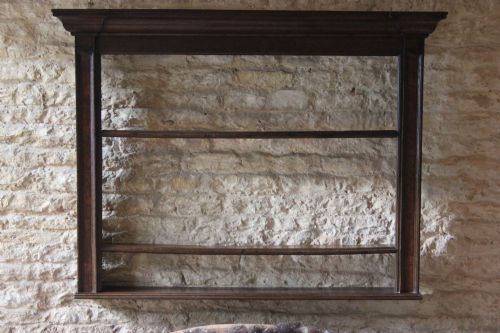
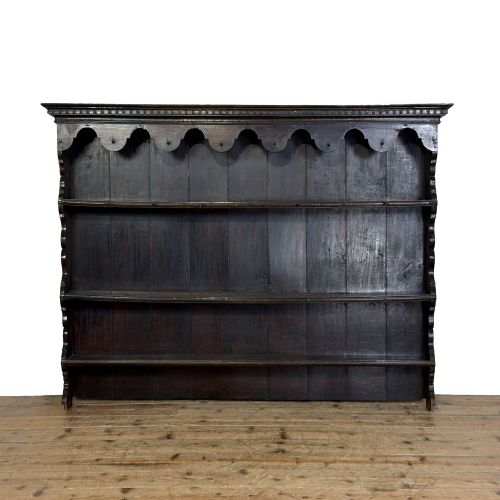
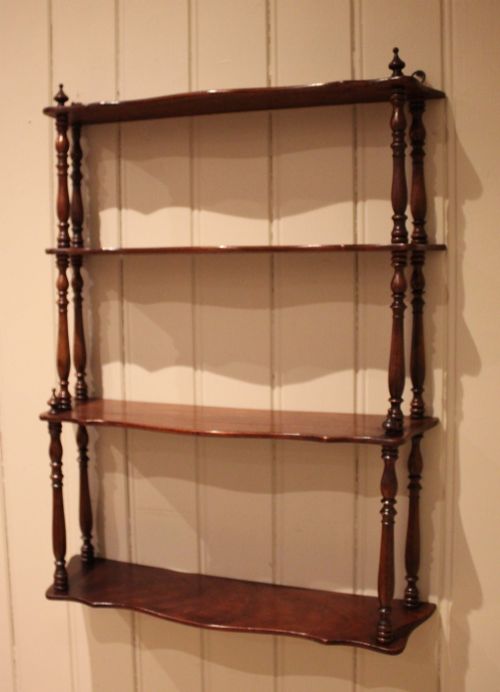
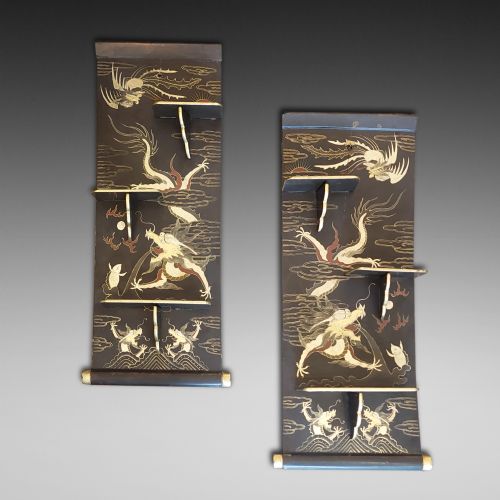
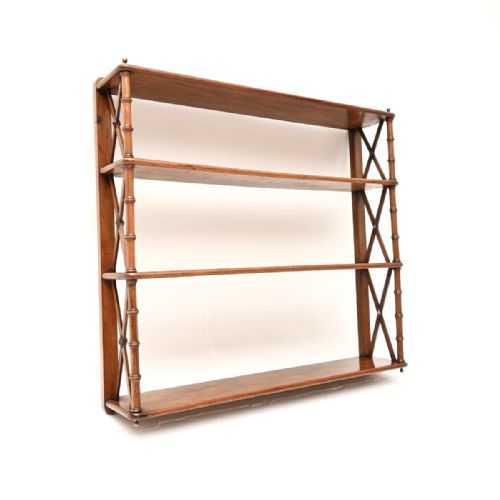
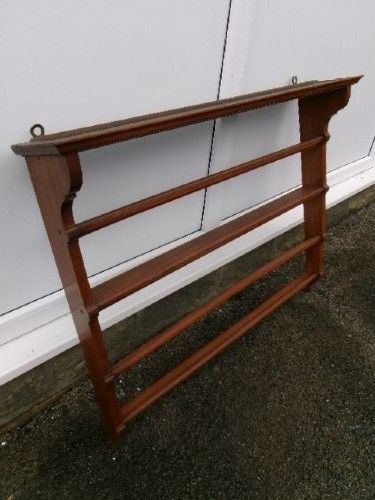
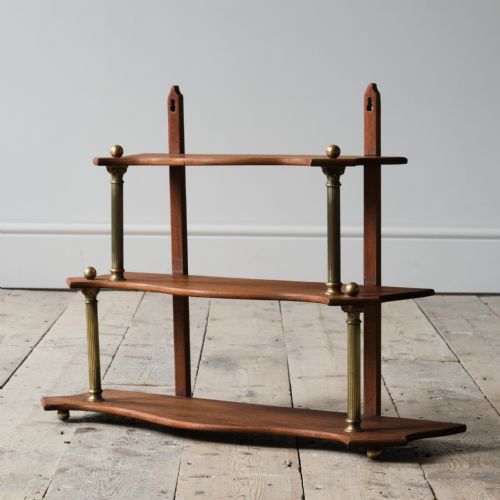
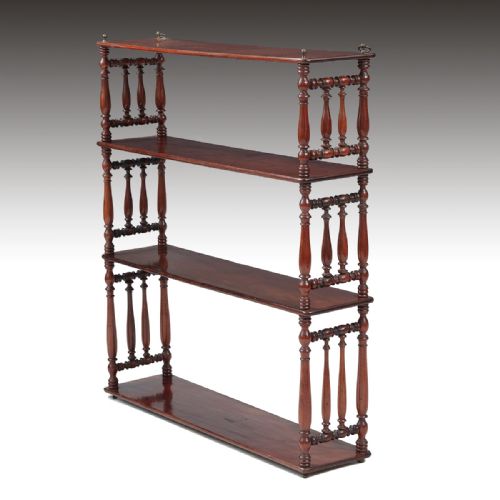
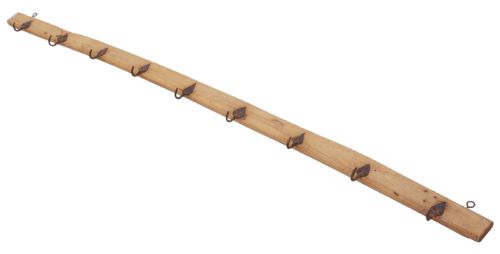
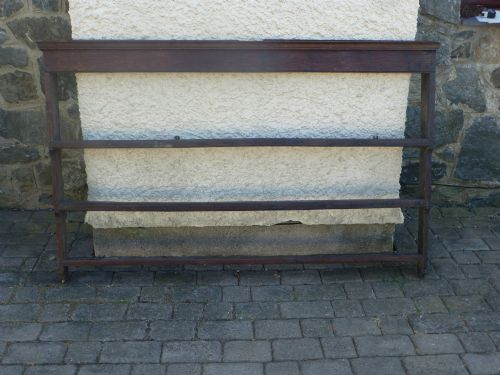
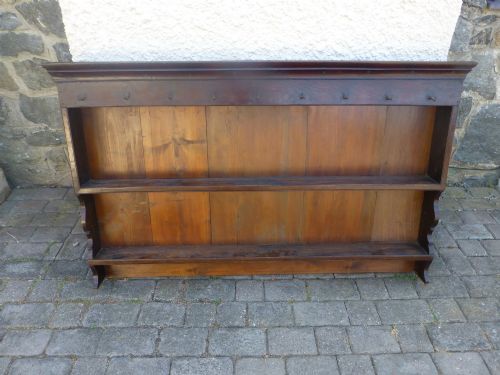
An antique wall display rack is a timber structure designed to hang on vertical surfaces, providing open shelving for domestic display. You will find these pieces taking the form of hanging plate racks, spoon racks, bookcase shelves, and small wall cabinets originating across the eighteenth, nineteenth, and early twentieth centuries.
The most frequent examples on this page are mahogany and oak hanging shelves alongside eighteenth-century delft racks. These forms reflect centuries of domestic kitchen and parlour storage needs, evolving from sturdy utility into decorative wall furniture.
Makers produced these fittings in various regional timbers, ranging from plain country pine to figured walnut and polished mahogany. Styles span the austere lines of the Georgian period through to the carved flourishes of Victorian Gothic Revival and Arts and Crafts simplicity.
Materials and construction methods
Joiners built these racks primarily using native hardwoods like oak and mahogany, often pairing them with secondary softwoods such as pine for interior panels and backs. Selected boards were hand-planed and joined using traditional methods suited to hanging weight.
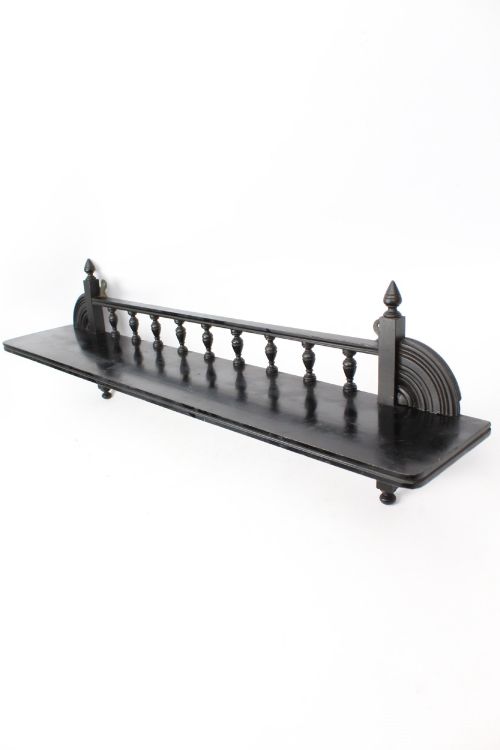
Surface treatments varied widely between plain waxed timber, painted finishes, and ebonised detailing. Eighteenth-century delft racks relied on sturdy peg or dovetail joints to bear the heavy load of earthenware plates, whilst later Victorian and Edwardian iterations utilised precise machine-cut joinery and applied mouldings.
Antique Wall Display Rack Retail Price Guide 2026
Typical asking prices for wall display rack among the pieces listed under this phrase on Sellingantiques today, from the lower quarter to the upper quarter. They describe what is for sale here now, not the wider market.
Listings feature oak, mahogany, pine, walnut, and iron, spanning the Georgian, Victorian, Edwardian, and Regency periods.
Judging the execution and finish
Quality rests in the selection of timber figures and the crispness of the mouldings or carved details. Finer pieces display well-matched grains on visible shelves and proper depth in decorative fretwork or turned supports.
Simpler country pieces gain merit through honest patination and untouched original surfaces rather than complex decoration. The integrity of the hanging points and the solidity of the shelf joints dictate how well the piece survives daily service.
The Antique Wall Display Rack Glossary
- Delft rack
- A wall-mounted timber shelf unit specifically partitioned with plate grooves and retaining rails for displaying ceramic plates. These typically date from the eighteenth century.
- Hanging shelves
- Open wall-mounted timber shelves designed to hold books or small ornaments without taking up floor space. They attach directly to masonry or panelling.
- Marquetry
- Decorative veneer work using various coloured woods to form geometric or floral patterns on the surface. This technique appears on finer nineteenth-century examples.
- Ebonised wood
- Timber stained or treated to imitate expensive ebony, popular during the Victorian period. It provides a stark, dark contrast against lighter walls.
- Trefid spoon
- An early form of spoon featuring a notched, lobed top handle, often associated with seventeenth and eighteenth-century sets found in spoon racks.
Antique Wall Display Rack: Frequently Asked Questions
Were these racks originally meant for kitchens?
Many early oak examples originated in farmhouse kitchens to hold pewter and delftware safely away from bustling work surfaces. Other forms, particularly mahogany and satin birch variations, were made for parlours and libraries.
By looking at the depth of the shelves and the presence of plate grooves, you can usually tell whether a piece was built for utility dining ware or lighter display objects.
How do I clean and maintain antique wall timber?
Dust the surfaces regularly with a dry, soft lint-free cloth to prevent grit accumulation in carved details and joints. Apply a quality beeswax sparingly once or twice a year to nourish the dry antique wood.
Avoid modern liquid polishes containing silicone, as they leave a sticky film that attracts dust and degrades the historic polish over decades of care.
Can I use these shelves for modern paperback books?
Most antique wall shelves accommodate standard books, provided the depth and height clearance match your volumes. Check the internal shelf depth carefully, as older bookcases are often shallower than modern equivalents.
Heavier modern hardbacks can strain antique hanging brackets, so monitor the stability of the wall fixings when loading up open shelves.