




Antique Wainscot Arm Chair
These antique wainscot arm chair examples are solid oak seating pieces built across the seventeenth, eighteenth, and nineteenth centuries.
Antique Wainscot Arm Chair
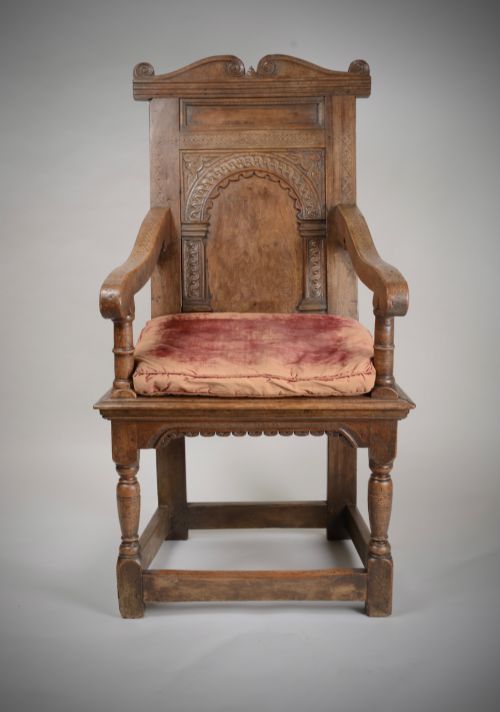
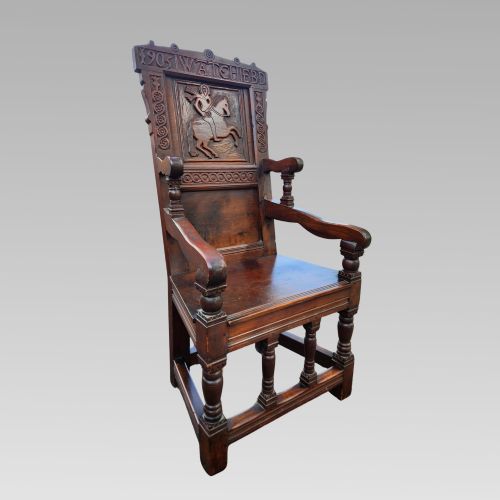
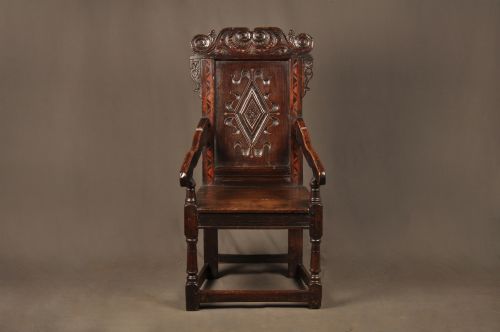
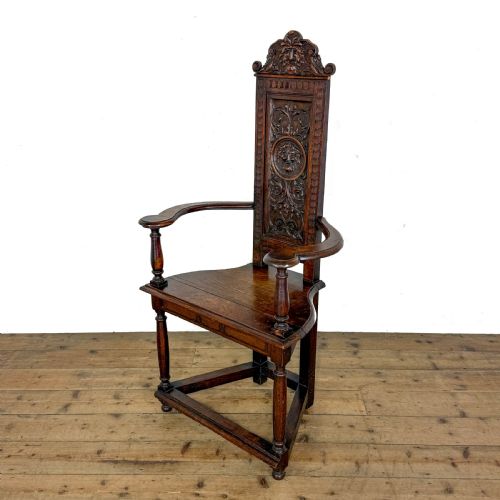
An antique wainscot arm chair represents heavy, panelled wooden seating constructed primarily during the seventeenth century, alongside later revival pieces from the eighteenth and nineteenth centuries. These sturdy forms function as primary seating pieces originating from English, Welsh, Scottish, West Country, and Dutch regional traditions.
The pieces on this page span several stylistic categories including Jacobean, Gothic Revival, Jacobean Revival, and vernacular vernacular designs. Buyers encounter early examples alongside nineteenth-century interpretations sharing the characteristic panelled back and timber armrests.
What varies in quality
The depth and clarity of the carved decoration set individual examples apart, as skilled hands achieved sharper relief and more balanced compositions. Plain panels contrasted with elaborate carving depending on the original commission and regional workshop standards.
Proportion and timber selection dictate the visual weight of each chair, with tightly grained oak retaining cleaner lines over centuries. Originality of construction and the retention of early surfaces separate primary period pieces from later revival interpretations.
Antique Wainscot Arm Chair Retail Price Guide 2026
Typical asking prices for wainscot arm chair among the pieces listed under this phrase on Sellingantiques today, from the lower quarter to the upper quarter. They describe what is for sale here now, not the wider market.
Listings feature solid oak construction spanning the seventeenth, eighteenth, and nineteenth centuries across regional British and Dutch styles.
The Antique Wainscot Arm Chair Glossary
- Wainscot
- A wooden panelled construction method originally applied to interior walls and subsequently used for heavy wooden armchairs.
- Jacobean
- The artistic style spanning the reign of James I, characterised by robust proportions and strapwork carving.
- Vernacular
- Everyday regional building traditions shaped by local materials and practical domestic requirements.
- Mortise and tenon
- A traditional woodworking joint where a projecting tongue fits securely into a corresponding cavity.
- Gothic Revival
- The nineteenth-century architectural and decorative movement that reinterpreted medieval forms and tracery.
Antique Wainscot Arm Chair: Frequently Asked Questions
How do I date an oak wainscot chair?
Dating relies on examining the construction methods, joinery style, and the depth of the carved motifs relative to known period examples.
Changes in tool marks and regional building traits also help place a chair within the seventeenth, eighteenth, or nineteenth centuries.
Where were these chairs used originally?
These heavy seating pieces stood in the principal rooms of seventeenth-century homes, often reserved for the head of the household.
Later examples served similar domestic roles in halls, parlours, and farmhouses across English, Welsh, and Scottish regions.
How should I care for historic oak furniture?
Keep wooden seating away from direct heat sources and sudden humidity shifts to prevent the solid oak panels from splitting or warping.
Applying a traditional beeswax polish occasionally helps nourish the timber surface without building up excessive residue.
What is the difference between Jacobean and revival pieces?
Period pieces date from the original seventeenth-century era of manufacture, displaying authentic wear patterns and period construction techniques.
Revival examples replicate these earlier styles during the nineteenth century using period-appropriate oak and traditional woodworking methods.