


Antique Victorian Ring
An antique victorian ring brings historic gold work and old-cut stones together into a personal piece of finger jewellery that carries deep nineteenth-century sentiment.

Antique Victorian Ring
An antique victorian ring encompasses gold bands, gemstone clusters, and sentimental designs originating primarily from the nineteenth century and the early twentieth century. Buyers seeking this category encounter heavily detailed cluster settings, gypsy mounts, and plain commemorative bands shaped by distinct historical periods.
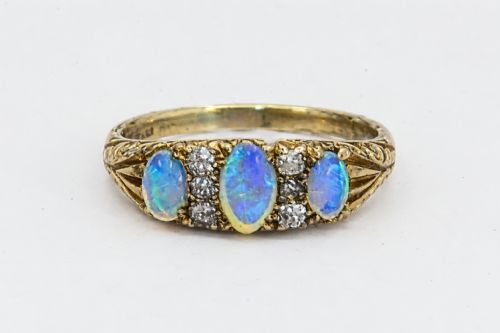
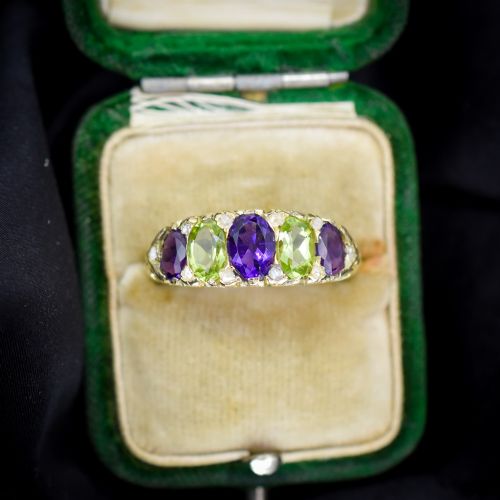
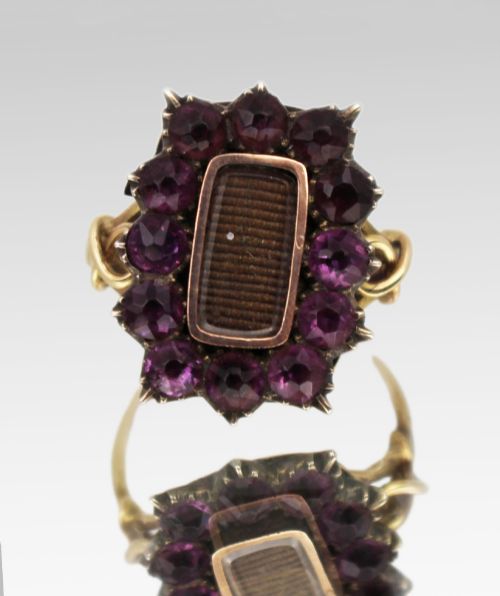
The selections span mid-victorian, late victorian, and Edwardian styles, reflecting changing aesthetic preferences across decades of hand assembly. Common configurations include three-stone arrangements, multi-stone starbursts, and intricate navette shapes designed to sit flat along the finger.
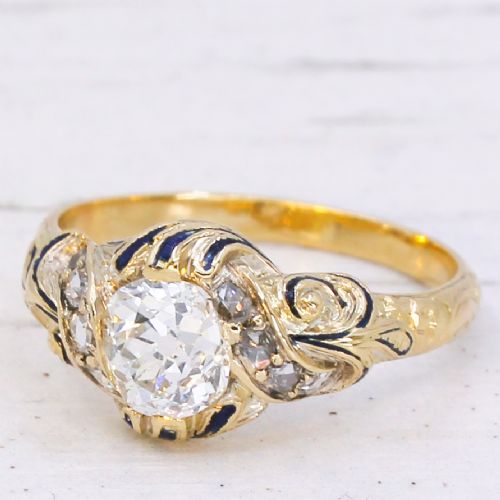
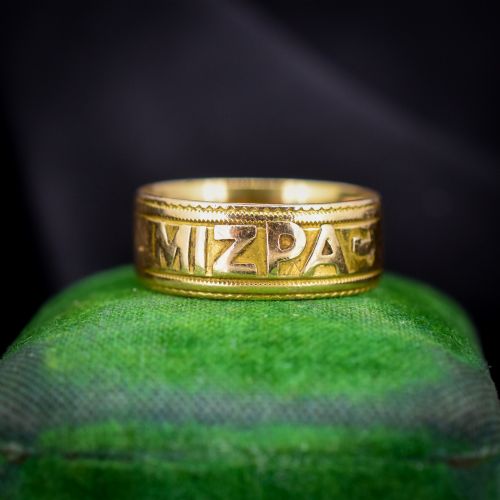
Beyond standard decorative wear, many surviving examples incorporate symbolic motifs such as snakes, buckles, flowers, and mizpah inscriptions. These specific designs record personal promises, mourning customs, and regional hallmarking traditions preserved in precious metal.
How they were made
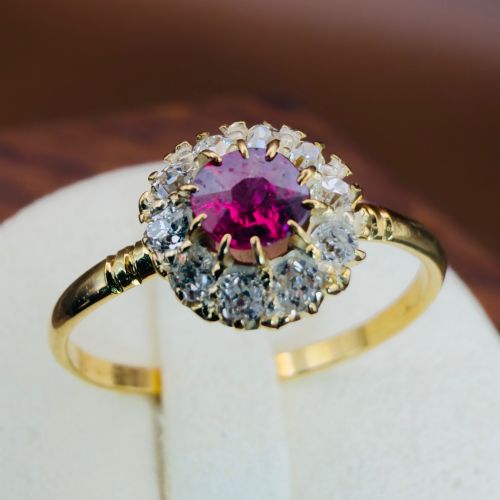
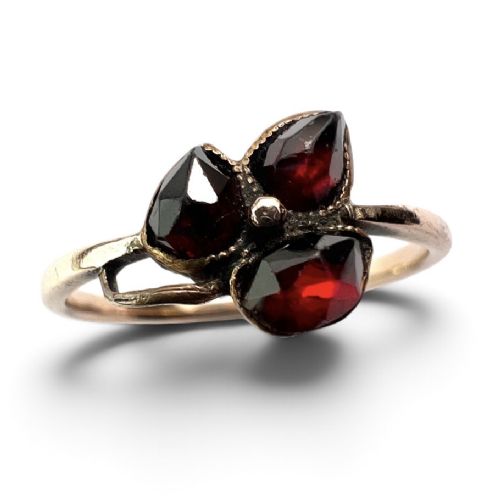
Makers constructed these pieces predominantly in 18ct yellow gold, 15ct gold, and 9ct gold, occasionally integrating platinum accents during the later periods. Gemstones such as old-cut diamonds, rubies, sapphires, garnets, opals, and pearls were hand-set into bezels, starbursts, or claw configurations directly onto the precious metal bands.
Metalsmiths employed casting, hand engraving, and soldered wirework to achieve intricate motifs like snakes, lovers knots, and floral clusters. Hallmarks stamped into the interior shanks record assay office locations and specific dates of manufacture, providing clear documentary evidence of their origin.
Listings feature 18ct yellow gold, 15ct gold, and 9ct gold bands paired with old-cut diamonds, garnets, rubies, and opals.
What varies in quality
The standard of an antique victorian ring depends heavily on the crispness of the hand-chased detail and the integrity of the original setting. Superior pieces maintain sharp relief on engraved motifs and secure, undamaged gemstone arrangements that show no sign of modern re-tipping.
The choice and cut of the stones also dictate the tier of the piece, with well-matched old mine-cut diamonds and saturated natural rubies or sapphires elevating the work. Additionally, clear legible hallmarking adds verifiable provenance to the overall construction.
Waring and Gillows
The Antique Victorian Ring Glossary
- Old mine cut
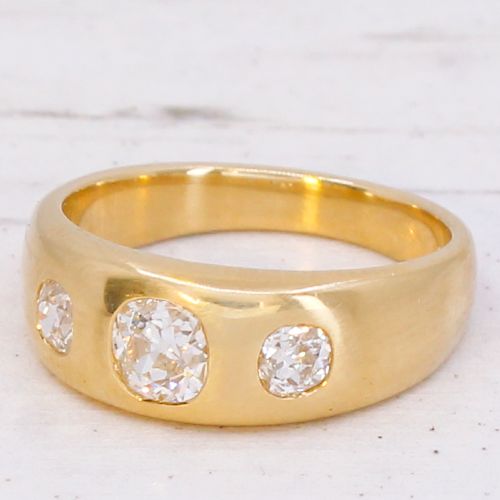
- A diamond cut characterised by a cushion shape, a high crown, and a large culet facet, typical of nineteenth-century stones. These diamonds perform uniquely under candlelight.
- Gypsy ring
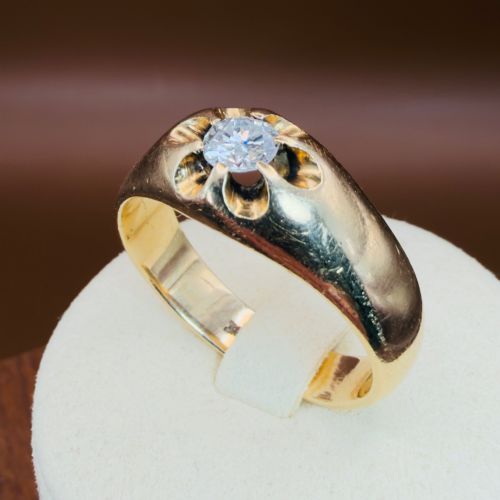
- A band style where gemstones are flush-set directly into the thick gold metal surface. This smooth profile gained popularity for daily wear during the late nineteenth century.
- Navette
- A boat-shaped or marquise setting that points longitudinally along the finger. This elongated outline maximises visual presence using multiple clustered stones.
- Mizpah
- An inscription or motif denoting an emotional bond between people separated by distance. These pieces often serve as tokens of remembrance or affection.
- Trilogy ring
- A three-stone ring design representing past, present, and future. The central stone is frequently flanked by two matching gems in a claw or boat setting.
Antique Victorian Ring: Frequently Asked Questions
How do I identify a Victorian ring?
Examination of the metal fineness marks, the style of the stone cutting, and the construction methods helps establish the period. Old mine-cut diamonds and specific gold purities like 15ct point directly to nineteenth-century production.
Assay office stamps and date letters inside the band provide precise chronological markers. Comparing the decorative motifs against documented historical styles confirms the era.
Were these rings worn daily in the past?
Many nineteenth-century examples, particularly wedding bands and durable gypsy settings, were manufactured for continuous everyday wear. Sturdy gold shanks and flush-set stones allowed owners to keep them on during daily tasks.
More delicate configurations featuring pearls or soft opals required greater care and were often reserved for special occasions. Surviving wear patterns on the gold surface reflect these historical usage habits.
How should I clean my antique ring?
Gentle cleaning with warm water, mild soap, and a soft brush removes accumulated surface oils without stressing old settings. Harsh chemical dips must be avoided, as they damage softer organic gems like pearls and opals.
Checking the security of the claws under magnification before cleaning prevents accidental stone loss. Professional inspection ensures fragile settings remain stable for continued wear.
Can antique rings be resized safely?
Most gold bands can be adjusted by a skilled jeweller who understands historic construction techniques. The presence of intricate hand engraving or channel-set stones around the entire band requires careful consideration.
Working on the underside of the shank preserves the original hallmarks and top decorative elements. Consulting a specialist ensures the structural integrity of the metal is maintained.