




Antique Vernis Martin
Antique vernis martin pieces are painted furniture bearing the distinctive translucent lacquer tradition, bringing French Rococo elegance and pictorial charm into a room.
Antique Vernis Martin
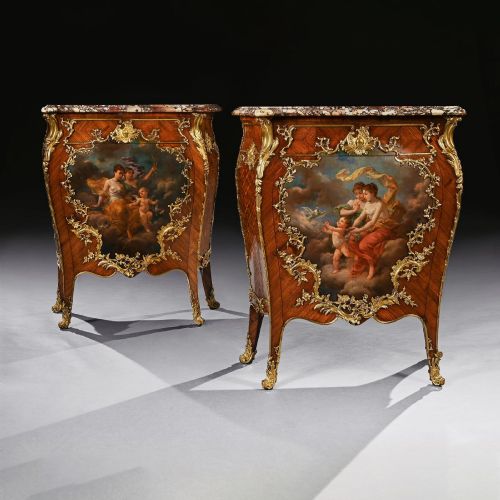
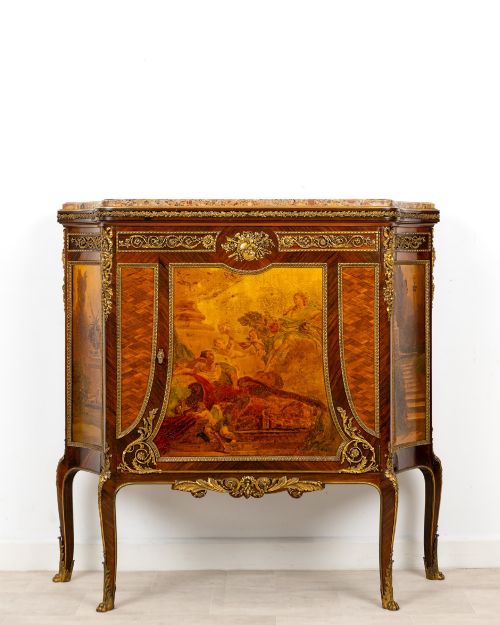
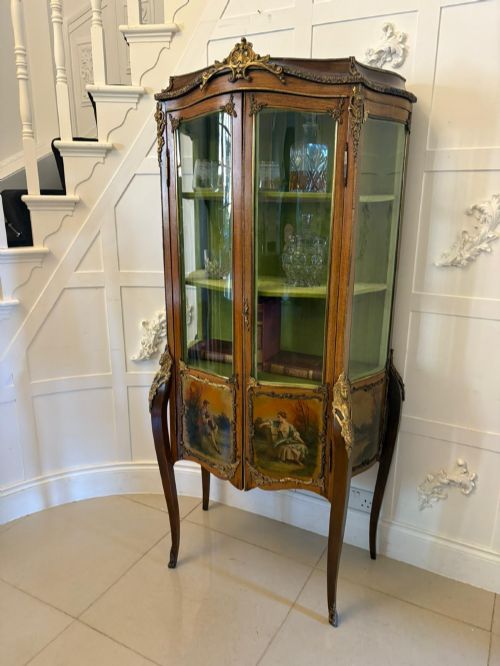
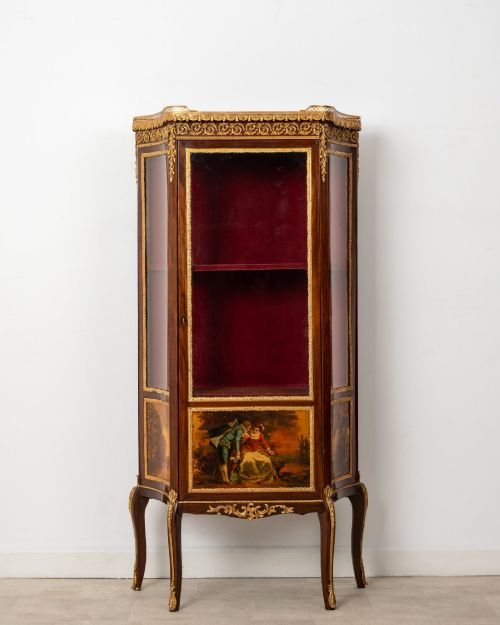
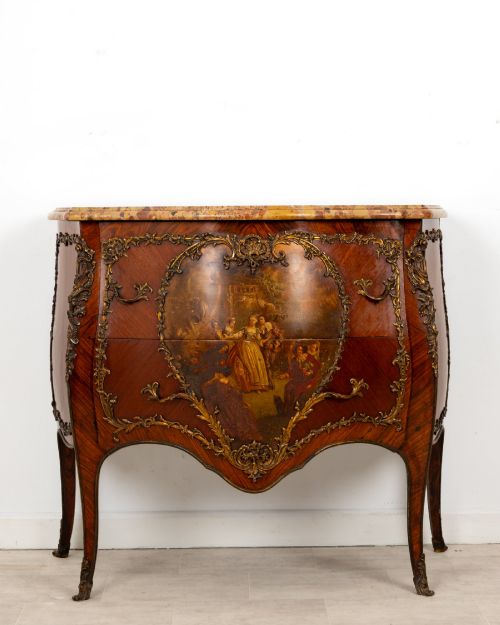
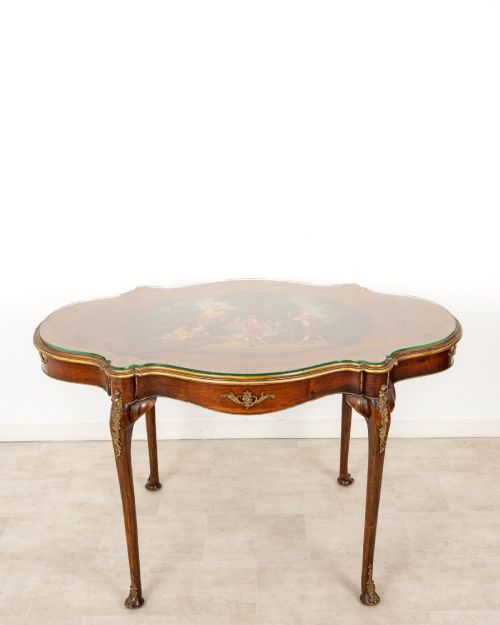
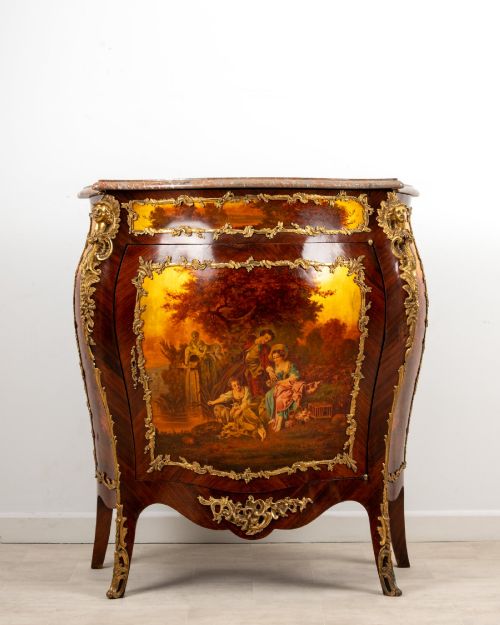
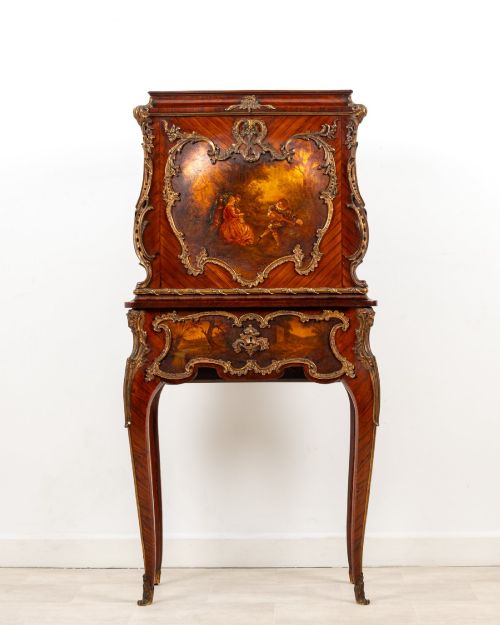
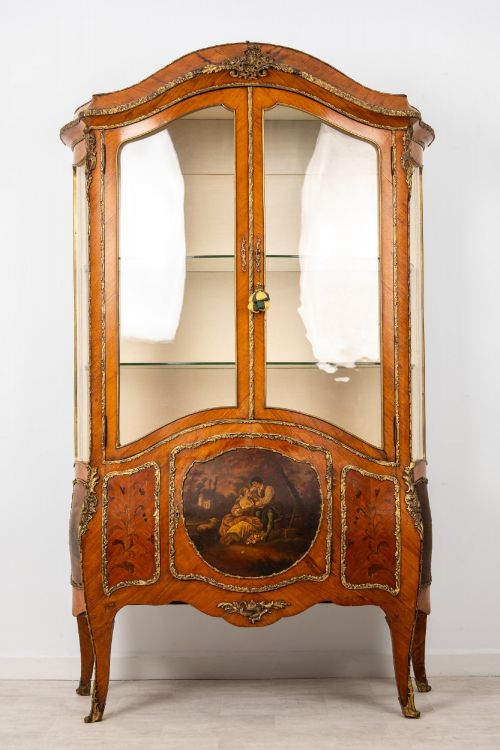
When you search for antique vernis martin, you encounter French furniture largely from the nineteenth century, created in the Louis XV and Rococo revival styles. The pieces span vitrines, display cabinets, commodes, and writing desks designed for sophisticated interiors.
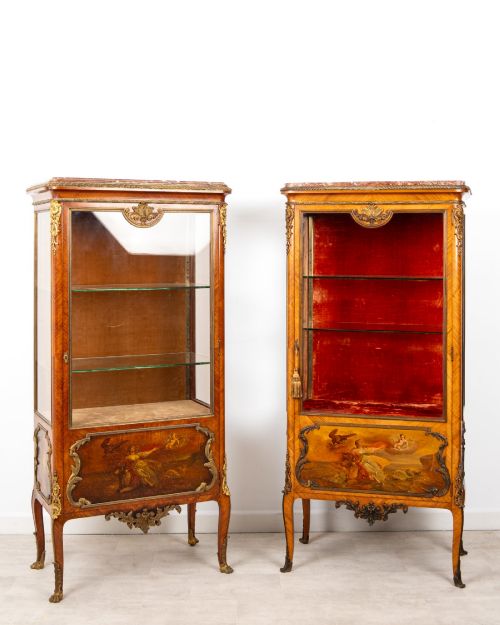
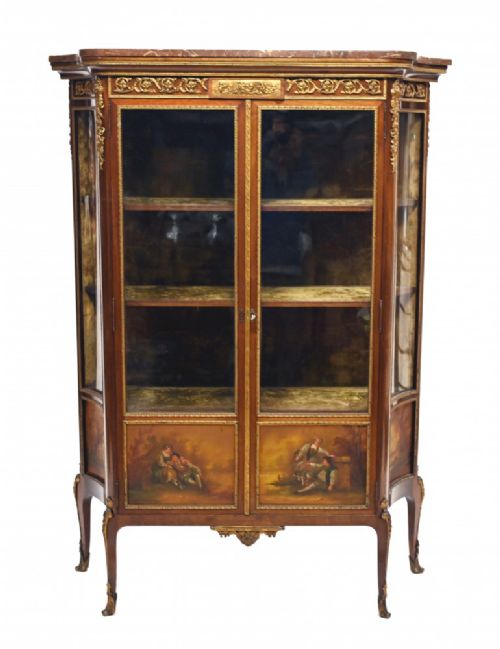
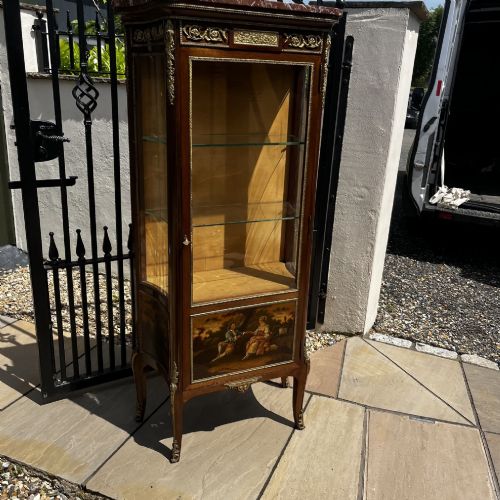
The most common forms on this page are vitrines and display cabinets featuring glass panels alongside painted figurative scenes. These items utilise underlying carcasses of kingwood or mahogany, enriched with gilt bronze and ormolu mounts.
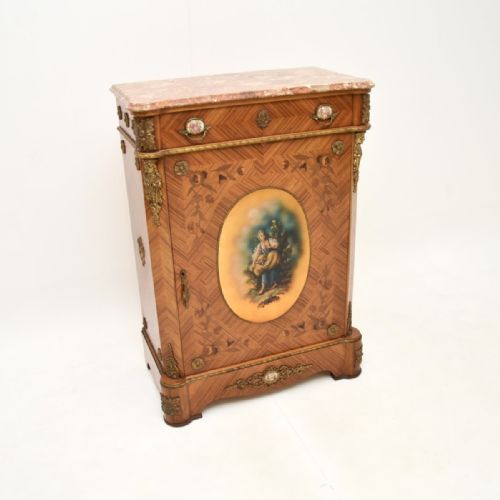
Originating predominantly from Paris workshops and makers inspired by the Martin brothers, these items reflect nineteenth-century French cabinet-making at its most decorative. Pieces range from serpentine side cabinets to tall pedestal display stands.
How they were made
The technique relies on layered resin varnishes applied over painted paper or direct wood grounds to imitate Asian lacquer. Artisans built up translucent coats, polishing each layer to achieve a deep, luminous finish that protects the delicate pastoral scenes underneath.
Cabinets and commodes combine structural hardwoods like mahogany and kingwood with cast ormolu and gilt bronze mounts. Marble tops frequently complete the upper surfaces of commodes and side cabinets, adding weight and contrast to the finished object.
Antique Vernis Martin Retail Price Guide 2026
Typical asking prices for vernis martin among the pieces listed under this phrase on Sellingantiques today, from the lower quarter to the upper quarter. They describe what is for sale here now, not the wider market.
Several cabinets conceal secret drawers behind their drop-down writing flaps, providing a hidden compartment for private correspondence.
What varies in quality
The refinement of the painted panels dictates much of the distinction across pieces, separating standard decorative application from accomplished artistic execution. Hand-painted pastoral figures showing fine brushwork and depth outrank simple stencilled or mass-produced decoration.
Bronze work and casting quality also define the upper tier of objects, where crisply chased ormolu mounts integrate seamlessly with the timber carcass. The choice of underlying veneers, such as figured kingwood rather than plain secondary timbers, further separates standard production from exhibition pieces.
François Linke
The Antique Vernis Martin Glossary
- Vernis Martin
- A type of European lacquer developed in eighteenth-century France by the Martin brothers, imitated in nineteenth-century revival pieces. It uses successive coats of varnish to achieve a translucent, glossy finish over painted scenes.
- Ormolu
- Gilt bronze mounts applied to the corners, feet, and borders of fine furniture. This decorative metalwork enhances the architectural lines of cabinets and commodes.
- Vitrine
- A glass-fronted display cabinet designed to exhibit porcelain and objects of vertu. These pieces often incorporate painted lacquer panels in their lower sections.
- Secrétaire à abattant
- A tall writing cabinet featuring a drop-down fall-front panel that conceals small drawers and pigeonholes. They frequently combine lacquer panels with marble tops and gilt bronze mounts.
- Kingwood
- A dense, richly figured Brazilian timber used extensively for veneering fine French furniture. Its contrasting dark and golden grains complement polished lacquer surfaces.
Antique Vernis Martin: Frequently Asked Questions
What is vernis martin furniture?
Vernis martin refers to furniture decorated with a specialised translucent lacquer finish developed in France. The technique mimics Asian lacquerwork using layered varnishes over painted pastoral or romantic scenes.
Most surviving examples date from the nineteenth-century revival periods when French cabinet-makers embraced Louis XV aesthetics. They appear primarily on display cabinets, vitrines, and commodes.
Where were these pieces made?
The vast majority of these items originated in Paris workshops during the nineteenth century. Master cabinet-makers and specialised studios produced them for wealthy European and international clientele.
While inspired by eighteenth-century originals, these later interpretations reflect the high technical skill of Victorian and Edwardian French craftsmanship.
How should I care for a vernis martin cabinet?
Protect lacquered surfaces and painted panels by keeping them away from direct sunlight and steady heat sources. Extreme temperature shifts can cause the underlying wood and varnish to react.
Dust gently with a dry, soft microfibre cloth rather than using liquid polishes or chemical cleaners. Maintaining stable indoor humidity preserves both the lacquer and the delicate gilt bronze mounts.
How can I tell the period of a piece?
Examine the interior construction, secondary timbers, and the character of the gilt bronze mounts for period indicators. Nineteenth-century revival pieces often utilise machine-sawn interior woods and standardised casting methods.
Stylistic cues also point to the era, as nineteenth-century interpretations of Rococo forms frequently display heavier proportions and brighter gilding than their eighteenth-century predecessors.