




Antique Venice Landscape Painting
An antique venice landscape painting brings the light and architecture of the lagoon into a room through nineteenth and early twentieth century works.
Antique Venice Landscape Painting
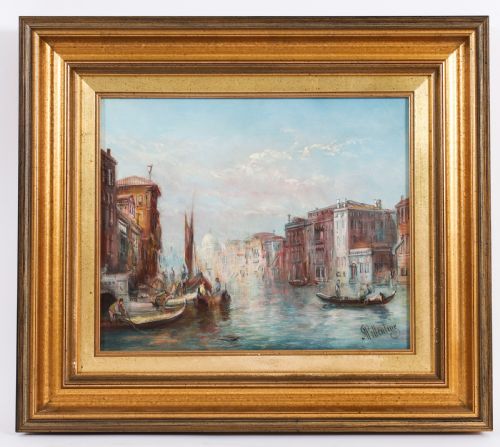
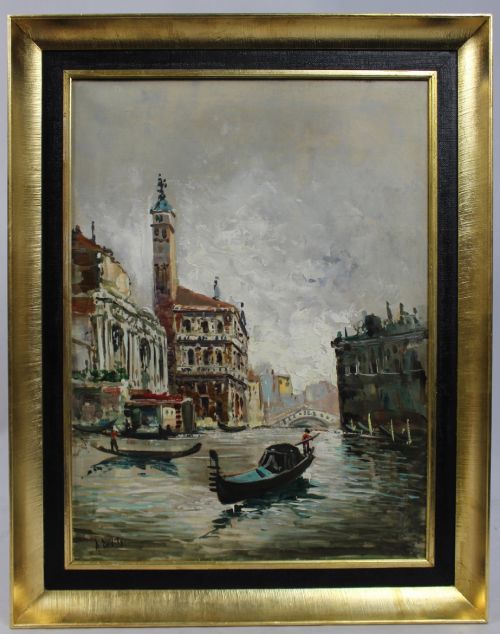
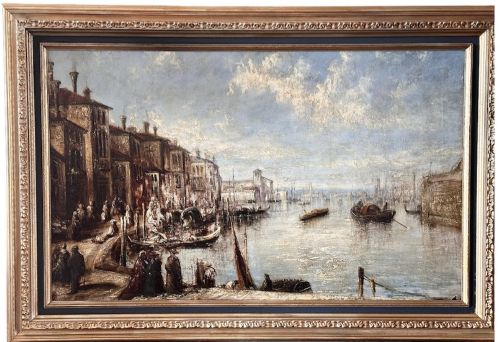
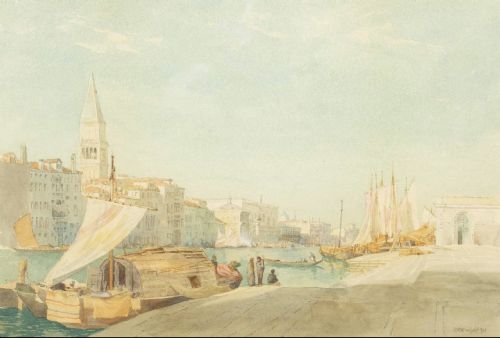
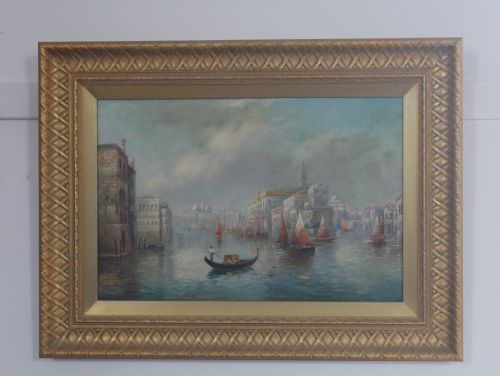
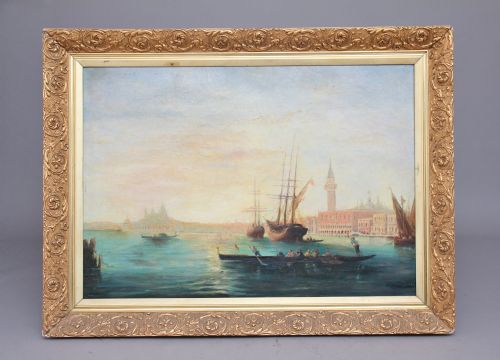
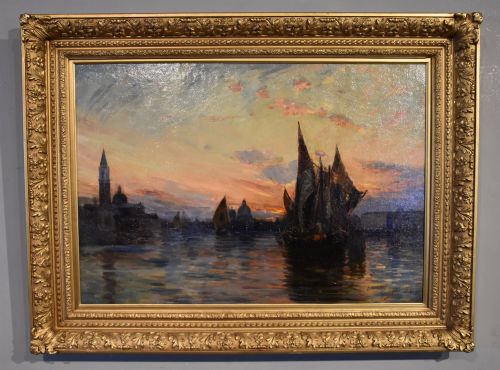
An antique venice landscape painting captures the architecture, canals, and unique light of the Italian city across the nineteenth and early twentieth centuries. The pieces available range from detailed depictions of the Grand Canal and the Doge's Palace to quieter views of the Venetian lagoon and smaller waterways.
Buyers will most frequently encounter nineteenth-century works alongside Edwardian and later pieces from the early decades of the twentieth century. These paintings and watercolours record the enduring appeal of Venice as a subject for British and continental artists working in styles that span traditional townscapes to impressionistic interpretations.
How They Were Made
The works rely primarily on oil paint applied to canvas, board, or wood panels, alongside watercolours executed on paper. Giltwood and gilded frames frequently accompany these paintings, providing the original housing for both oils and works on paper.
Artists utilised traditional brushwork to capture the shifting reflections on the water and the masonry of historic palazzos. Pigments were handled to render the distinct atmospheric haze and luminosity characteristic of the Venetian lagoon.
Listings feature works spanning the nineteenth century through the 1960s, executed in oil on canvas, watercolour, and pastel.
What Varies in Quality
Quality rests upon the artist's ability to handle the characteristic light and architectural perspective of the lagoon rather than the mere presence of a famous landmark. Stronger examples demonstrate a confident control of water reflections and atmospheric depth.
The handling of the medium, whether the transparency of watercolour on paper or the rich application of oil paint on canvas, separates more accomplished compositions from simpler topographical records.
Alfred Pollentine·Jane Vivian·Francis Moltino·Thomas Hodgson Liddell·William Raymond Dommersen
The Antique Venice Landscape Painting Glossary
- Grand Canal
- The main waterway of Venice, lined with historic palazzos that frequently appear as the central subject in these paintings.
- Giltwood
- Wood carved and coated with gold leaf, commonly used for the ornate frames housing nineteenth-century oil paintings.
- Lagoon
- The enclosed bay of the Adriatic Sea in which Venice is situated, providing the expansive skies and water surfaces captured in these works.
- Palazzo
- A grand residential building or palace in Italy, serving as the architectural focal point in many Venetian townscapes.
Antique Venice Landscape Painting: Frequently Asked Questions
How do I identify a 19th-century Venice painting?
Nineteenth-century works are typically identified through the handling of traditional oil or watercolour mediums, often accompanied by period giltwood frames. The subjects focus on famous civic landmarks before twentieth-century alterations to the city.
The clothing of figures in the gondolas and along the quays also points toward the nineteenth or early twentieth century, aligning with the recorded dates of the artists.
Were these painted in Venice or from sketches?
Many artists travelled to Italy to produce on-site watercolours and preliminary oil sketches capturing the specific light and atmosphere of the canals. Finished canvases were frequently completed back in the studio using these direct observations.
Artists often returned to favoured compositions of the Grand Canal or the Doge's Palace across multiple works.
What is the difference between an oil and a watercolour Venice painting?
Oil paintings utilise oil paint on canvas or wood panels, allowing for heavier textures and rich layering of colour to depict the water and stone. Watercolours employ pigment on paper, offering a lighter, more transparent quality well suited to bright lagoon skies.
Both mediums were widely used by artists documenting the city during the Victorian and Edwardian periods.
How should I frame an antique Venice painting?
Original giltwood frames provide the most historically appropriate housing, complementing the warm tones and gilded details common to nineteenth-century art. If framing a watercolour on paper, conservation mounting behind glass protects the medium from environmental damage while maintaining period character.
Heavy ornate frames are typically suited to larger oil paintings, whereas lighter mouldings often accompany watercolours.