


Antique Veneered Chest
An antique veneered chest brings rich wood grains and centuries of cabinetry skill into a room, offering both practical storage and striking surface pattern.
Antique Veneered Chest
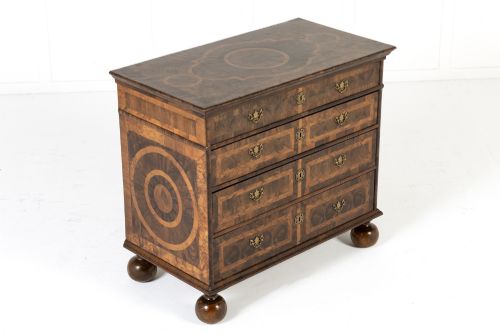
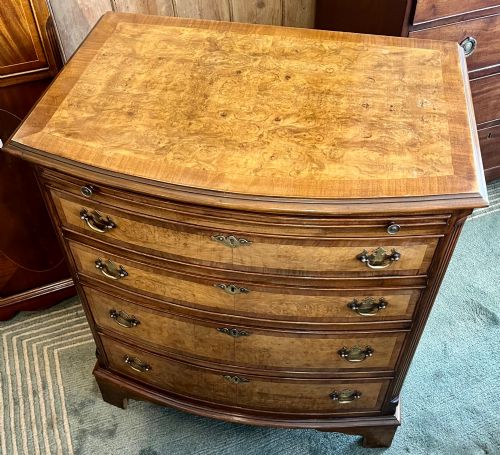
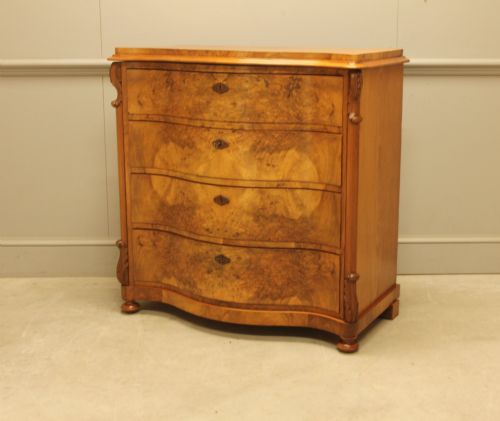
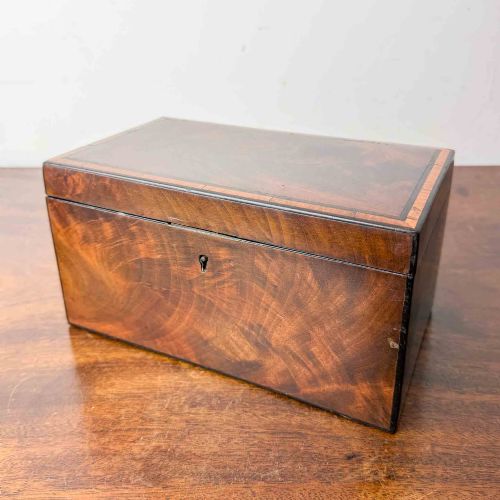
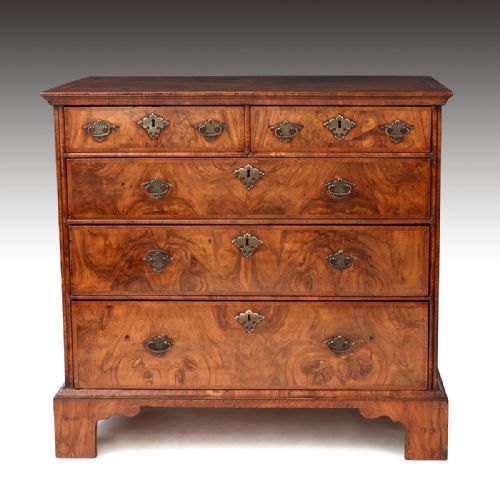
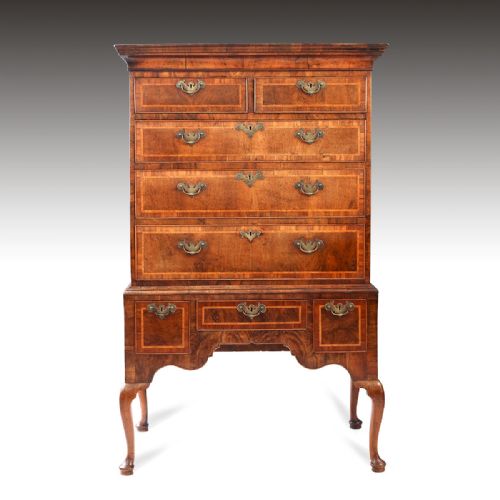
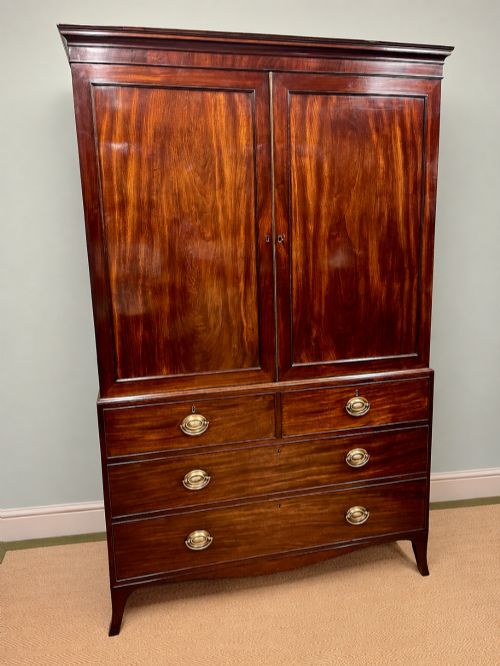
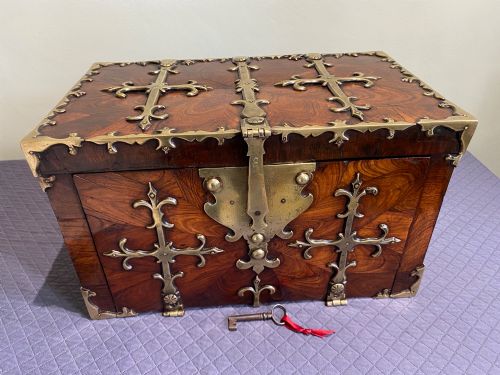
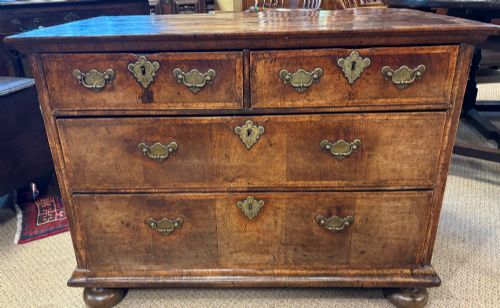
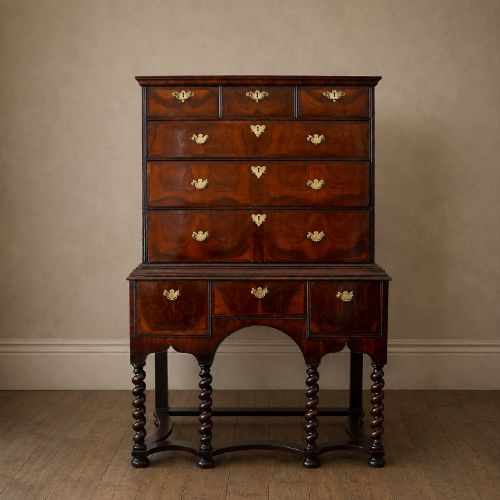
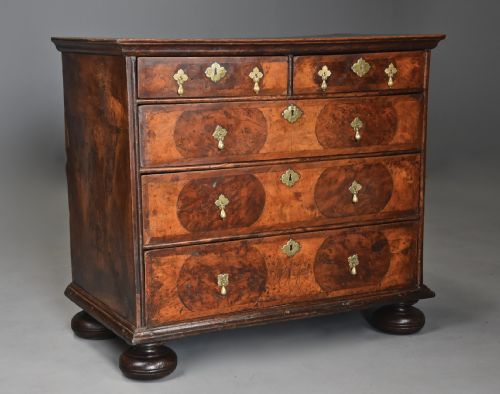
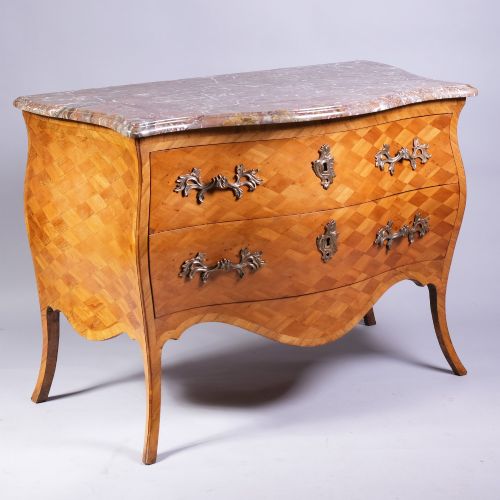
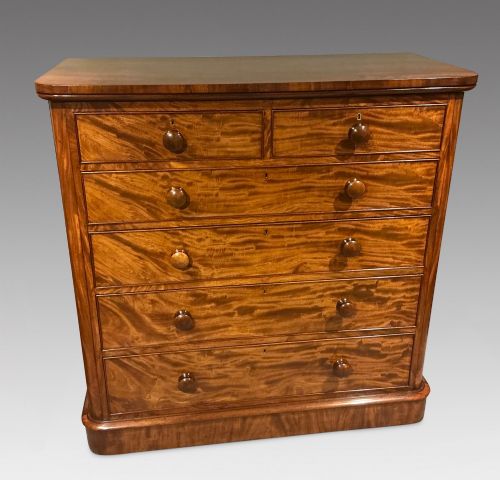
An antique veneered chest encompasses case furniture surfaced in decorative woods, spanning multiple centuries from the seventeenth onwards. The selections here range from substantial drawer units and commodes to linen presses, chests on stands, and smaller tea caddies.
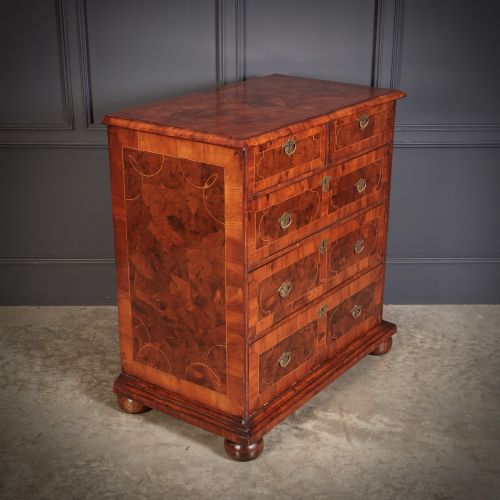
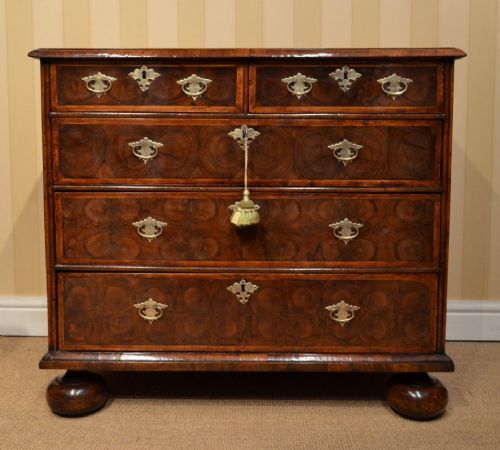
The seventeenth-century pieces frequently display intricate oyster cutting or kingwood parquetry, while later examples bring forward the figured grains of mahogany, walnut, and satinwood. Buyers encounter diverse regional expressions, including English walnut designs, French commodes, and Biedermeier interpretations.
Forms extend from low bedside tables to tall cabinets, accommodating varied domestic spaces. Walnut and mahogany dominate the offerings, supported by regional timbers like yew wood, laburnum, and ash.
How they were made
Early makers achieved distinctive surface movement by cross-cutting branch wood to create circular oyster patterns or arranging geometric parquetry tiles. Later periods utilised the flame and burr figures found in mahogany and ash, often pairing them with boxwood stringing or brass hardware.
Antique Veneered Chest Retail Price Guide 2026
Typical asking prices for veneered chest among the pieces listed under this phrase on Sellingantiques today, from the lower quarter to the upper quarter. They describe what is for sale here now, not the wider market.
The listings here feature walnut, mahogany, and oak alongside specialised decorative timbers including kingwood, boxwood, and laburnum.
What varies in quality
The standard of a piece rests on the choice of timber figure and the precision of the veneer layout across the carcase. Master craftsmen aligned grains thoughtfully from drawer to drawer, creating a unified visual rhythm that lesser work lacks.
Construction methods and secondary woods also distinguish finer examples, particularly in the hand-dovetailed drawer linings and the integrity of the underlying structure. Surface depth and natural patination over the centuries further separate standard utility pieces from exceptional commissions.
The Antique Veneered Chest Glossary
- Oyster veneering
- A decorative method using small cross-sections cut from branches, laid side by side to resemble oyster shells. The resulting patterns create concentric rings across the surface of seventeenth-century chests.
- Parquetry
- Geometric wood mosaics assembled from small pieces of contrasting timbers to form patterns on furniture surfaces. It appears on cabinet doors and drawer fronts from various periods.
- Linen press
- A tall cupboard featuring sliding trays or shelves in the upper section for storing textiles, stationed above lower drawers. They often feature panelled doors displaying figured mahogany or walnut.
- Commode
- A low chest of drawers or cabinet originating in France, frequently topped with marble. These pieces served both decorative and functional roles in formal rooms.
Antique Veneered Chest: Frequently Asked Questions
How do I care for a veneered chest?
Keep the timber away from direct heat sources and strong sunlight to prevent the underlying glue from drying and the wood from splitting.
Apply a microcrystalline wax occasionally to nourish the surface and maintain a soft sheen without building up heavy residues.
Where should I place an antique chest?
These pieces suit living rooms, hallways, and bedrooms where their figured grain patterns can serve as a focal point.
Ensure the room maintains stable humidity levels to protect the delicate wooden surfaces and joints over time.
What is a chest on stand?
A chest on stand consists of an upper drawer section elevated on a separate support frame with legs. This form lifts the main storage body higher off the floor.
Originating in earlier centuries, these pieces provide a lighter silhouette than standard floor-standing drawer units.
How do I identify seventeenth-century work?
Seventeenth-century pieces often feature distinct surface treatments like oyster cutting, geometric parquetry, and walnut or kingwood timbers.
Construction details such as hand-cut dovetails and oak secondary woods further point towards this early period of British and continental cabinetmaking.