



Antique Veneer Wardrobe
An antique veneer wardrobe brings warmth and striking timber grain to a bedroom, combining practical storage with classic craftsmanship.

Antique Veneer Wardrobe
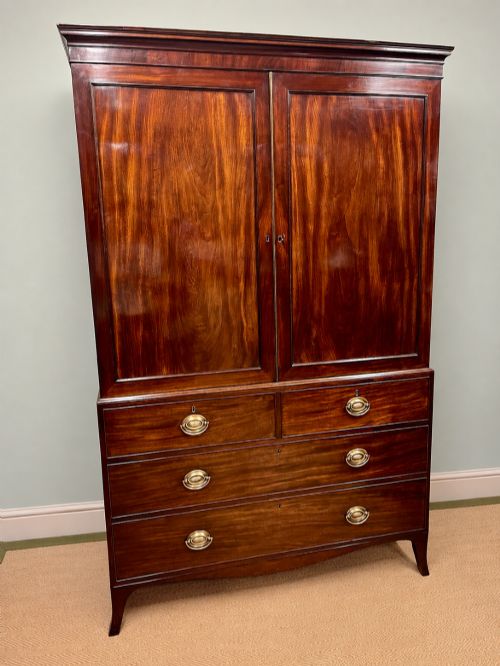
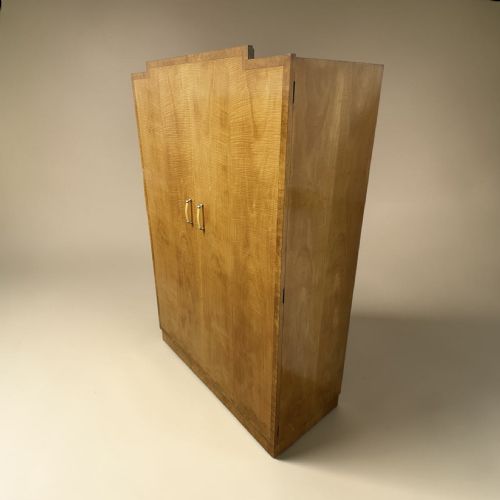
When you search for an antique veneer wardrobe, you encounter substantial timber furniture designed to hold garments and linens, originating from periods such as the Georgian, Regency, Victorian, and Art Deco eras. These pieces range from tall single-door cupboards to grand breakfront wardrobes and linen presses, often constructed with impressive timber facades.
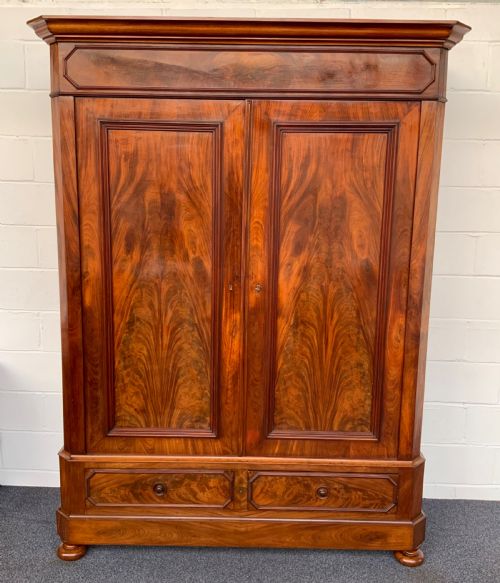
The versions most commonly met on this page include mahogany, walnut, and flame mahogany examples, spanning the nineteenth and early twentieth centuries. Makers applied thin layers of choice wood over secondary timbers, creating decorative patterns that highlight the natural figure of the grain.
Alongside traditional English designs, the selection includes continental forms such as French armoires, Biedermeier cabinets, and Grunderzeit wardrobes. These items demonstrate diverse regional aesthetics while serving the same fundamental domestic purpose of large-scale clothes storage.
How they were made
Cabinetmakers constructed these wardrobes using solid carcases of secondary timber, onto which they applied carefully sliced decorative veneers such as flame mahogany, curl mahogany, and walnut veneer. The grain patterns were often matched symmetrically across doors and drawer fronts to produce a striking visual balance.
Metal fittings such as brass handles, escutcheons, and hinges complemented the dark timber surfaces, whilst glass panels occasionally appeared in related cabinet and armoire formats. Traditional joinery methods ensured the stability of large door frames and heavy structural panels over centuries of use.
Pieces originating from English, French, German, and Dutch workshops appear in the archive, spanning Georgian, Victorian, Biedermeier, and Art Deco styles.
What varies in quality
Quality in an antique veneer wardrobe rests upon the selection and matching of the timber veneers, where superior pieces exhibit vibrant, continuous grain patterns across the entire facade. The skill of the cabinetmaker dictates how cleanly the veneers meet at the edges and how well the underlying structure resists seasonal timber movement.
Secondary wood selection and interior configuration also separate standard examples from finer commissions, with superior pieces offering carefully fitted linen slides, robust brass hardware, and well-executed architectural mouldings. The integrity of the polish and the retention of original surface patination further define the standing of a piece within the range.
JEAN FAURE
The Antique Veneer Wardrobe Glossary
- Veneer
- A thin slice of decorative timber applied to a coarser underlying wood body. This technique allows cabinetmakers to display striking grain patterns that would be structurally unstable or too costly if built from solid timber.
- Linen press
- A large storage cupboard traditionally used for flat household linens, typically featuring sliding trays in the upper section and drawer storage below. These pieces evolved into the modern wardrobe format.
- Breakfront
- A piece of furniture featuring a central section that projects forward from the flanking wings. This architectural arrangement creates depth and shadow across the wardrobe facade.
- Armoire
- A large wardrobe or cupboard originating from continental Europe, usually fitted with heavy hinged doors and deep interior storage space. French and Dutch examples frequently display distinct regional timber choices.
- Biedermeier
- A Central European style dating from the nineteenth century characterised by clean lines, minimal ornamentation, and an emphasis on the natural beauty of veneers. Walnut and mahogany were frequently utilised during this period.
Antique Veneer Wardrobe: Frequently Asked Questions
What is an antique veneer wardrobe?
An antique veneer wardrobe is a large timber storage piece featuring thin decorative wood layers applied to the exterior surfaces, produced across various historical periods from the Georgian era through to Art Deco.
These pieces provide generous hanging space or linen storage while showcasing the natural figure of materials such as mahogany and walnut.
How do I tell periods apart?
Periods are distinguished by architectural style, timber treatment, and overall silhouette, ranging from formal Georgian breakfronts to ornate Victorian doors and streamlined Art Deco geometries.
Examining the internal construction, hardware style, and veneer matching helps establish whether a piece belongs to the nineteenth or early twentieth century.
Where were these wardrobes used?
These large wardrobes and presses were designed principally for principal bedrooms and dressing rooms in substantial period homes, providing secure storage for garments before fitted closets became common.
In domestic settings, they served both a functional role and acted as prominent architectural furniture within the bedroom.
How do I live with a veneer wardrobe?
Living with these large timber cabinets involves placing them away from direct heat sources and sudden humidity changes to protect the delicate surface veneers from drying or lifting over time.
Regular gentle dusting and occasional waxing help maintain the depth and lustre of the historical polish on mahogany and walnut surfaces.