

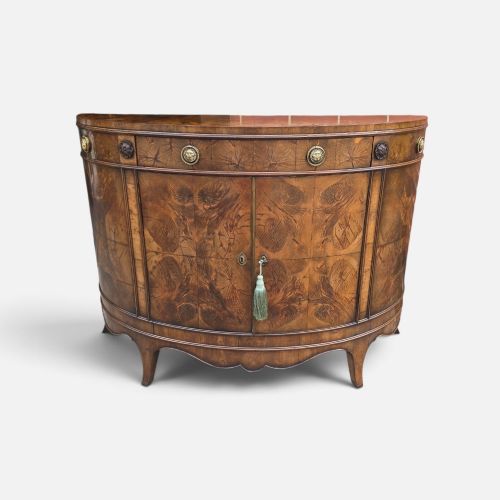


Antique Veneer Sideboard
These antique veneer sideboard pieces bring figured timbers and practical storage to a room.
Antique Veneer Sideboard
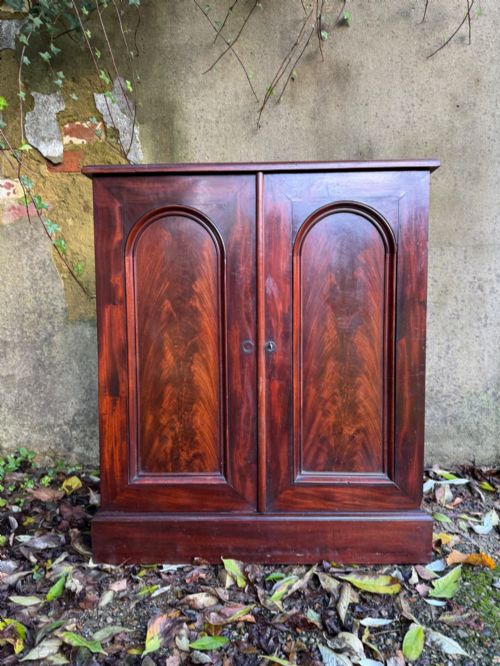
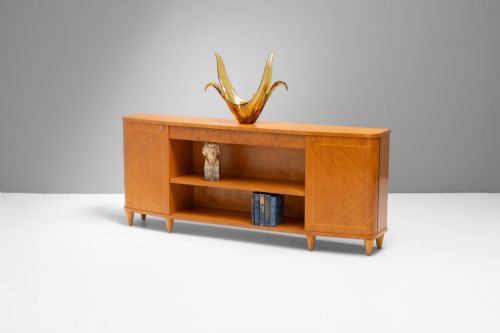
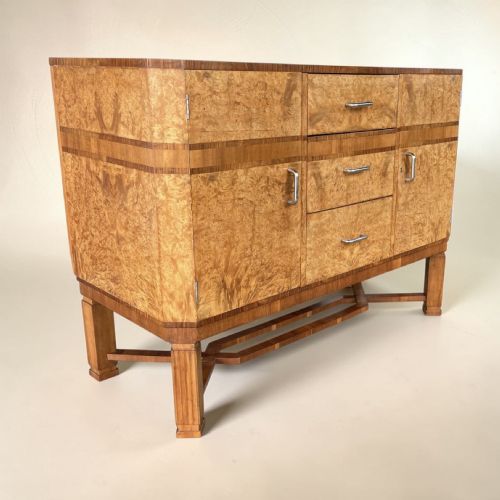
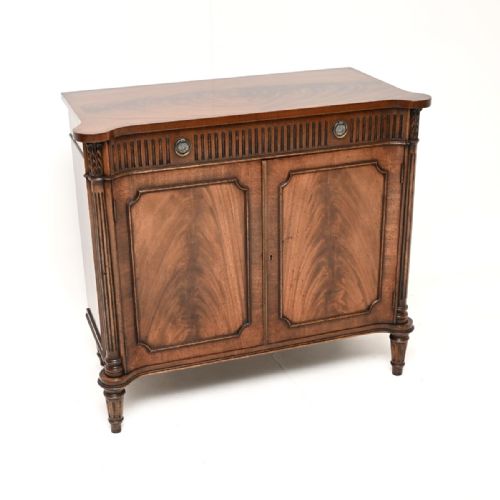
When you search for an antique veneer sideboard, you are looking at large storage furniture faced with decorative wood cuts. The pieces on this page span several centuries and styles, ranging from Georgian and Regency eras up to Art Deco designs from 1930.
The selection includes sideboards, side cabinets, credenzas, chiffoniers, and linen presses. You will frequently encounter mahogany and walnut timbers, often matched with flame mahogany veneer or burr walnut.
Origins vary from British workshops to French Parisian makers and Swedish Grace aesthetics. These items served as functional dining room storage or serving tables, and today they function as statement pieces in domestic interiors.
How they were made
Cabinet makers utilised thin slices of highly figured timber applied over secondary carcass woods. Flame mahogany veneer and burr walnut provided striking visual grain patterns across large flat doors and drawer fronts.
Additional materials included brass mounts, marble tops, and gilt metal decorations. These elements were combined with traditional joinery to build sturdy cabinets and credenzas designed for daily domestic use.
Antique Veneer Sideboard Retail Price Guide 2026
Typical asking prices for veneer sideboard among the pieces listed under this phrase on Sellingantiques today, from the lower quarter to the upper quarter. They describe what is for sale here now, not the wider market.
Some cocktail cabinets from 1930 hide secret compartments designed specifically for holding vintage martini shakers.
What varies in quality
Quality rests in the selection and matching of the veneer across the front elevation. Superior examples display symmetrical grain patterns that flow evenly across multiple doors and drawers.
Construction details such as solid secondary timbers, original brass hardware, and intact marble tops elevate a piece. The crispness of carved mouldings and the precision of the marquetry or inlay also separate standard items from finer works.
The Antique Veneer Sideboard Glossary
- Veneer
- A thin slice of decorative wood applied to a base timber to create patterned surfaces. This technique allows cabinet makers to utilise expensive or highly figured logs efficiently.
- Flame mahogany
- A distinct timber figure resembling flickering flames, prized for its dynamic movement. It appears frequently on polished nineteenth century furniture.
- Burr walnut
- Wood taken from a growth or knot on a walnut tree, producing a swirling, speckled pattern. It is commonly found on high status cabinets and credenzas.
- Chiffonier
- A compact sideboard or low cupboard developed in the nineteenth century, often featuring a raised shelf back. They provided convenient storage in dining rooms and drawing rooms.
- Credenza
- A sideboard or cabinet, frequently associated with Victorian design and sometimes featuring curved glass doors or gilt metal mounts. These pieces often incorporated marble tops.
Antique Veneer Sideboard: Frequently Asked Questions
What is an antique veneer sideboard?
It is a piece of storage furniture faced with decorative wood layers like mahogany or walnut.
These items date from various historical periods and include formats such as side cabinets, chiffoniers, and credenzas.
How do I care for veneered furniture?
Keep the timber away from direct heat sources and strong sunlight to prevent the veneer from drying or cracking.
Dust with a soft dry cloth and occasionally apply appropriate wax polish to maintain the finish.
How do I identify the period of a sideboard?
Examine the overall style, such as Regency curves, Victorian proportions, or Art Deco geometric lines.
Construction methods, secondary woods, and hardware styles also help date the piece accurately.
Where were these sideboards used?
They were traditionally placed in dining rooms to store cutlery, linen, and serving dishes.
Today they function effectively in living rooms, hallways, and modern dining spaces for general storage.