





Antique Veneer Desk
An antique veneer desk brings patterned timber surfaces and practical writing space into a room, offering centuries of cabinet-making skill.
Antique Veneer Desk
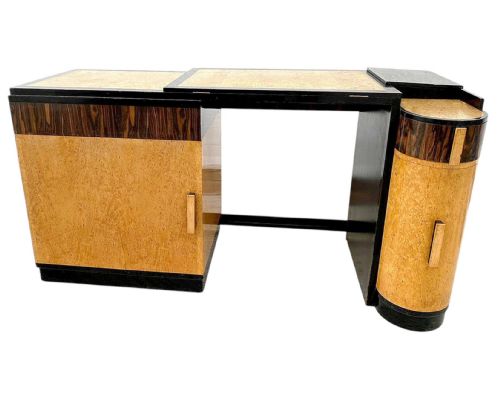
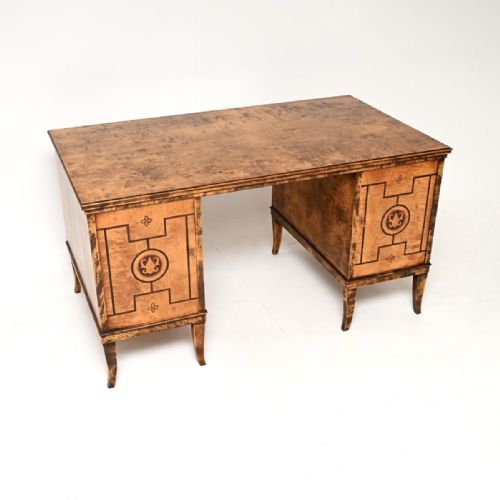
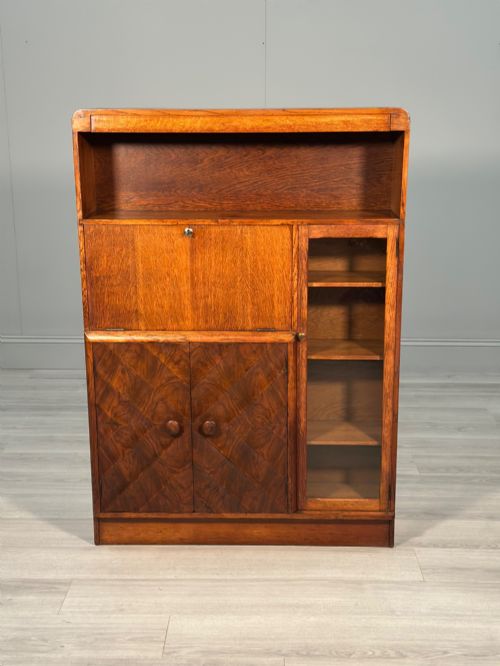
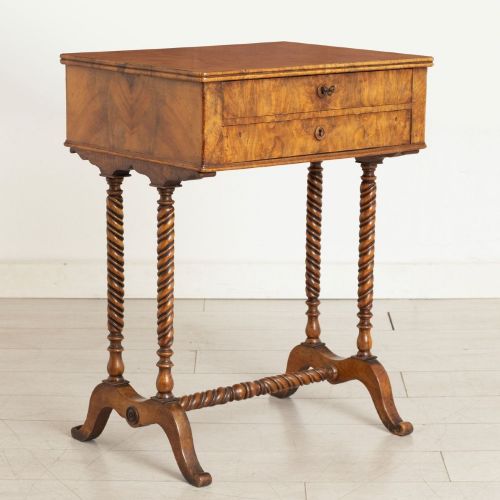
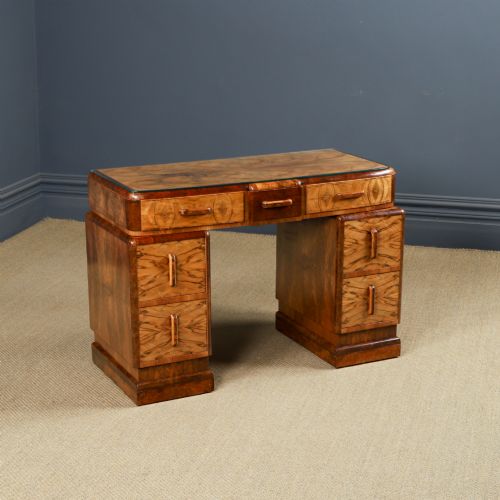
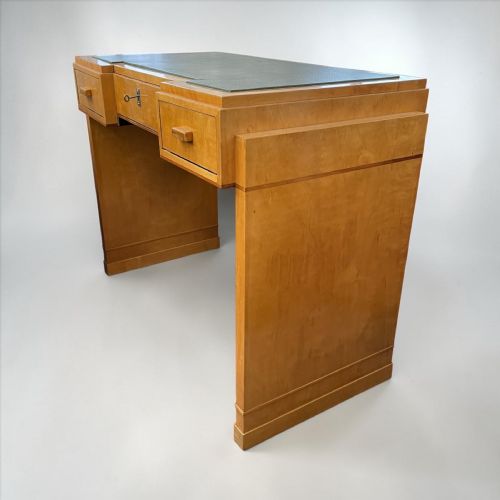
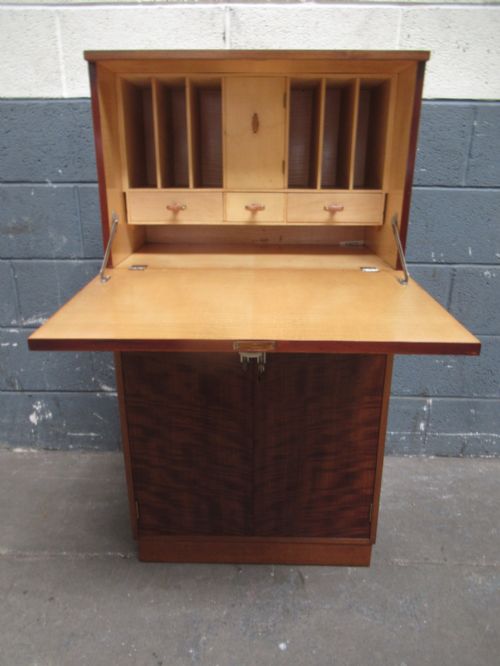
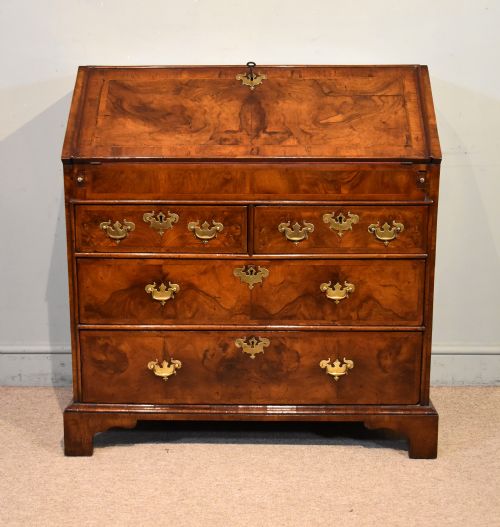
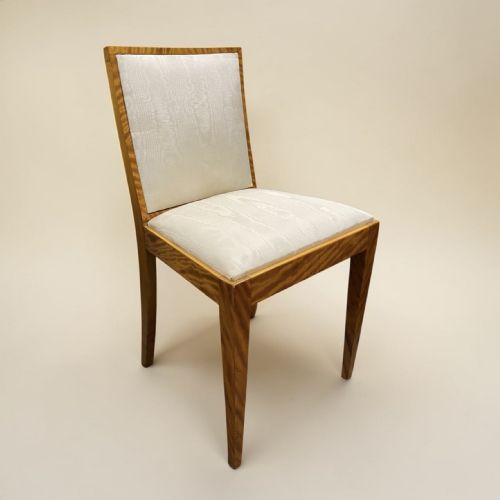
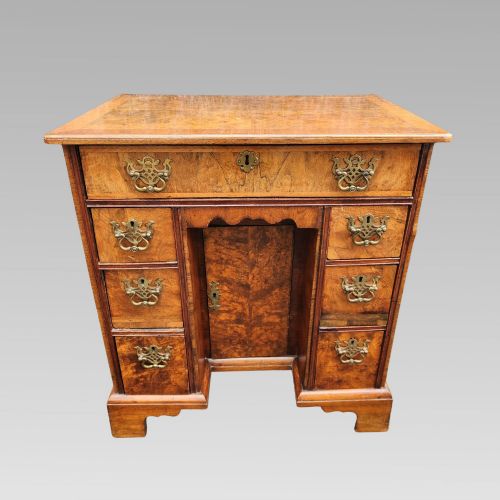
An antique veneer desk encompasses writing surfaces finished with thin slices of decorative wood, taking forms such as bureau bookcases, kneehole desks, and cylinder desks. These pieces span multiple eras, with examples appearing from the 17th century through the Georgian and Victorian periods up to 1930s Art Deco designs.
The most common formats on this page combine functional drawers or fall fronts with elaborate wood grains, drawing on styles ranging from William & Mary and Queen Anne to Biedermeier and French Rococo Revival.
Makers and workshops across Britain, Sweden, France and Germany utilised timber overlays to display intricate grain patterns that solid wood construction could not achieve.
Materials and construction methods
Craftsmen applied thin leaves of walnut, burr walnut, amboyna, kingwood, tulipwood, mahogany, satinwood and oak over secondary structural timbers, securing them with traditional animal glues.
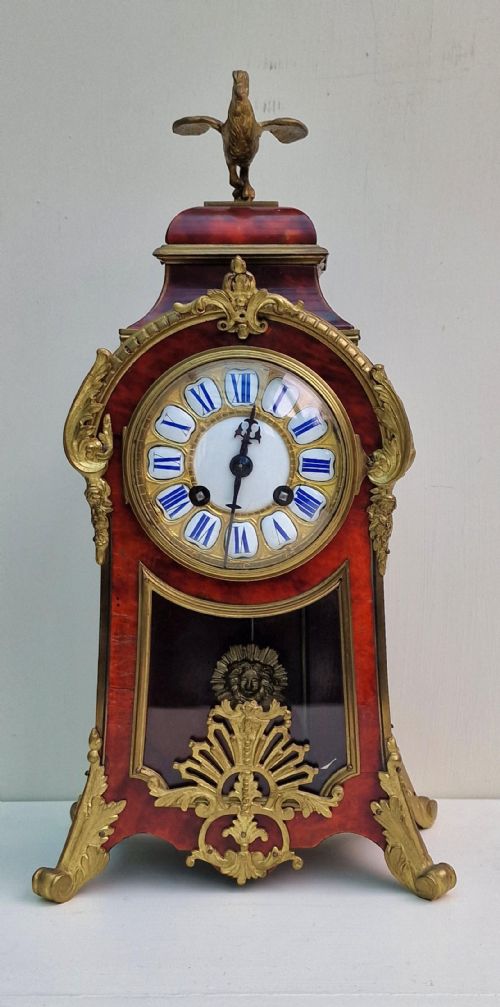
Makers often enhanced these surfaces with featherbanding, crossbanding, or oyster veneer cut from small branches, complemented by brass handles, leather inserts, glass panels, and ormolu mounts.
Antique Veneer Desk Retail Price Guide 2026
Typical asking prices for veneer desk among the pieces listed under this phrase on Sellingantiques today, from the lower quarter to the upper quarter. They describe what is for sale here now, not the wider market.
Listings feature walnut, burr walnut, amboyna, kingwood, tulipwood, satinwood, oak, and mahogany veneers.
Distinguishing quality in veneered writing furniture
Quality rests on the selection and matching of the wood veneers, where symmetrical grain alignment and thoughtful book-matching demonstrate superior workshop practice.
The integrity of the underlying timber ground and the preservation of the delicate surface layers determine the structural standard, distinguishing restrained traditional joinery from later revival work.
E Gomme·Bath Cabinet Makers·Hille
The Antique Veneer Desk Glossary
- Veneer
- A thin layer of figured wood applied to a secondary timber base to create decorative exterior surfaces. This technique allowed cabinet makers to display dramatic grain patterns.
- Burr walnut
- A growth deformity in walnut trees that produces dense, swirling patterns when sliced into veneers. It remains prized for its rich texture on tabletops and fall fronts.
- Bureau bookcase
- A writing cabinet featuring a sloping fall front desk combined with upper shelving enclosed by doors. These multi-functional pieces provide both workspace and display capacity.
- Featherbanding
- A decorative inlay technique using small strips of veneer arranged in a herringbone pattern around the perimeter of a drawer or top. It frames the central grain panel.
- Oyster veneer
- Transverse slices cut from small branches or roots, resembling oysters when arranged across a surface. This method creates concentric circular patterns popular in the seventeenth century.
Antique Veneer Desk: Frequently Asked Questions
What periods do these desks cover?
The pieces span from the seventeenth century through Georgian and Victorian eras, extending into early twentieth-century Art Deco and Biedermeier styles.
This broad chronological range means buyers encounter everything from early walnut escritoires to streamline 1930s office writing desks.
How do I care for a veneered surface?
Protect the thin wood layers from direct sunlight and extreme humidity fluctuations to prevent the animal glue underneath from drying out and lifting.
Dust gently with a dry cloth and apply appropriate wax sparingly to maintain the finish without dampening the timber.
What is an oyster veneer?
Oyster veneer consists of circular cross-sections cut from small branches or twigs, arranged tightly together to form an interlocking pattern.
Cabinet makers used this technique extensively during the seventeenth and early eighteenth centuries to create rhythmic surface textures.
Are these desks suitable for daily work?
Many formats provide functional writing surfaces, internal pigeonholes, and drawers designed for correspondence and paperwork.
Care should be taken with modern writing implements and moisture on historic leather inserts to preserve the original materials.