
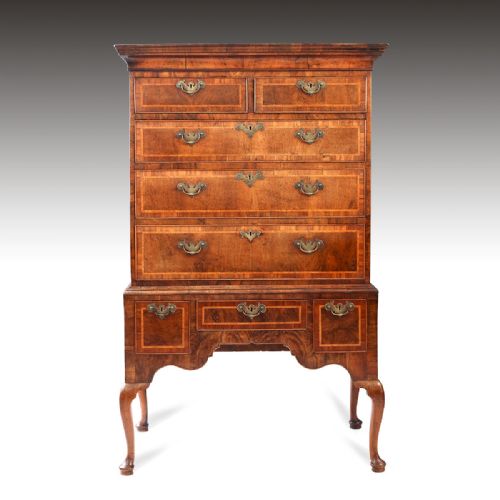
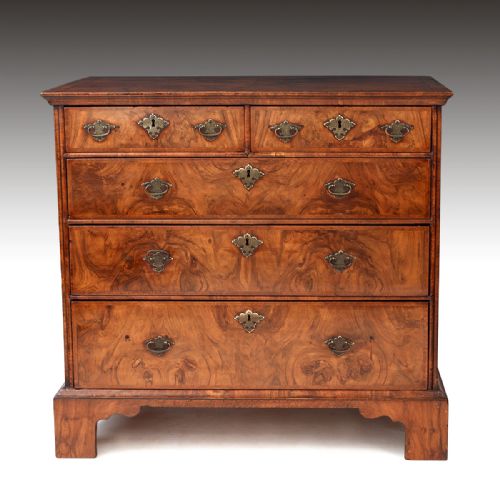
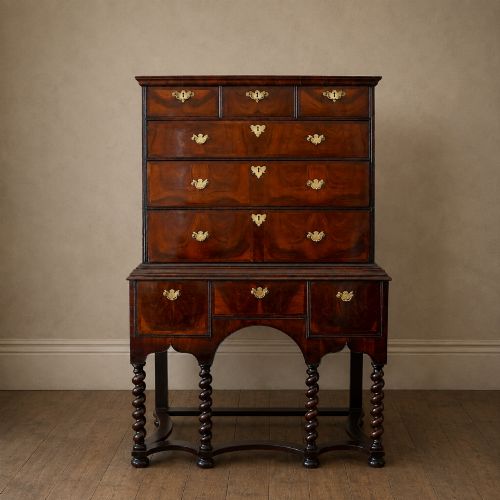
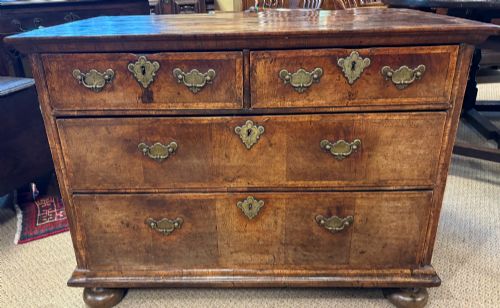

Antique Veneer Chest
An antique veneer chest brings rich timber figure and historic cabinet-making into a room, offering both practical storage and deep visual texture.
Antique Veneer Chest
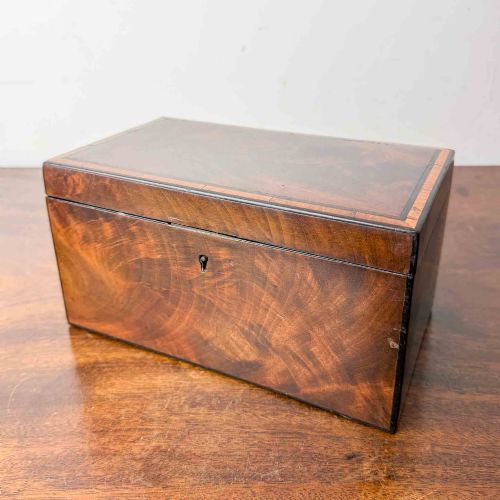
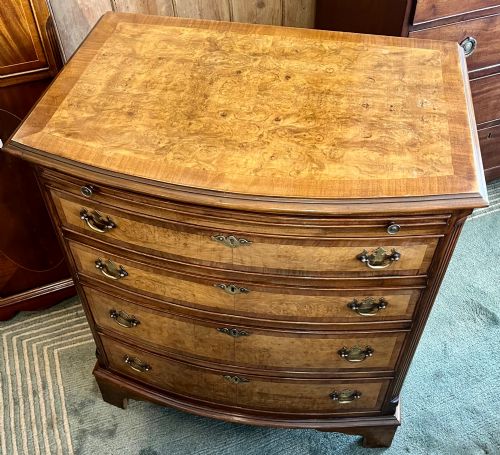
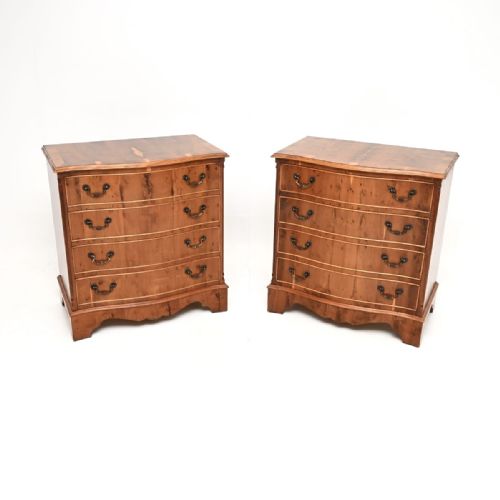
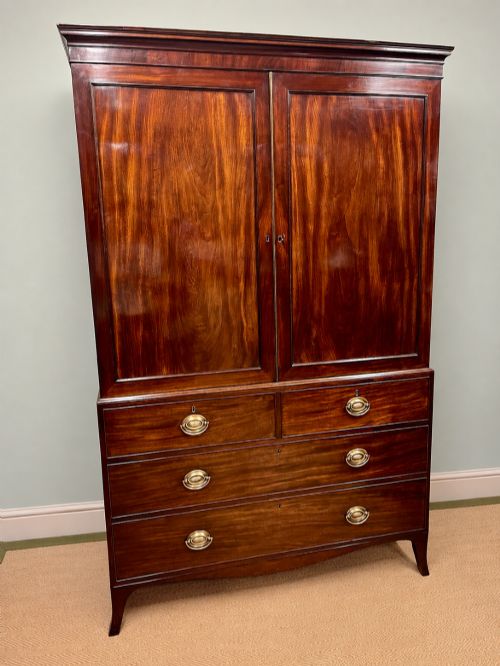
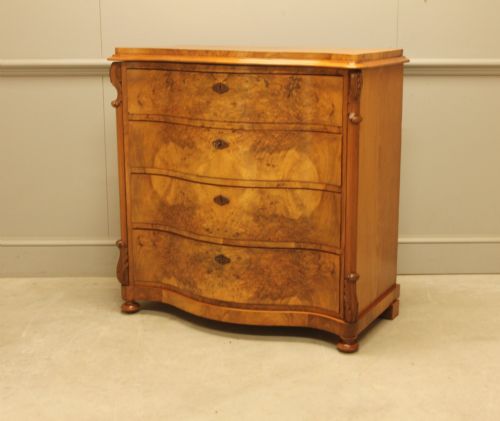
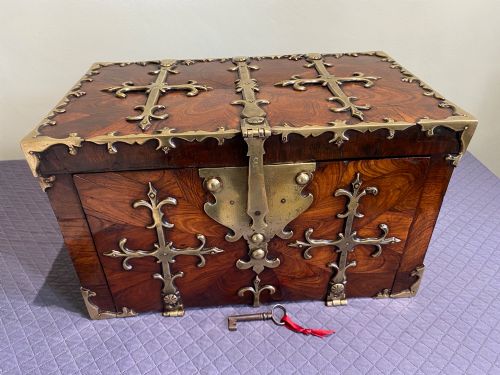
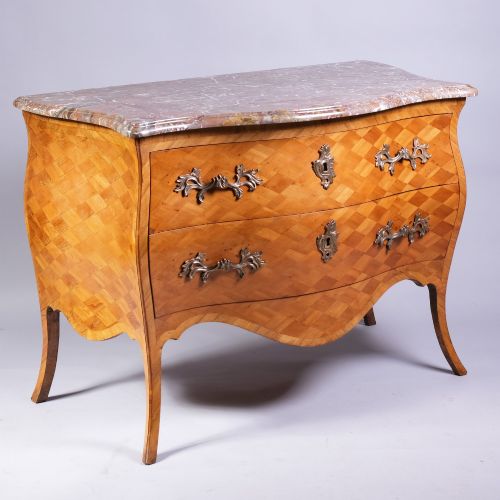
An antique veneer chest encompasses various forms such as chests of drawers, linen presses, commodes, and cabinets on stands originating from the seventeenth century through to the twentieth century. Buyers seeking this phrase encounter pieces spanning the William and Mary, Queen Anne, Georgian, Regency, Victorian, and Art Deco periods, alongside Biedermeier and Louis Philippe designs.
The construction ranges from compact bedside chests and tea caddies to large mahogany and walnut drawer chests, often utilising secondary woods like pine or oak for internal structures. English, French, and Swedish workshops all contributed distinct regional proportions to these forms over the centuries.
Materials and construction
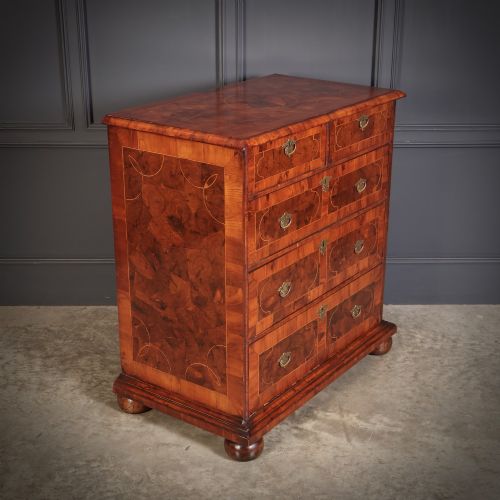
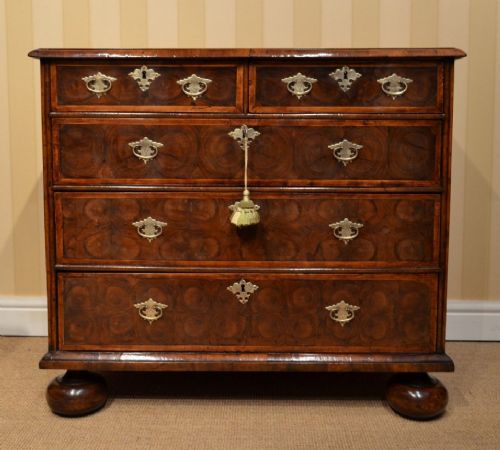
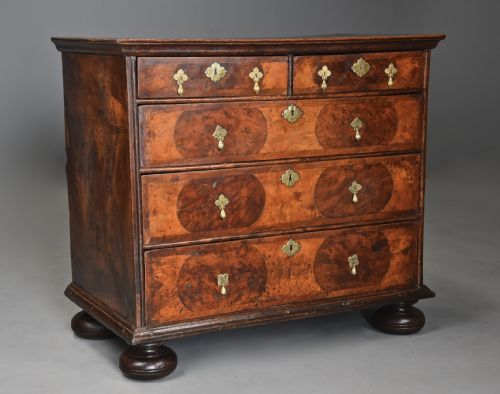
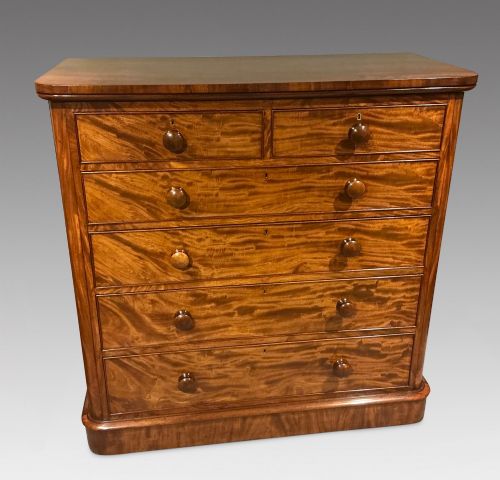
Cabinet-makers applied decorative timbers such as walnut, mahogany, kingwood, satinwood, and yew wood as thin slices over foundational carcases constructed from oak or pine. Specialised cutting techniques yielded distinctive patterns, including symmetrical flame grains, burr growths, and circular oyster pieces sliced directly from smaller branches.
Inlaid details, parquetry geometric arrangements, and contrasting stringing utilising boxwood or maple often complemented the primary veneers. Protective finishes were built up using traditional polishing methods to enhance the natural lustre and figure of the wood.
Makers even turned humble fruitwood branches into mesmerizing swirling patterns simply by slicing them like carrots.
Judging the work
Quality rests upon the skill of the timber selection and the precision of the veneer matching across the surfaces and drawer fronts. Superior examples display continuous grain patterns that flow smoothly across the construction lines rather than arbitrary patches of wood.
The integrity of the underlying carcase, the retention of period brass hardware, and the depth of the polished surface finish further separate standard items from exceptional survivals. Natural ageing and honest wear contribute to the visual resonance of the piece without obscuring the original joinery.
The Antique Veneer Chest Glossary
- Veneer
- A thin layer of figured wood applied to a solid secondary timber carcase for decorative effect.
- Oyster veneer
- Circular or oval pieces of timber cut transversely across small branches to reveal concentric growth rings.
- Burr walnut
- A knotted growth on a walnut tree sliced to produce a highly figured, swirling grain pattern.
- Parquetry
- Geometric patterns formed by fitting small pieces of contrasting veneer together.
- Linen press
- A tall storage cabinet featuring upper sliding trays or shelves above a lower chest of drawers.
Antique Veneer Chest: Frequently Asked Questions
How do I date an antique veneer chest?
Dating relies on examining the timber species, construction methods, and hardware styles characteristic of specific eras like the seventeenth century or the Georgian period.
Secondary woods inside the drawers and the style of the dovetail joints also provide clear chronological markers.
How should I care for a veneered surface?
Keep wooden pieces away from direct sunlight and sudden temperature shifts to prevent the thin timber layers from lifting or drying out.
Apply traditional wax polishes sparingly and buff gently with a soft cloth to maintain the finish.
Are these chests suitable for everyday bedroom use?
These pieces provide sturdy and practical storage for clothing and linens while serving as focal points in a bedroom or hallway.
Drawer construction from earlier centuries remains robust enough for regular daily operation.