

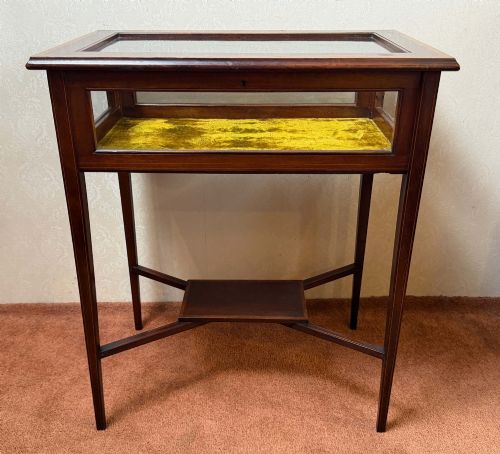
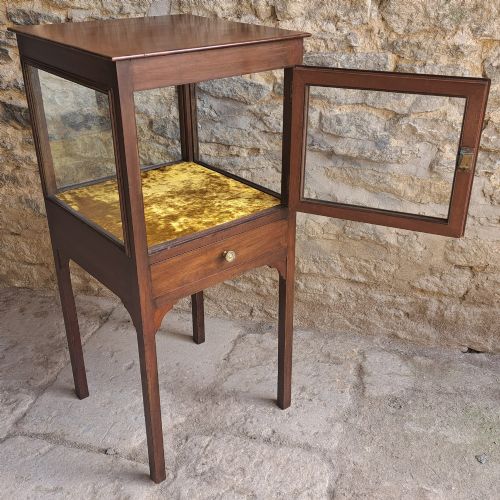


Antique Velvet Lined Table
An antique velvet lined table offers a glass-topped stage for your small treasures, combining refined woodwork with tactile textile interiors.
Antique Velvet Lined Table
An antique velvet lined table functions primarily as a display piece for jewellery, medals, and small curiosities. The listings show these pieces appearing mainly as bijouterie tables, display cabinets, and fitted boxes from the eighteenth century through to the twentieth century.
You will most frequently meet mahogany and walnut examples dating from the Victorian and Edwardian periods, often featuring glazed tops or hinged lids. These tables elevate personal collections by keeping items visible yet protected within a soft textile bed.
The form encompasses everything from serpentine tables to freestanding cabinets and smaller tabletop caskets. Each version serves the dual purpose of domestic furniture and secure display.
How these tables were constructed
Cabinet makers utilised dense hardwoods such as mahogany, walnut, and occasional satinwood inlay to build stable frames that could support glazed panels. Brass, ormolu mounts, and glass components were integrated to frame the display areas securely.
Interiors were lined with velvet fabric, providing a contrasting cushion designed to prevent movement and scratching of delicate objects placed inside. Joinery methods relied on traditional techniques appropriate to Georgian, Victorian, and Edwardian workshop practices.
Antique Velvet Lined Table Retail Price Guide 2026
Typical asking prices for velvet lined table among the pieces listed under this phrase on Sellingantiques today, from the lower quarter to the upper quarter. They describe what is for sale here now, not the wider market.
Materials recorded across the inventory include mahogany, walnut, brass, ormolu, glass, and satinwood inlay combined with fabric velvet linings.
What distinguishes finer examples
Quality rests in the precision of the cabinet work, the choice of timber figurations, and the refinement of brass or ormolu mounts. Sharper detailing in Sheraton style inlay or French revival curves separates standard production from superior workshop output.
The condition and execution of the interior velvet lining, alongside the clarity and integrity of the glass panels, play significant roles in the overall standard of the piece.
The Antique Velvet Lined Table Glossary
- Bijouterie table
- A specialised display table with a glazed compartment designed for showcasing small valuable items. These tables usually feature hinged lids.
- Ormolu
- Gilded bronze ornamentation applied to furniture, frequently seen on French revival pieces. It adds decorative metallic contrast to the timber frame.
- Satinwood inlay
- Contrasting light wood inserted into darker timber surfaces to create decorative patterns. This technique appears prominently in Sheraton revival pieces.
- Serpentine shaped
- A gently undulating curved line found along the edges or fronts of certain tables. This contour requires skilled carpentry to execute properly.
- Curio
- A small object of art, curiosity, or sentimental value housed within display furniture. The velvet lining protects these delicate items from damage.
Antique Velvet Lined Table: Frequently Asked Questions
What fits inside an antique velvet lined table?
These tables and cabinets suit small personal possessions such as pocket watches, rings, medals, and decorative trinkets. The enclosed glazed space keeps dust away while maintaining full visibility.
Larger cabinets accommodate broader collections of small ornaments, whereas tabletop boxes hold specific items like scent bottles or jewellery sets.
How do I care for the velvet interior?
Keep the velvet lining clean by using a soft brush or low-suction vacuum attachment to remove dust gently. Avoid moisture and direct sunlight to prevent the fabric pile from flattening or fading.
Checking the interior periodically ensures that the backing board and textile remain stable and free from environmental dampness.
Where should I place this table in a room?
Position the piece where overhead lighting can pass through the glass top to illuminate the contents below. Avoid placing the table directly in harsh sunlight to protect both the wood finish and the interior fabric colour.
They function effectively as focal points in drawing rooms or as display surfaces in studies and bedrooms.
How can I tell Victorian pieces from Edwardian ones?
Victorian examples often display heavier timber construction in walnut or mahogany, sometimes featuring ornate French revival influences. Edwardian pieces tend to present lighter proportions with refined Sheraton style inlay work.
Examining the construction methods, timber grain, and secondary woods helps clarify the period of manufacture.