




Antique Velvet Fauteuil Pair
An antique velvet fauteuil pair brings French seating grandeur and tactile softness to a room, offering matched elegance for a fireside or salon.
Antique Velvet Fauteuil Pair
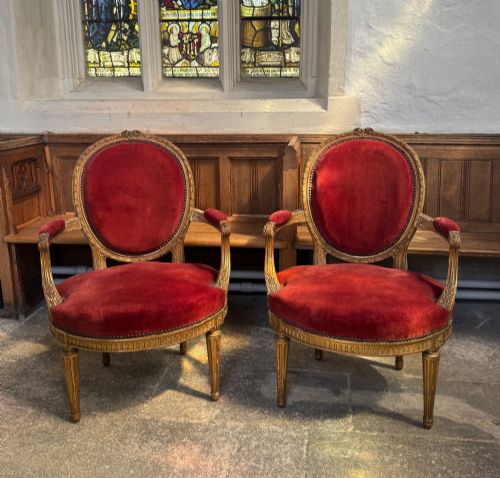
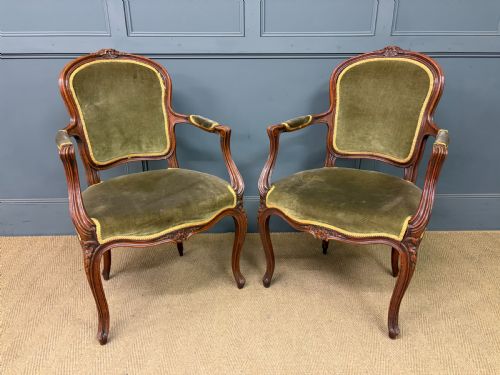
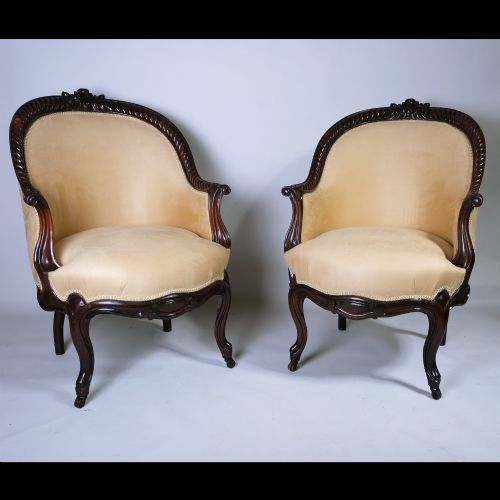
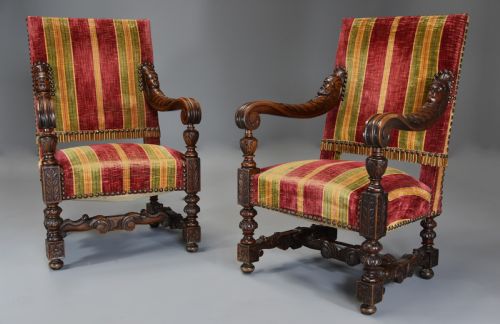
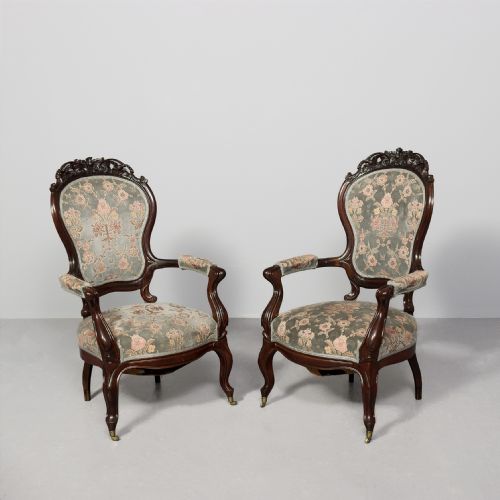
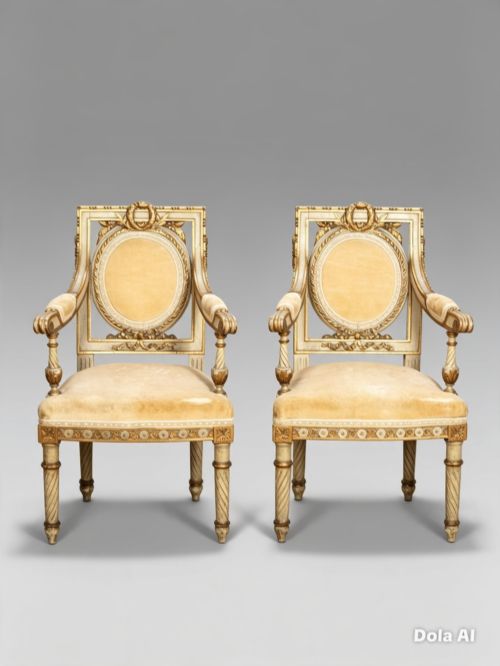
An antique velvet fauteuil pair consists of matched open-armed French seats upholstered in plush pile fabric, originating predominantly across the nineteenth and early twentieth centuries. These armchairs reflect historical design revivals including Louis XV and Louis XVI styles, alongside Victorian interpretations.
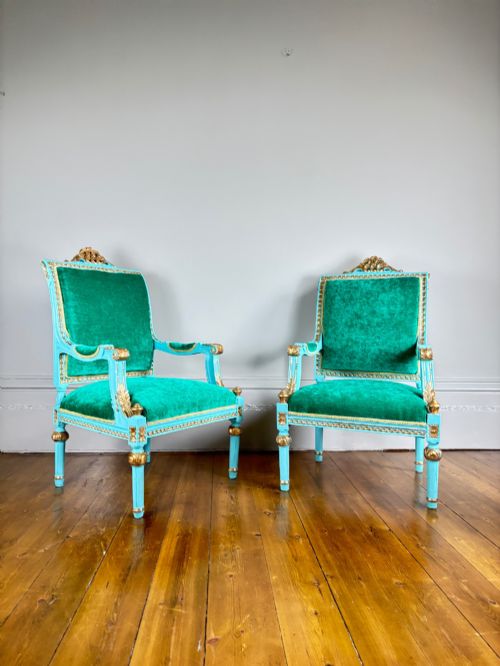
The selections on this page span walnut, mahogany, beech, and giltwood frames, often shaped with carved details. Buyers encounter pieces ranging from children's salon chairs to generously proportioned gilt seating from the 1850s to the 1920s.
Makers drew on classical French motifs, incorporating cabriole legs and painted finishes. The combination of open wooden armframes and rich pile upholstery defines the character of these matching pairs.
Separating the ordinary from the exceptional
Quality rests in the crispness of the wood carving and the proportional harmony of the frame. Skilled artisans achieved fluid lines in walnut and giltwood that lesser workshops missed.
The integrity of the structural timber and the weight of the gilding or paint determine longevity. Superior examples maintain intact original frames and tactile velvet surfaces without heavy modification.
The Antique Velvet Fauteuil Pair Glossary
- Fauteuil
- An open-framed upholstered armchair originating in France, traditionally featuring exposed wood around the arms and back. These seats became central to domestic comfort during the eighteenth century and later revival periods.
- Giltwood
- Timber treated with a thin layer of gold leaf or gesso preparation. This material is common on decorative seating designed for formal reception rooms.
- Louis XVI Revival
- A nineteenth-century design movement mimicking the neoclassical restraint of the 1700s. Pieces in this style typically display straight tapered legs and symmetrical carving.
- Cabriole leg
- A furniture leg featuring a double curve, swelling outward at the knee and tapering inward toward the foot. This form draws inspiration from animal limbs and appears frequently on period seating.
- Directoire
- A transitional style bridging neoclassical and empire periods in France. It emphasises clean lines and understated classical motifs.
Antique Velvet Fauteuil Pair: Frequently Asked Questions
How do I clean antique velvet?
Velvet pile requires gentle brushing with a soft-bristled brush to lift dust and restore the direction of the fibres. Avoid water or liquid cleaners, which can permanently flatten or watermark historic pile.
Professional textile conservation is recommended for deep cleaning. Harsh rubbing will damage the delicate historic fabric binding.
Are these chairs comfortable for daily use?
These open armchairs were originally built for formal sitting rather than lounging. The supportive upright posture suits conversation and reading.
Modern users often add discreet support cushions. The vintage internal padding provides a firmer sit than contemporary armchairs.
How do I distinguish Louis XV from Louis XVI style?
Louis XV pieces feature asymmetrical curves, scrolling foliage, and flowing cabriole legs. The overall aesthetic is organic and fluid.
Louis XVI style introduces straight lines, symmetry, fluted columns, and geometric shapes. The transition reflects a return to classical neoclassical proportions.
Can I mix these chairs with modern decor?
Matched pairs of historic armchairs anchor contemporary rooms by adding textural contrast and historical depth. Velvet upholstery bridges old and new interior palettes.
Place them against neutral walls to highlight the carved wooden frames. Their scale allows them to function as focal points in minimalist spaces.