
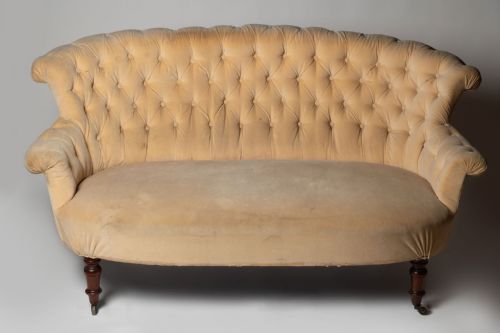


Antique Velvet Canape
An antique velvet canape brings tactile presence and traditional seating into a room, offering upholstered comfort anchored in walnut, mahogany, fruitwood, and carved wood frames.
Antique Velvet Canape
An antique velvet canape is a multi-seater upholstered form found across the Victorian period, the nineteenth century, and the years 1880, 1890, 1900, and 1920. These pieces function as sofas, settees, and couches designed for formal or domestic sitting areas.
The selections on this page draw from French Chateau, Napoleon III, French Louis XV, Rococo Revival, French Rococo Revival, Louis XV Revival, Victorian Rococo Revival, and Austro-Hungarian styles. Examples range from open arm walnut frames to shell shaped forms and pieces prepared for upholstery.
Buyers most frequently encounter nineteenth century and Victorian items alongside pieces dated precisely to 1880, 1890, 1900, and 1920. These pieces span continental workshops and include small mahogany pairs alongside larger walnut and fruitwood two seater sofas.
How they were made
The construction of these seats relies on sturdy timber frames carved from walnut, mahogany, fruitwood, and general wood. Artisans shaped these woods into sweeping Rococo Revival curves, open arms, and architectural outlines.
Upholstery forms the primary tactile element, utilising velvet, tapestry fabric, and general textile materials. Brass hardware and metal components occasionally fasten or accent the structural joints of the couches and settees.
One exceptional Austro-Hungarian piece takes the form of an oversized seashell.
What varies in quality
Quality reveals itself in the depth and crispness of the hand carving across the wooden frames. Walnut and mahogany components display sharper relief and more articulate lines than softer fruitwoods.
The choice of covering material distinguishes the output, with original velvet or tactile tapestry fabric contributing to the physical integrity of the piece. The complexity of the revival style, from simple Directoire lines to ornate French Rococo, dictates the ambition of the original design.
The Antique Velvet Canape Glossary
- Canape
- An upholstered settee or sofa featuring an exposed wooden frame. This form provides seating for multiple people within formal reception rooms.
- Rococo Revival
- A nineteenth-century design movement characterised by asymmetrical C-scrolls, naturalistic floral motifs, and flowing curves. This style heavily influenced French and Victorian seating forms.
- Fruitwood
- Timber harvested from fruit-bearing trees such as pear or apple, utilised for furniture framing. It offers a smooth grain and warm tone for cabinetmakers.
- Directoire
- A transitional French design style bridging Louis XVI and Empire periods. It favours restrained neoclassical geometry and simpler structural profiles.
- Tapestry Fabric
- Woven textile featuring pictorial or patterned designs used for heavy upholstery. This material provides durability and dense surface texture on period seats.
Antique Velvet Canape: Frequently Asked Questions
What is an antique velvet canape?
An antique velvet canape is a period settee or sofa upholstered in textile and supported by a carved wooden frame. These pieces originate from the nineteenth and early twentieth centuries.
They reflect diverse regional aesthetics including French Chateau, Austro-Hungarian, and Victorian Rococo Revival styles.
How do I style a velvet canape?
Place the settee as a focal point in a living room, hallway, or bedroom where its carved wooden frame and velvet upholstery remain visible. Pair it with complementary antique furnishings that match its specific revival period.
Keep the surrounding decor balanced to let the ornate walnut or mahogany woodwork stand out.
What materials make up these settees?
The structural frames consist of woods including walnut, mahogany, fruitwood, and general timber. Metal and brass components occasionally appear in the construction.
Upholstery materials comprise velvet, tapestry fabric, and other historical textiles.