

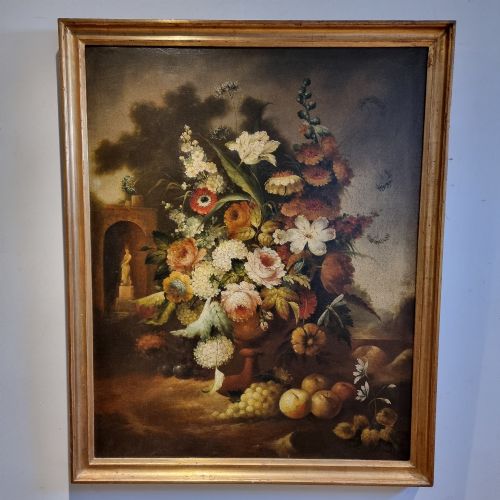
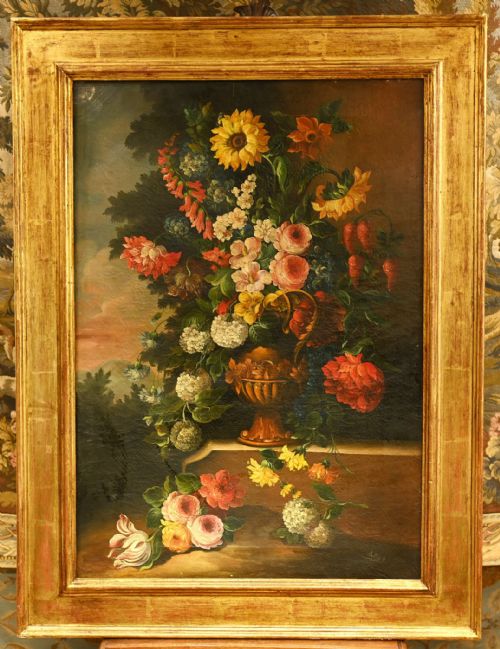


Antique Urn Floral Artwork
These antique urn floral artwork pieces bring centuries of botanical painting and decorative design into rooms through oil, watercolour and metalwork.
Antique Urn Floral Artwork
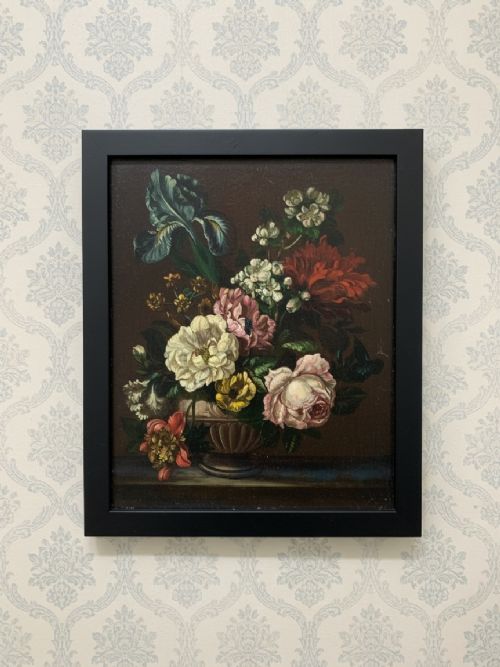
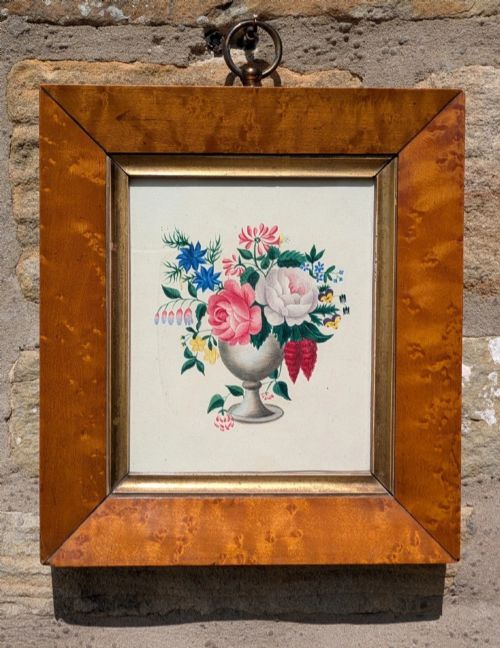
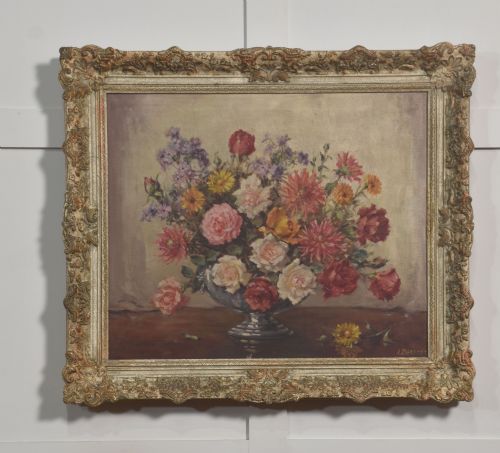
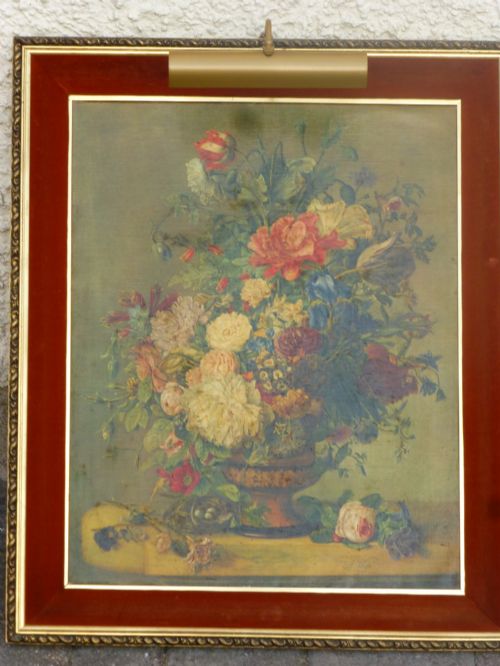
When you search for antique urn floral artwork, you encounter oil paintings, watercolours and decorative vases depicting flowers arranged in classical vessels. The selection draws primarily from the eighteenth century, nineteenth century, Regency era and 1920 revival periods.
Most examples take the form of oil paintings on canvas or wood panels, alongside occasional watercolours and metal vases. These pieces capture botanical subjects styled through Dutch Golden Age, Flemish Revival, Italian School and Baroque traditions.
The objects bridge fine art and decorative history, depicting floral arrangements often centred around traditional garden urns. You find both original period works and later revival pieces created in imitation of earlier European styles.
How they were made
Painters utilised oil paint applied to canvas, wood panels and painted boards, building up rich compositions of flowers and fruit. Frames of timber, gilded wood and giltwood enclose the painted surfaces.
Vases among the selection employ metalwork and cloisonné techniques, combining durable metal bases with decorative surface inlays. These varied production methods ensure both lasting structural integrity and detailed visual presentation.
Antique Urn Floral Artwork Retail Price Guide 2026
Typical asking prices for urn floral artwork among the pieces listed under this phrase on Sellingantiques today, from the lower quarter to the upper quarter. They describe what is for sale here now, not the wider market.
Pigeons occasionally share the canvas with flowers and fruit in nineteenth-century still life compositions.
What varies in quality
The refinement of brushwork and the depth of the floral composition separate finer paintings from simpler decorative works. Masterful handling of light upon petals and the rendering of the urn distinguish superior canvases.
Materials also indicate quality, with solid wood panels and intricate giltwood frames representing higher craftsmanship than basic timber supports. The precision of cloisonné work similarly elevates decorative vases within the range.
The Antique Urn Floral Artwork Glossary
- Oil on panel
- A painting executed on a wooden board rather than stretched canvas. This surface type provides a rigid support often found in earlier European works.
- Giltwood
- Wood that has been treated with a thin layer of gold leaf or gold paint. It frequently appears on the decorative frames enclosing period paintings.
- Cloisonné
- An ancient metalworking technique where enamel compartments are separated by thin metal strips. It creates intricate patterns on decorative vessels.
- Baroque
- An artistic style characterised by dramatic movement and rich detail. Works from this tradition emphasise dynamic compositions of flowers and fruit.
- Regency
- A period in British design spanning the early nineteenth century. Pieces from this era often display refined classical proportions and botanical studies.
Antique Urn Floral Artwork: Frequently Asked Questions
Where should I hang an oil painting?
Position oil paintings away from direct sunlight and excessive moisture to protect the canvas and wood panels. Stable indoor environments preserve the integrity of both the paint and the frame.
Allow sufficient wall space for larger compositions to breathe within the room. Proper placement highlights the depth of the floral details without crowding surrounding furniture.
What defines a still life painting?
A still life depicts inanimate subject matter, typically featuring natural items like flowers, fruit and botanical specimens. Artists arrange these elements deliberately to study form, light and colour relationships.
Within this selection, urns serve as the central vessel holding the floral arrangements. The genre allows painters to capture transient natural beauty in permanent form.
How do I distinguish revival pieces from older works?
Revival works imitate the artistic styles of earlier centuries, such as the eighteenth-century revival pieces produced in later decades. Examining the materials, pigments and framing helps clarify the likely age of the object.
Consulting the listed period alongside stylistic cues provides a reliable guide to when the piece was made. Dealers document these eras based on visible construction and artistic conventions.