



Antique Upholstered Recliner
These antique upholstered recliner pieces combine period joinery with mechanical comfort, offering a seat designed for long hours of rest.
Antique Upholstered Recliner
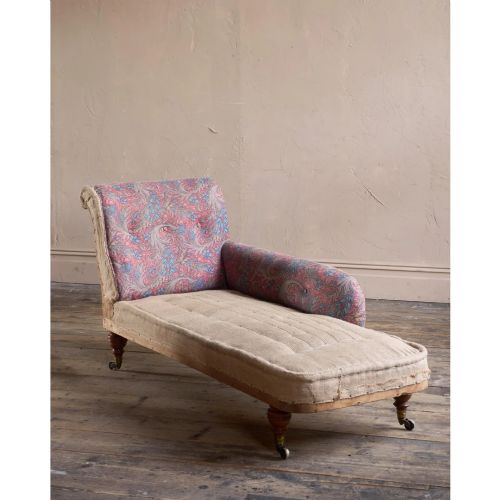
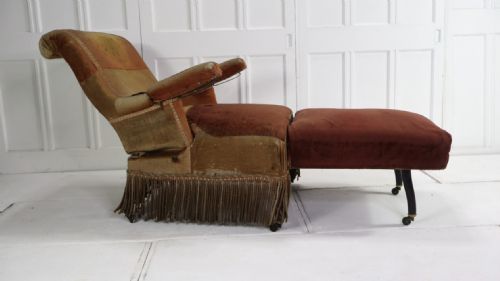
An antique upholstered recliner brings together nineteenth-century seating forms and adjustable mechanisms designed for physical ease. Buyers searching for an antique upholstered recliner find pieces ranging from library armchairs to daybeds and chaise longues that alter their posture.
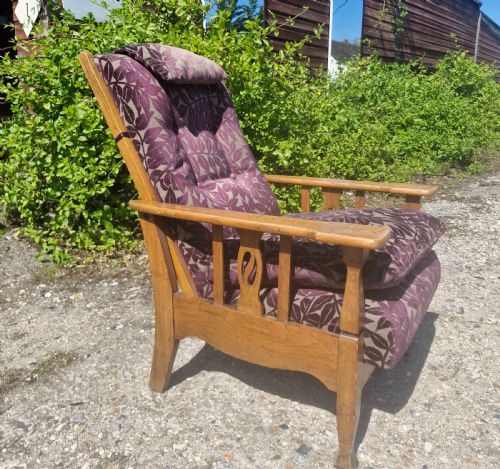
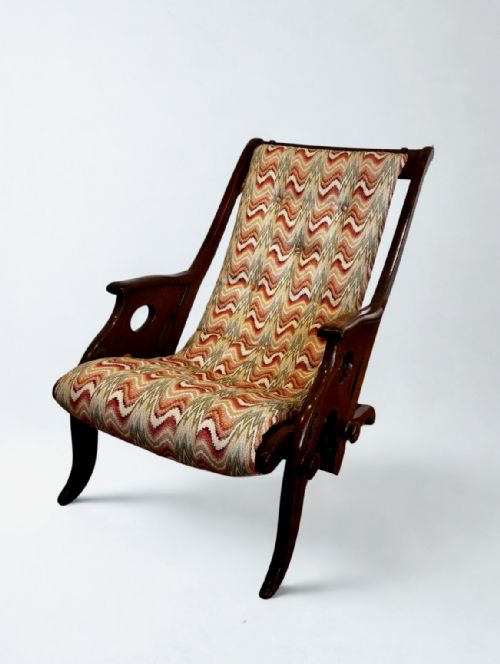
The selections span the nineteenth century through the early nineteen-tens, taking the shape of oak or mahogany armchairs alongside French Second Empire and Arts and Crafts examples. Many rely on sliding actions or adjustable backs to shift from an upright position to a reclined posture.
Chaise longues and daybeds appear frequently alongside heavy library chairs fitted with brass hardware. These seating arrangements suit studies and drawing rooms where reading or resting required dedicated support.
How they were made
Makers constructed the frames using sturdy timbers including oak, mahogany, rosewood, and ebonised wood, joined to withstand the shifting stresses of mechanical movement. Iron and brass components operated the sliding frames and reclining actions concealed within the woodwork.
Upholstery techniques involved heavy fabric, velvet, blue damask, and leather stretched over buttoned padding and sprung interiors. The integration of mechanical ratchets and sliding tracks demanded precise carpentry to ensure the adjustable sections operated smoothly.
Some nineteenth-century readers apparently dozed off with such dedication that their chairs required built-in mechanical assistance to wake them up.
What varies in quality
The sophistication of the mechanical adjustment mechanism dictates much of the distinction between standard seating and superior examples. Pieces bearing maker attribution or robust brass and iron hardware reflect higher standards of period production.
Timber selection and the crispness of carved details in the mahogany or oak frames separate ordinary workshop output from finer craftsmanship. The preservation of original upholstery materials and the integrity of the internal springing also influence the standing of each piece.
Howard and Sons·J. Herbert McNair·Jas Shoolbred·Foot and Son·Hampton and Sons
The Antique Upholstered Recliner Glossary
- Recliner
- A chair or daybed equipped with a mechanical action allowing the user to alter the angle of the backrest or seat. These mechanisms often utilise brass ratchets or sliding frames.
- Chaise longue
- An elongated upholstered seat intended for reclining, combining the functions of a chair and a daybed. Nineteenth-century examples often feature carved mahogany or ebonised wood frames.
- Campaign armchair
- A portable piece of seating designed for military officers or travel, frequently constructed from solid rosewood or hardwood with folding or adjustable components.
- Library chair
- A heavy, supportive armchair designed for prolonged reading, often incorporating mechanical adjustments or reading attachments. Early Victorian and William IV examples are typical of this form.
Antique Upholstered Recliner: Frequently Asked Questions
How do I operate the reclining mechanism?
Most period reclining chairs rely on manual ratchets, sliding tracks, or brass levers concealed beneath the armrests or side rails. Adjusting the angle requires lifting or shifting the backrest until the mechanism locks securely into place.
Care should be taken with antique actions to avoid forcing worn metal components. Gently supporting the weight of the backrest while adjusting preserves the nineteenth-century hardware.
Are these chairs suitable for daily use?
These seating pieces were built with durable timber frames and robust upholstery to withstand regular sitting and reclining. Many library chairs and armchairs remain functional for daily relaxation.
Because the internal padding and nineteenth-century springs experience age, consulting a specialist about the condition of the upholstery helps ensure comfort. Gentle use preserves the historic framework.
How do I identify a Victorian reclining chair?
Victorian reclining chairs typically display dense mahogany, oak, or ebonised wood frames paired with buttoned velvet, leather, or damask upholstery. Their construction emphasises substantial weight and dark wood tones.
Mechanical hardware made of brass or iron provides the adjustable function distinctive to the period. Makers from this era often incorporated sliding seats or ratcheted backs into standard armchair forms.