

Antique Trunk with Drawers
An antique trunk with drawers offers practical storage grounded in centuries of vernacular craftsmanship, combining a lidded chest with functional lower compartments.
Antique Trunk with Drawers
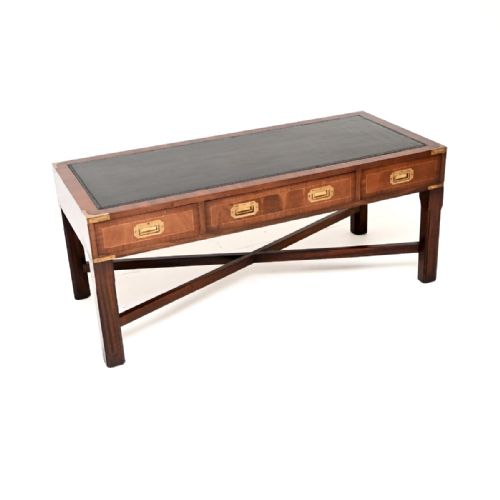
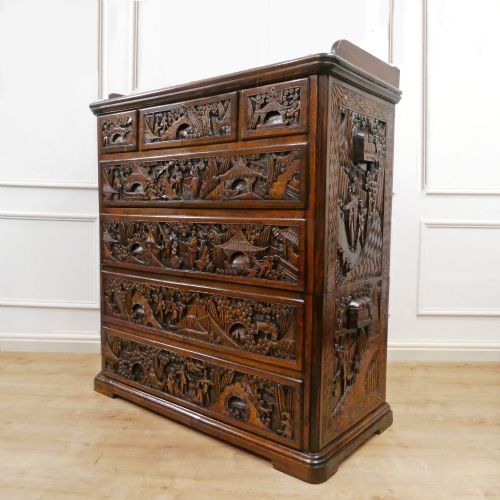
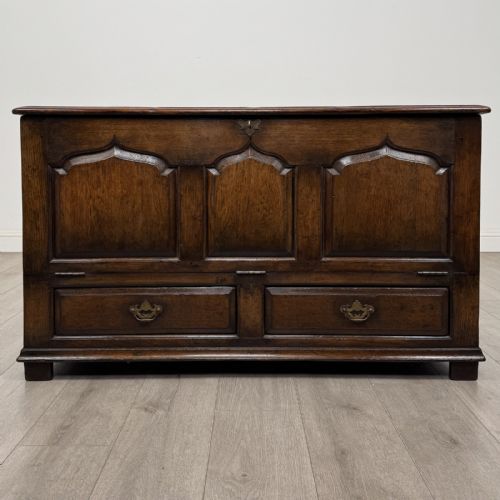
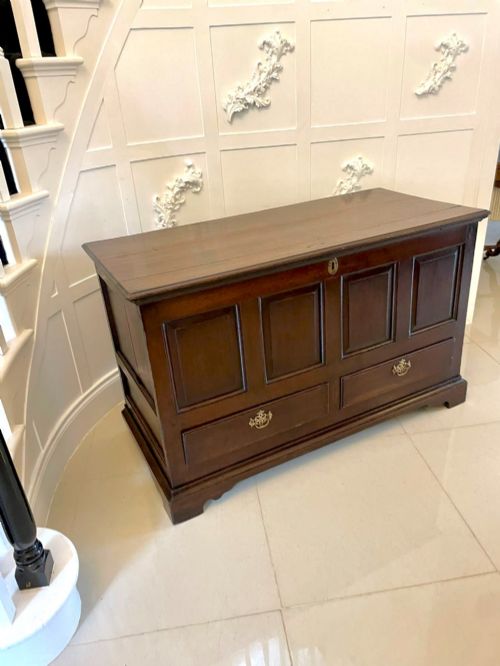
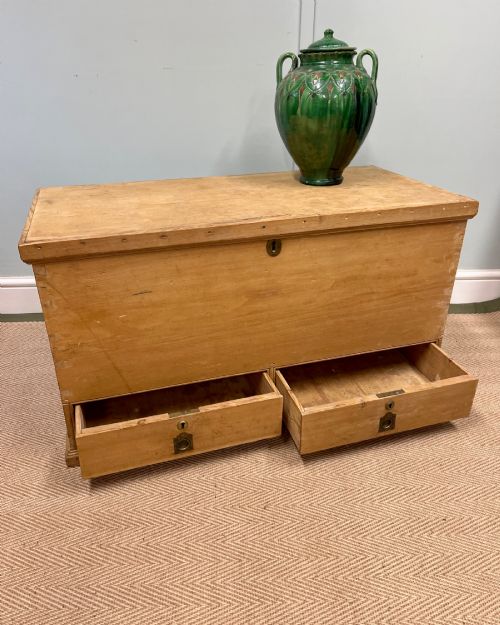
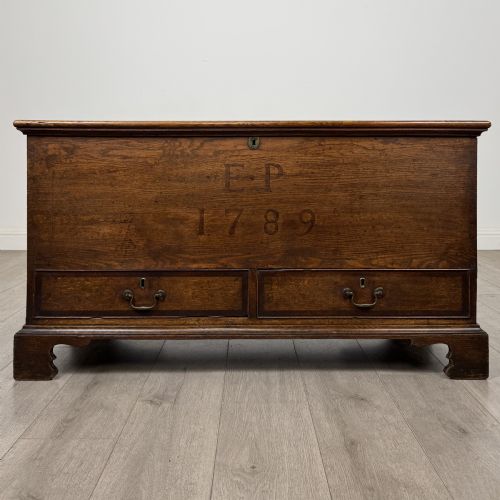
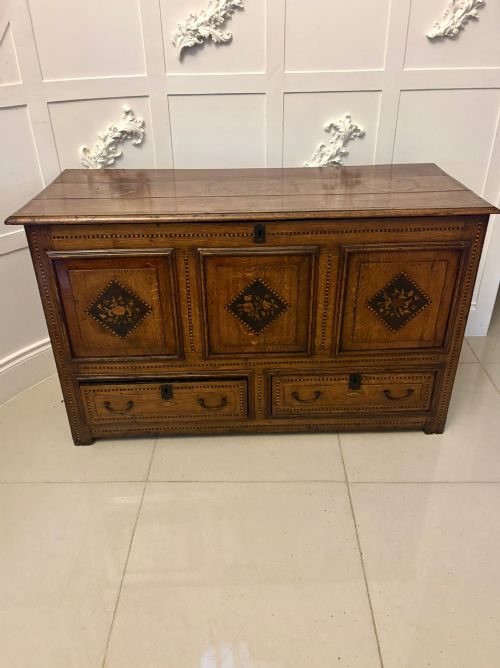
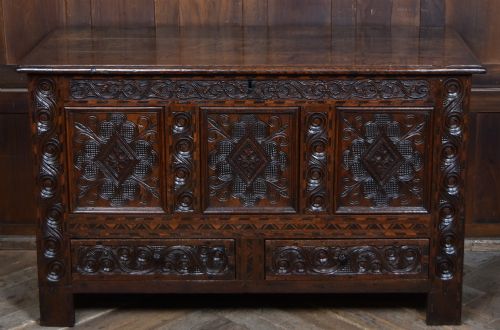
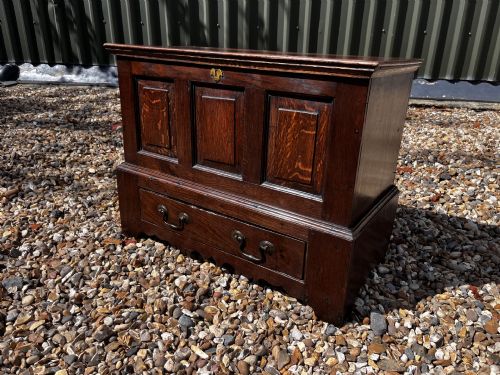
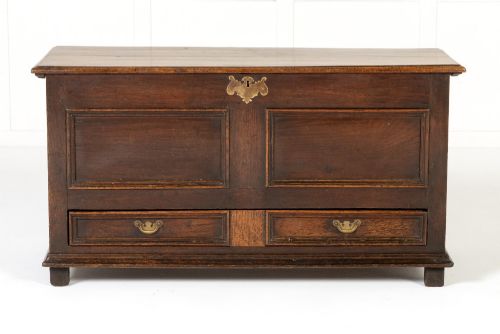
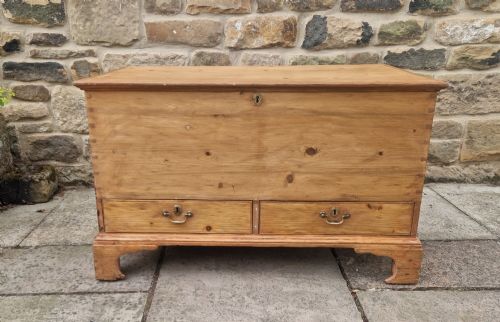
An antique trunk with drawers bridges the gap between simple blanket boxes and tallboy chests, bringing together upper lidded compartments and lower storage. These pieces appear most frequently as mule chests and coffer baches originating from the seventeenth, eighteenth, and nineteenth centuries.
Makers constructed these forms in regional oak, pine, and mahogany, reflecting domestic needs in English, Welsh, and campaign contexts. The integration of internal and external drawers allows both bulky linens and smaller items to find a single home.
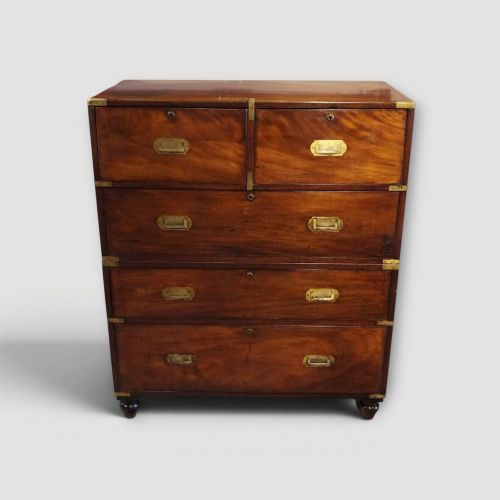
The material palette shifts from heavy native hardwoods in earlier periods to lighter softwoods and painted finishes by the Victorian era. Buyers encounter everything from rustic country workshop pieces to disciplined military campaign furniture fitted with brass hardware.
Materials and Construction
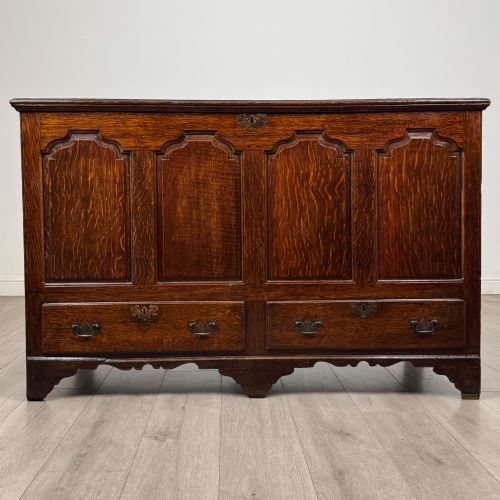
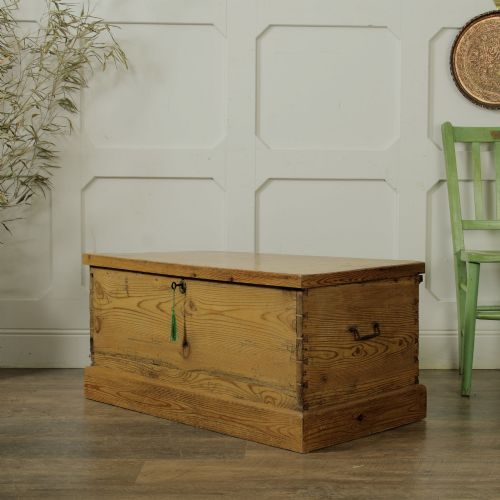
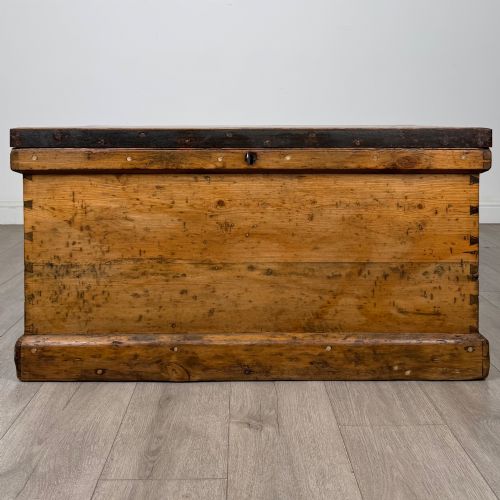
Joiners relied heavily on solid oak and pine, shaping panels by hand and securing frames with pegged mortise and tenon joints. Elm appeared selectively for decorative panels, while mahogany served in refined Georgian and campaign pieces.
Iron and brass provided structural reinforcement and lifting handles, particularly on campaign trunks designed for travel. Craftsmen applied organic waxes, paints, and occasional marquetry inlay to finish the timber surfaces.
Antique Trunk with Drawers Retail Price Guide 2026
Typical asking prices for trunk with drawers among the pieces listed under this phrase on Sellingantiques today, from the lower quarter to the upper quarter. They describe what is for sale here now, not the wider market.
Some pine mule chests hide small internal compartments known as till boxes, designed to keep coins safe from prying fingers.
Distinguishing Quality
The integrity of the timber framing and the survival of original hardware dictate the standing of an individual piece. Hand-cut dovetails within the drawers and undisturbed panel shrinkage signal workshop competence rather than later assembly.
Proportion and surface patina separate utilitarian storage from superior vernacular design. Pieces retaining early waxed finishes or original regional paint display the integrity of their period without aggressive modern intervention.
The Antique Trunk with Drawers Glossary
- Mule chest
- A traditional storage chest featuring one or more drawers built into the base beneath the main lidded compartment. This form developed during the seventeenth century to ease access to stored textiles.
- Campaign furniture
- Portable pieces designed for military officers, constructed with inset brass handles and dismantling elements. These items utilise robust timbers like mahogany and oak to withstand transit.
- Marquetry
- The art of applying decorative veneer pieces to a structure to form intricate geometric or floral patterns. Craftsmen utilised contrasting woods to enrich the visual depth of formal chests.
- Fielded panel
- A wooden panel with bevelled edges designed to fit securely within a grooved frame. This technique allowed timber to expand and contract naturally with seasonal humidity changes.
Antique Trunk with Drawers: Frequently Asked Questions
What is a mule chest?
A mule chest is a storage box that combines a hinged lid on top with functional drawers built into the base. This hybrid design emerged when makers realised placing drawers beneath a coffer improved daily access to linens.
These pieces served as primary bedroom and parlour storage in homes across England and Wales. The lower drawers held smaller garments while the upper well accommodated bulkier blankets.
How old is my trunk?
Dating relies on examining construction methods, timber species, and tool marks visible on the interior boards. Seventeenth and eighteenth-century examples typically display hand-riven oak, pegged joints, and heavy panel construction.
Pine and mahogany variants became more common through the Georgian and Victorian periods, often showing machine-sawn elements by the nineteenth century. Regional styles and hardware designs also anchor pieces to specific decades.
Can I use this as a coffee table?
Many buyers repurpose these sturdy chests as living room centrepieces where they double as hidden storage. Their flat tops and solid proportions accommodate everyday surface use while keeping blankets out of sight.
When positioning timber pieces near heat sources, regular waxing prevents the old wood from drying out. Allowing adequate clearance protects the historical finish from excessive wear.
What is a coffer bach?
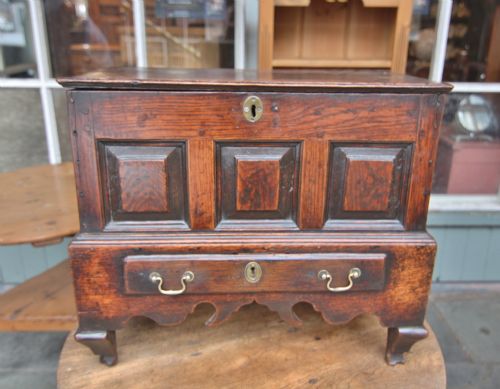
A coffer bach is a miniature Welsh chest featuring small drawers in the base beneath a lidded compartment. Historically, communities presented these diminutive pieces as gifts for marriages or significant birthdays.
Despite their compact scale, craftsmen employed the same sophisticated joinery found in full-sized furniture. Their survival makes them prized examples of regional vernacular woodworking.