



Antique Trunk Dial
An antique trunk dial is a sturdy timekeeper designed for reliable service in public rooms, bringing domestic presence and mechanical precision to any interior.
Antique Trunk Dial
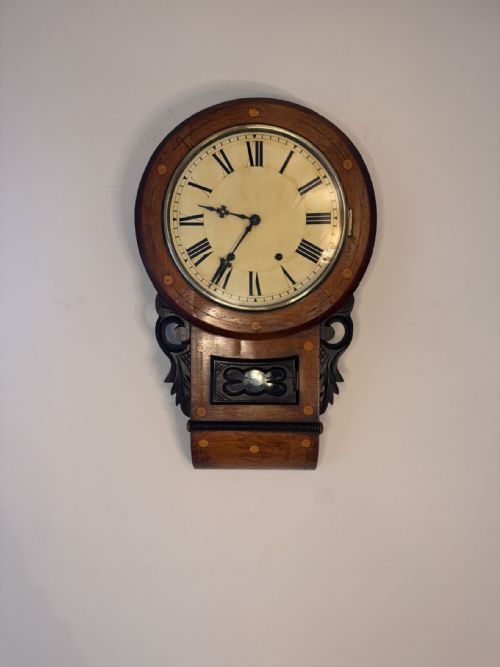
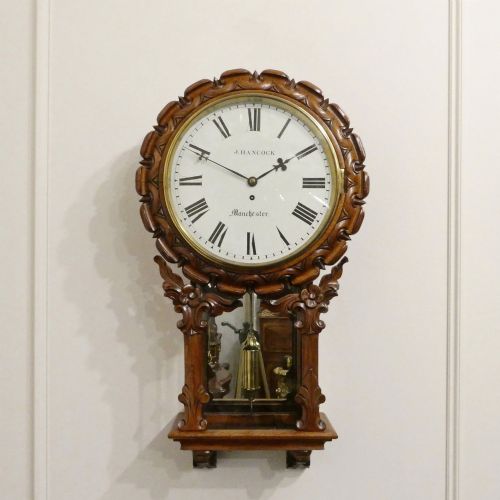
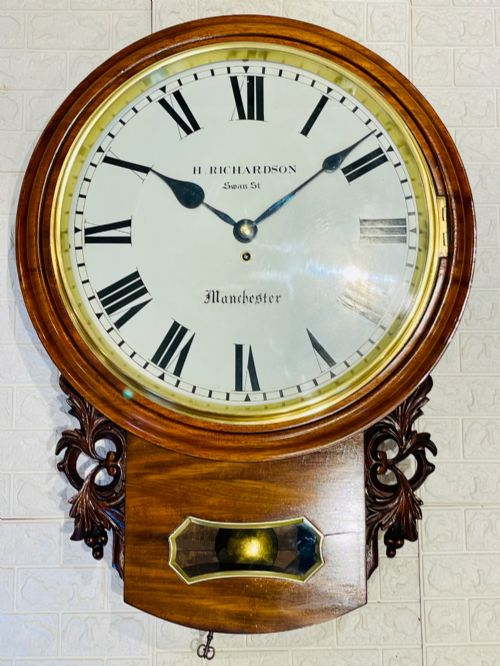
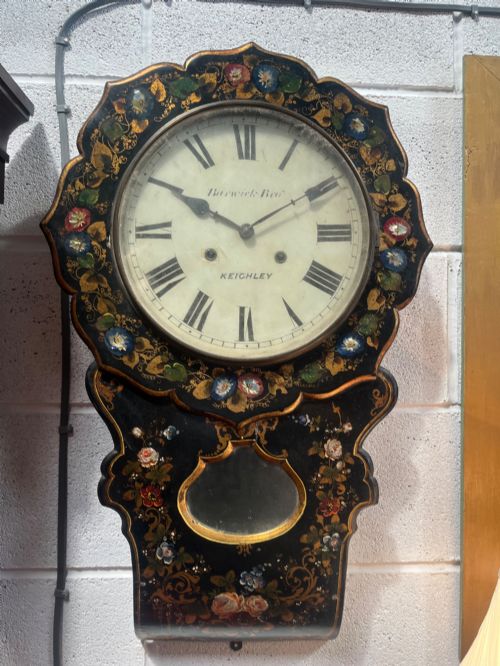
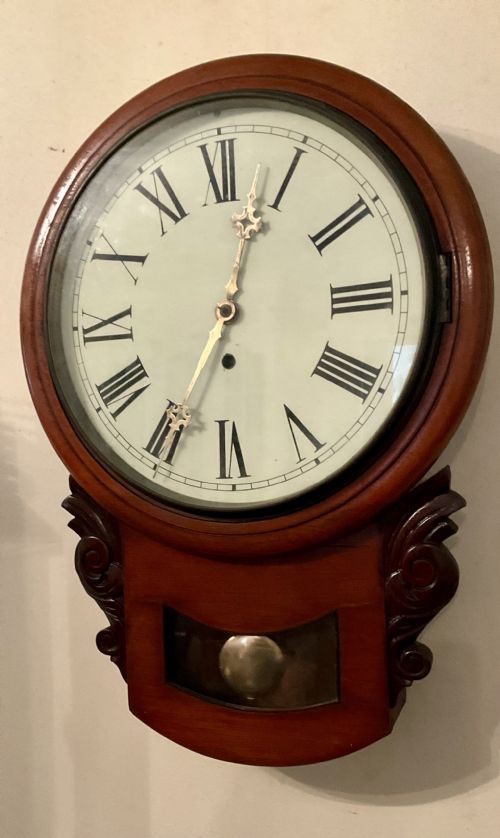
The term antique trunk dial describes wall-mounted timepieces featuring a prominent circular face mounted above an extended lower case, commonly known as drop-dial clocks. These pieces appear frequently from the nineteenth century onwards, reflecting the practical needs of offices, stations and large homes.
Makers utilised various timbers for these cases, with mahogany, rosewood and walnut dominating the inventory alongside oak and ebonised wood. The configuration generally pairs a single fusee movement with a glass-fronted brass bezel and a painted or wooden dial.
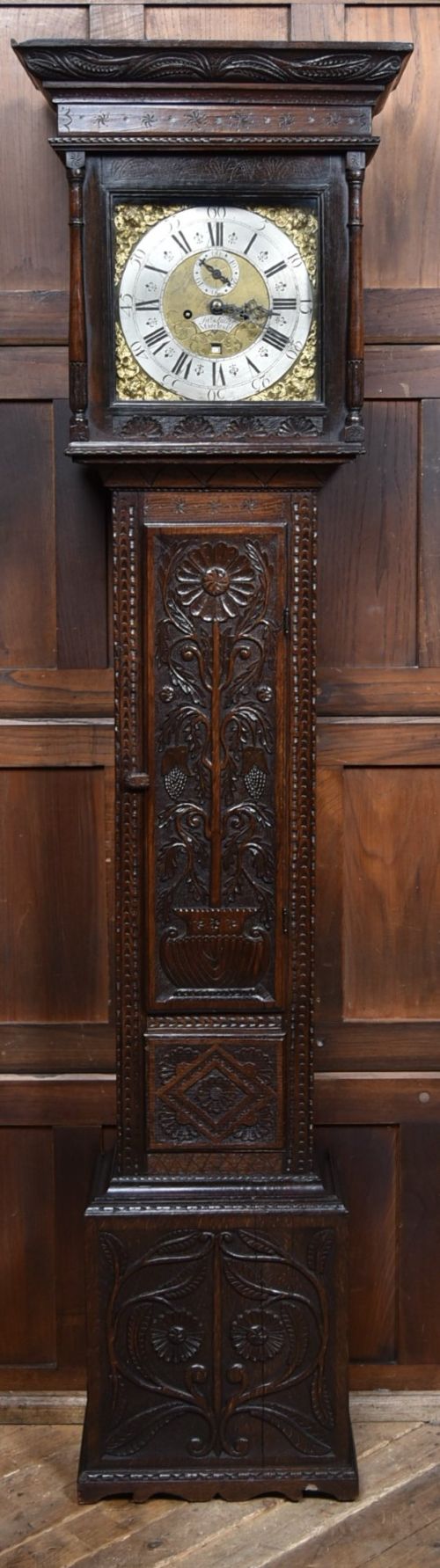
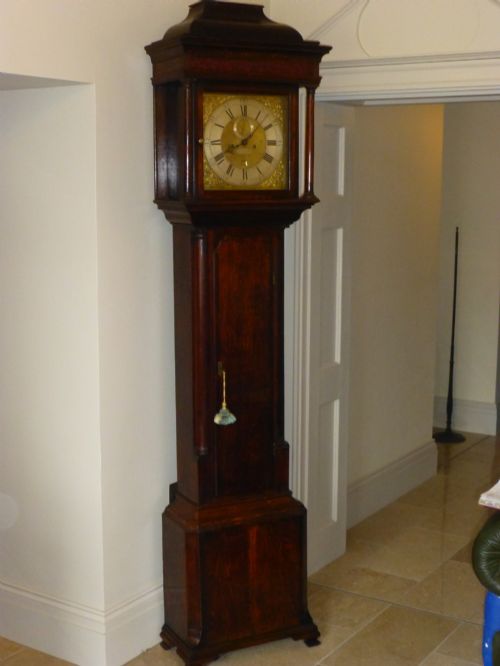
Originating primarily within English workshops, these wall clocks range from restrained Regency examples to heavily carved Victorian models and inlaid variations. Buyers encounter everything from simple timepiece movements to bell-striking mechanisms enclosed in compact or elongated trunk bodies.
How they were made
Cabinetmakers constructed the trunk cases using solid timbers like mahogany, oak and rosewood, frequently incorporating walnut veneers and mother-of-pearl inlay to decorate the surrounds. The lower box often includes side access doors secured by small brass latches, allowing adjustments to the pendulum bob and suspension spring.
Clockmakers fitted robust brass movements, often relying on fusee mechanisms to maintain steady tension on the gear train as the mainspring unwound. Dials were meticulously painted on metal or carved from wood, then protected behind thick bevelled glass held within heavy cast brass bezels.
Antique Trunk Dial Retail Price Guide 2026
Typical asking prices for trunk dial among the pieces listed under this phrase on Sellingantiques today, from the lower quarter to the upper quarter. They describe what is for sale here now, not the wider market.
Materials recorded on this site include brass, glass, mother-of-pearl and ebonised wood applied to wall-mounted and longcase forms.
What varies in quality
The standard of timber selection and cabinet construction dictates the primary tier of craftsmanship in these timepieces, distinguishing plain utility pieces from finely figured grain cabinets with intricate brass inlay. Finishes applied to the timber, whether French polish or wax, show varying degrees of preservation and depth.
Movement execution marks the mechanical division, where crisp wheel cutting, well-finished plates and signed brass dials indicate superior workshop standards. The integrity of the painted dial numerals and the original weight of the cast brass bezel further separate utilitarian production from high-grade commissions.
The Antique Trunk Dial Glossary
- Fusee
- A conical pulley connected to the mainspring by a chain or cord, designed to equalise the declining power of the spring as it unwinds. This mechanism ensures consistent force is delivered to the escapement throughout the running period.
- Drop dial
- A clock configuration where the circular dial sits atop a vertical wooden trunk or box that houses the pendulum. This shape evolved to accommodate the downward swing of the pendulum while providing a clear display.
- Bezel
- The brass ring that holds the glass protecting the clock face, usually hinged to allow access for hand setting. On better pieces, this frame is cast with heavy sections and secure catches.
- Timepiece
- A clock that indicates the hours and minutes but does not include a striking or chiming mechanism. These movements require simpler gear trains than their striking counterparts.
Antique Trunk Dial: Frequently Asked Questions
How do fusee movements work?
A fusee movement relies on a spiralling pulley and a chain to regulate the force transmitted from the mainspring to the gear train. As the spring loses tension, the chain pulls higher up the wider part of the cone, maintaining steady power.
This clever mechanical device ensures the clock maintains more consistent timekeeping as the power reserve gradually diminishes over the running cycle.
Where were trunk dials used?
These wall clocks hung in places requiring reliable timekeeping accessible to many people, such as railway stations, public offices, coaching inns and large domestic hallways. Their distinct shape made them easy to read from a distance while keeping the pendulum safely enclosed.
Later Victorian and Edwardian examples often transitioned into domestic settings, serving as functional decor in dining rooms and parlours.
How do I date a drop dial clock?
Dating relies on examining the timber choice, case construction methods, dial materials and movement signatures. Regency examples often feature clean mahogany cases and wooden dials, while Victorian pieces lean towards rosewood, walnut and inlaid decoration.
Maker signatures inscribed on the dial or movement plates provide further clues, cross-referencing with recorded working periods of the clockmaker.
What is a wooden dial?
A wooden dial is a painted or polished wooden disc used instead of the more common metal or enamel face, frequently found on early nineteenth-century Regency pieces. These surfaces require careful preservation to protect the original paint and lettering.
Craftsmen turned these wooden faces from solid timber blanks before applying the numerals and minute tracks by hand.