



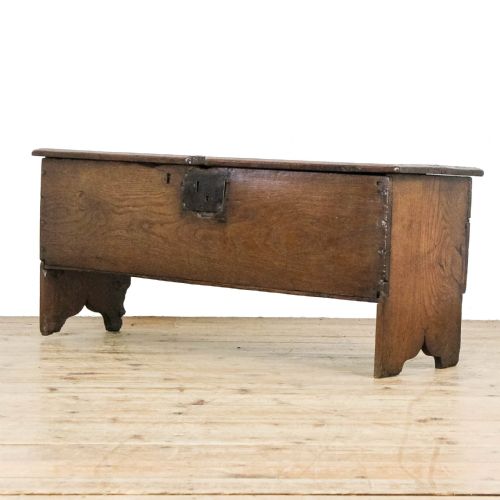
Antique Trunk Bench
An antique trunk bench provides practical storage and seating, bringing solid oak, mahogany, and pine construction into hallways and bedrooms from periods spanning the sixteenth century onward.
Antique Trunk Bench
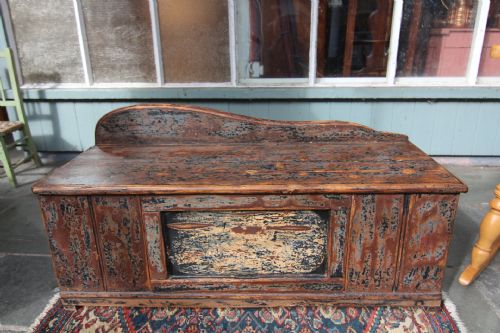
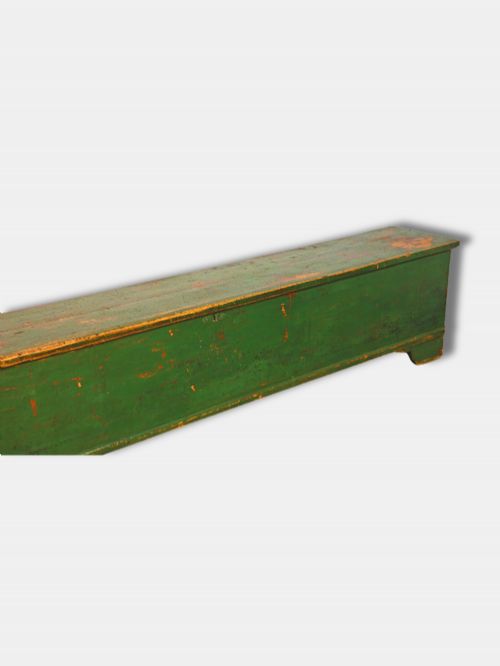
An antique trunk bench combines a deep storage box with a seat, taking the form of blanket chests, coffers, mule chests, and box settles. These pieces served functional domestic roles in storing textiles and providing seating before built-in wardrobes became common.
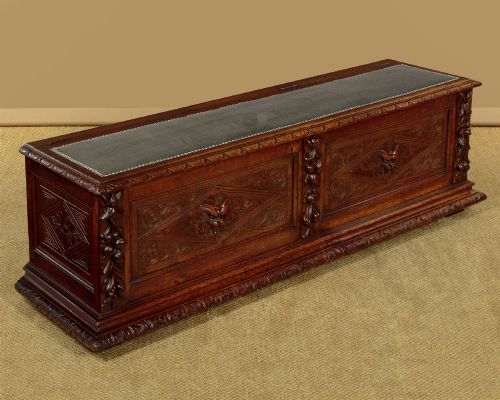
You are most likely to meet oak and mahogany examples spanning the Victorian, Edwardian, and nineteenth-century periods on this page. Many pieces double as luggage stands, ottomans, and hall benches with carved panels or upholstered tops.
Earlier iterations include eighteenth-century oak sword chests and sixteenth-century six-plank chests which emphasise utilitarian strength over comfort. Later nineteenth-century country house versions introduce plush leather upholstery and deep proportions designed for gentlemen's quarters.
Factors determining quality
The choice of timber and depth of carving separate standard utility boxes from superior country house pieces. Dense, figured mahogany and quarter-sawn oak with crisp, hand-chiselled detailing indicate higher workshop standards.
Structural integrity depends on original hinges, sound internal floorboards, and tight joints that withstand regular seating weight. Pieces retaining patinated original surfaces without excessive modern intervention command greater respect.
Proportion and scale dictate desirability, particularly in large ottomans and hall benches designed with raised upstands or fluted legs. Maker attribution through stamped signatures or labels adds archival certainty to superior construction.
Listings feature timbers including oak, mahogany, pine, walnut, beech, and ash, spanning from sixteenth-century six-plank chests to twentieth-century hotel luggage stands.
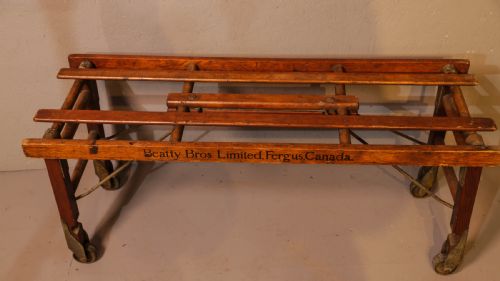
Brown & Lamont·Beatty Bros Fergus Canada·Hallett & Sons·Waring & Gillow
The Antique Trunk Bench Glossary
- Coffer
- A heavy wooden chest traditionally used for storing valuables or dry goods. Most feature hinged lids and sturdy box construction.
- Mule chest
- A chest featuring one or more drawers beneath the main storage well. They bridge the design gap between simple blanket boxes and chest of drawers.
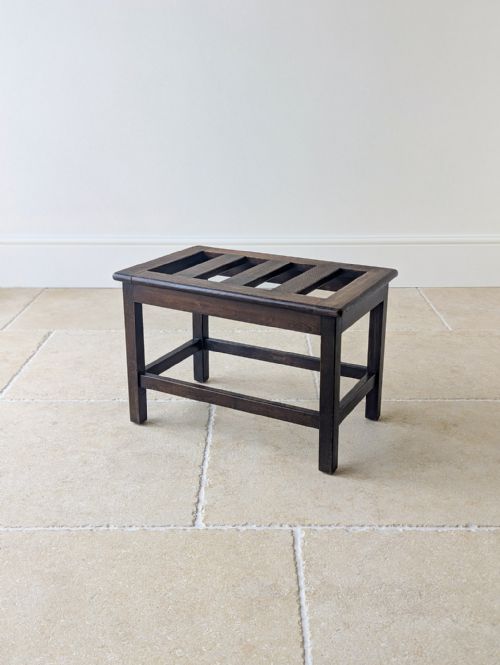
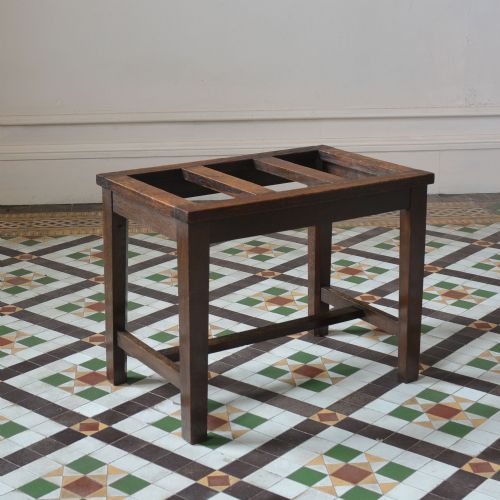
- Luggage stand
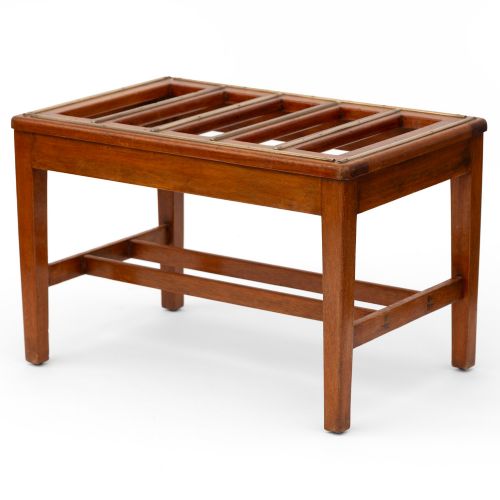
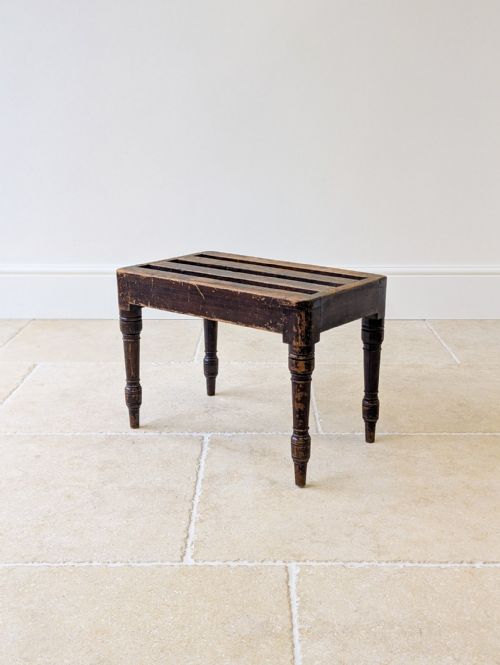
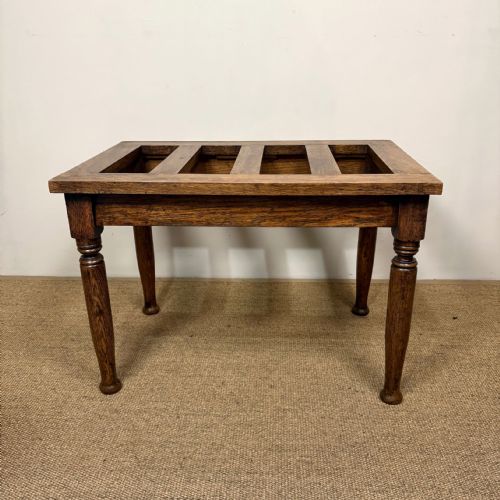
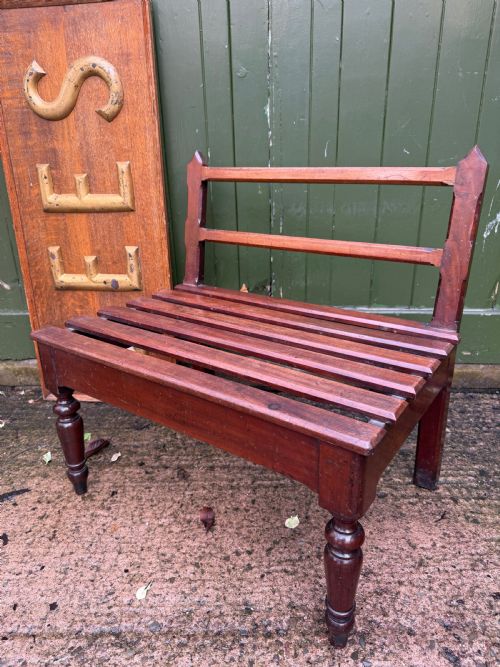
- A low support frame with sloped or flat tops designed for holding travel trunks in bedrooms and hotels. Many incorporate fabric webbing or wooden slats.
- Faux bois
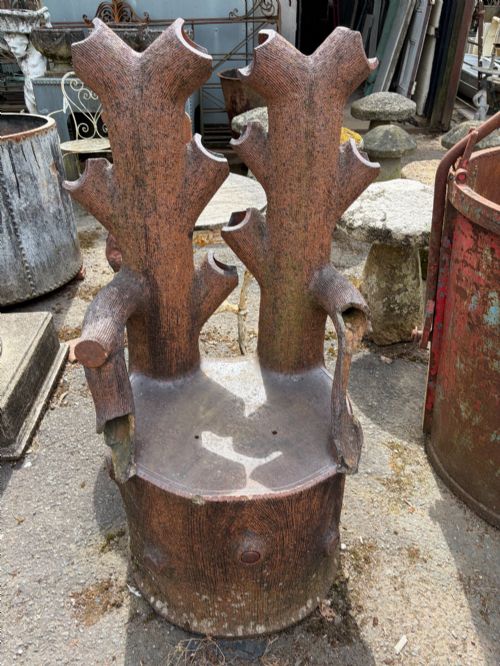
- An artistic imitation of wood grain applied to non-wooden surfaces or lesser timbers. It appears frequently on nineteenth-century garden seats and painted furniture.
- Six-plank chest
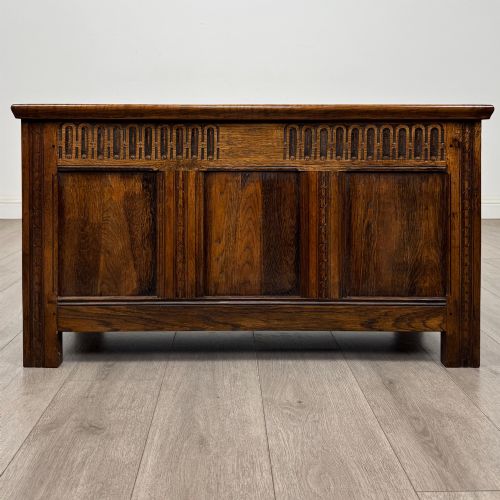
- An early form of primitive chest constructed from six broad boards joined edge to edge. Pegged joints and V-notch cutting typify sixteenth-century examples.
Antique Trunk Bench: Frequently Asked Questions
What is an antique trunk bench?
An antique trunk bench is a dual-purpose furniture form that combines a hinged storage compartment with a seating surface. They include blanket chests, box settles, and upholstered ottomans.
These pieces were built to store household linens, garments, or travel gear while offering a place to sit in hallways, bedrooms, and reception rooms.
How were antique trunk benches used?
Historically, these benches served to secure valuable textiles, woollens, and personal belongings away from dust and pests. In country houses and hotels, they functioned as luggage stands for guests.
The sturdy flat tops simultaneously provided casual seating when dressing or putting on boots in entrance halls and bedrooms.
How do I live with an antique trunk bench?
Position your trunk bench at the foot of a bed for spare blankets, or place it in a hallway as a boot bench. Ensure heavy lids are propped safely if accessed frequently.
Keep wooden surfaces conditioned with traditional wax and protect upholstered leather or linen tops from direct sunlight to preserve the patinated finish.
How do I date an antique trunk bench?
Dating relies on examining construction techniques, tool marks, timber species, and stylistic details. Sixteenth and seventeenth-century pieces use pegged oak planks and hand-riven boards.
Victorian and Edwardian examples introduce machine-sawn timbers, upholstered springs, iron brackets, and occasionally maker stamps or hotel provenance.