


Antique Trumeau
Antique trumeau mirrors combine architectural wall panels with oil paintings or glass plates, bringing distinct French character and vertical height to a room.
Antique Trumeau
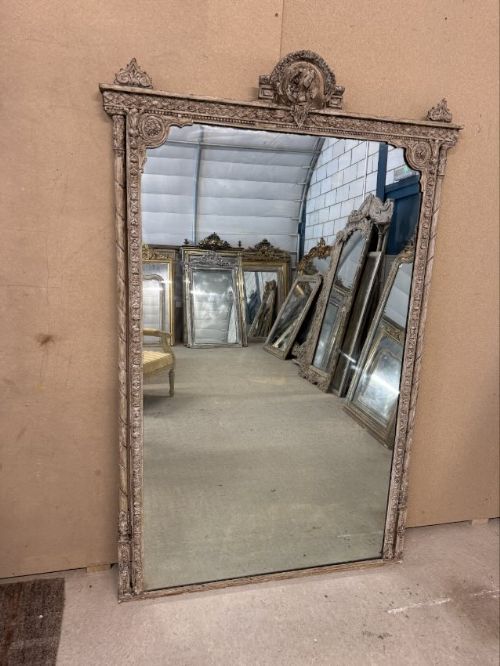
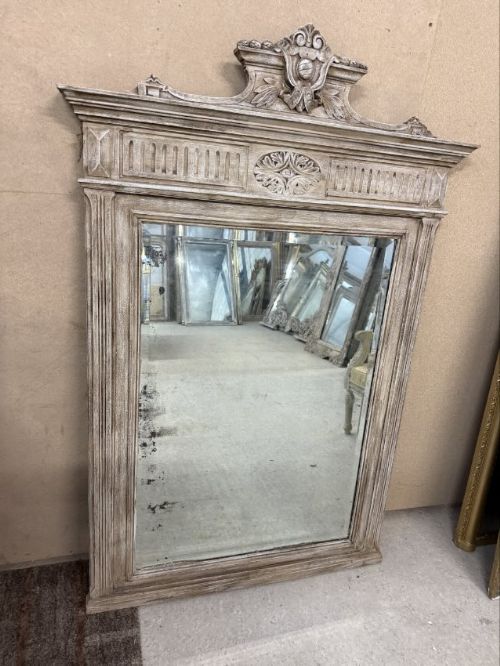
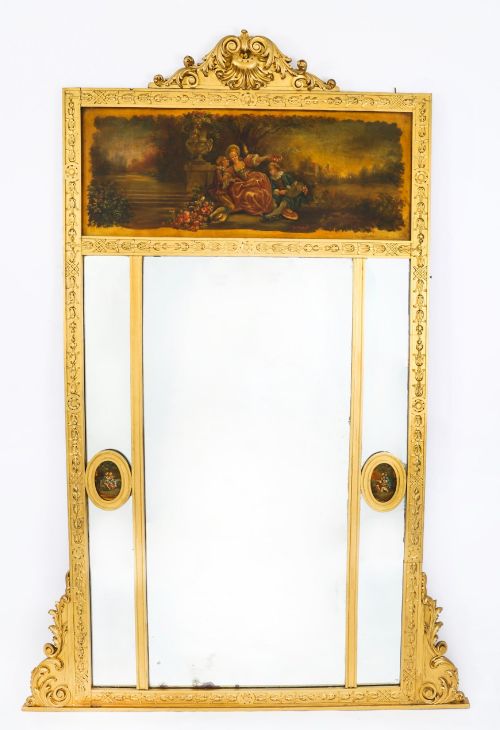
An antique trumeau comprises a wooden wall panel integrated with an oil painting, a verre eglomise panel, or a mirror plate. These pieces originate primarily from French chateaux and provincial homes, spanning periods from the eighteenth century through to the early twentieth century.
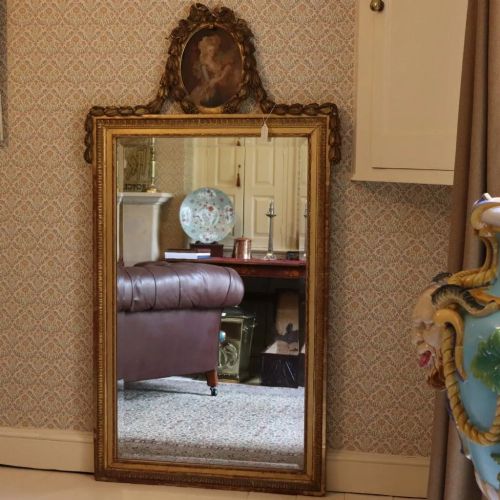
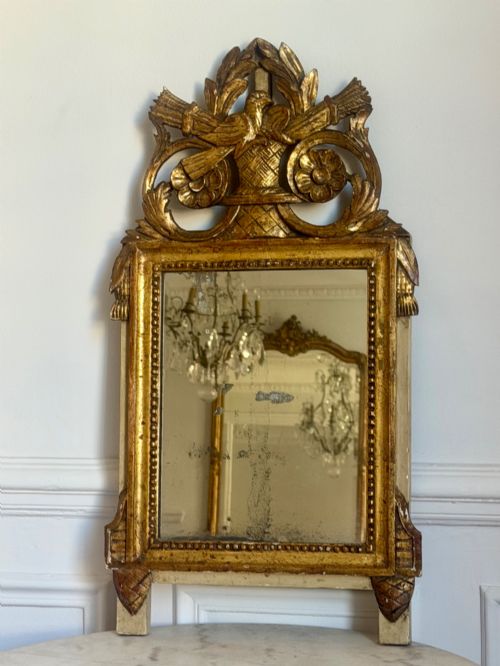
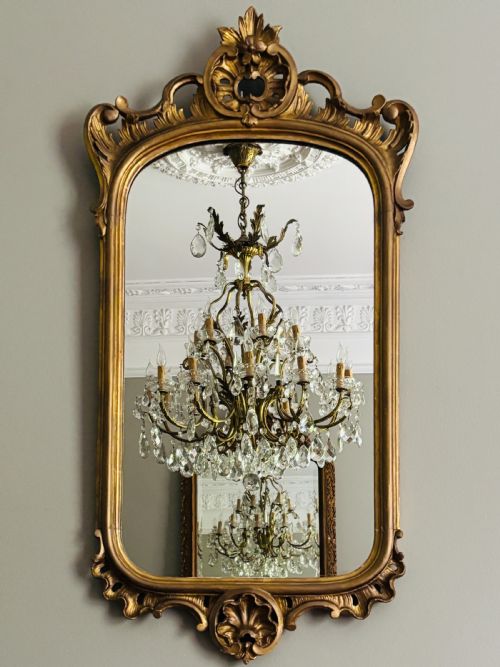
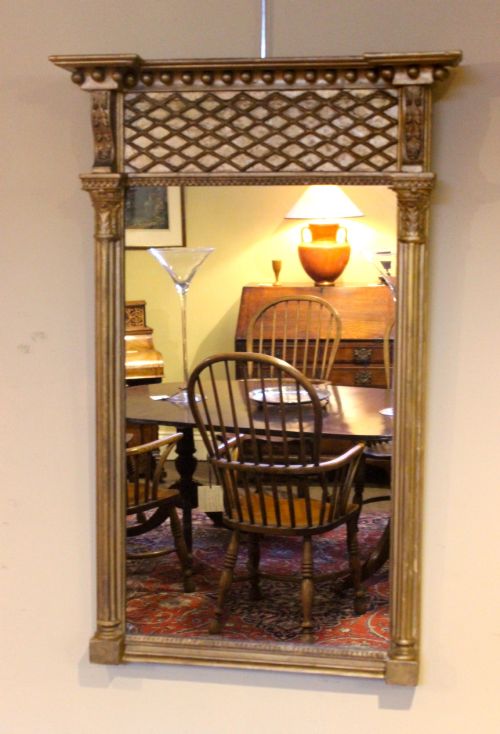
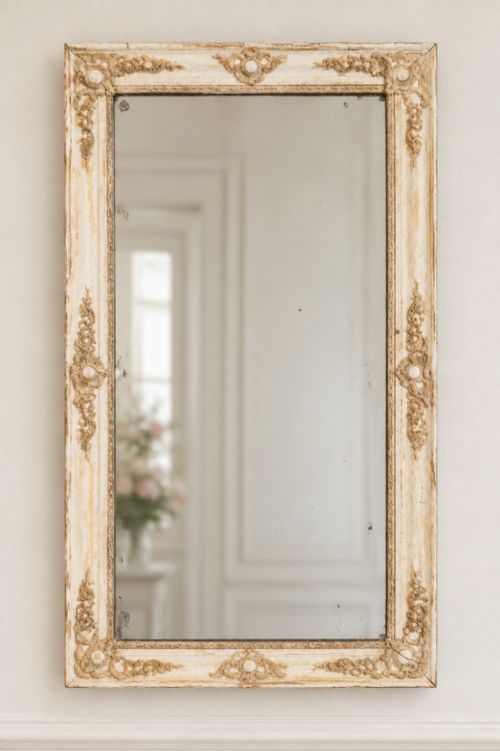
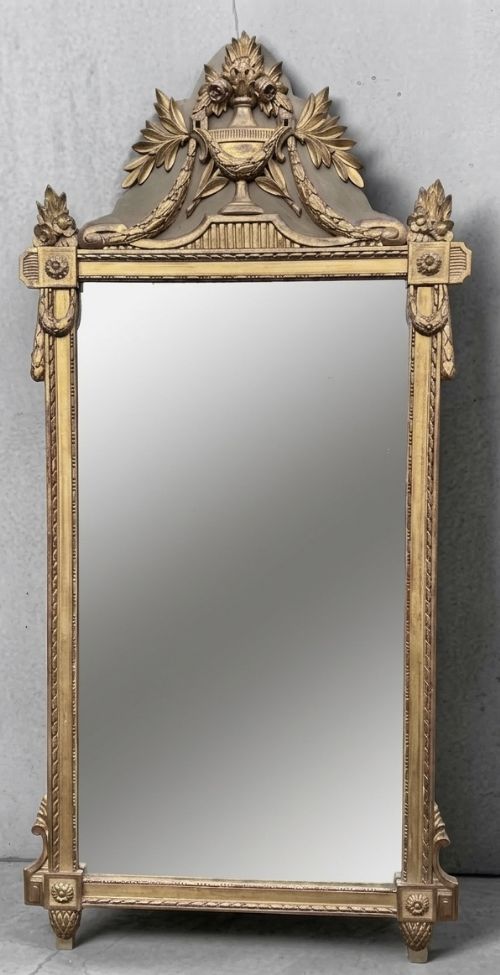
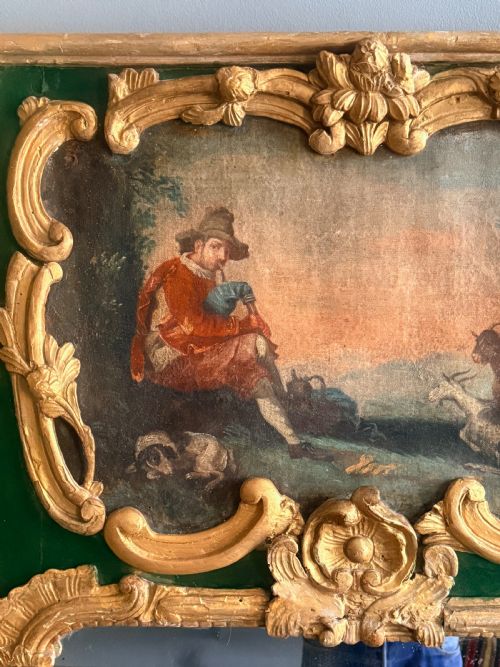
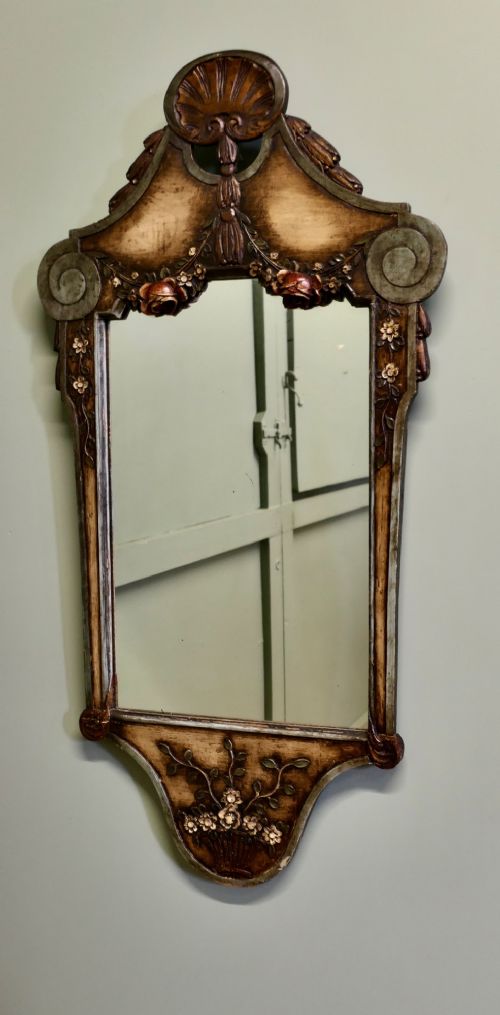
The version most commonly met on this page is the tall French pier mirror or wall mirror, combining carved wood frames with painted pastoral or marine scenes. Examples range from restrained Regency and Louis XVI styles to ornate Louis XV Rococo and French Empire designs.
Makers and artisans built these architectural panels to fit specific wall spaces between windows, utilising painted wood, gesso, and giltwood to unify wall decor. Collectors select them to anchor high-ceilinged rooms with period proportion and integrated artwork.
Materials and construction methods
Carpenters constructed the primary frames and panels from pine, mahogany, or walnut, applying layers of gesso to build up carved details. Craftsmen then finished these surfaces using gold leaf, bronze paint, or oil paint.
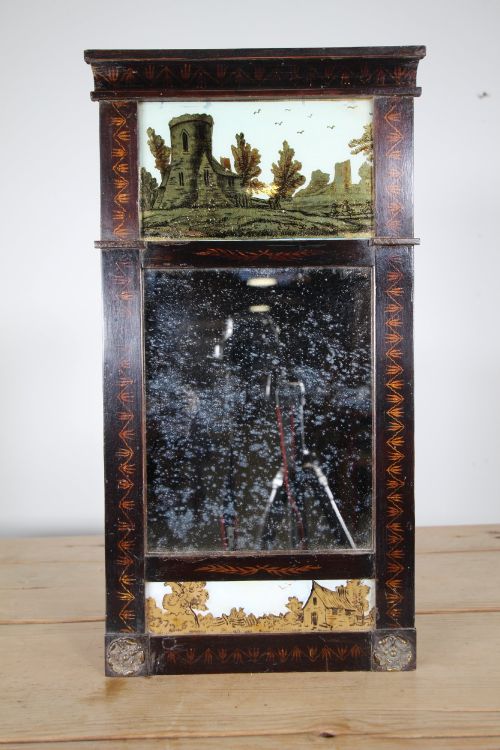
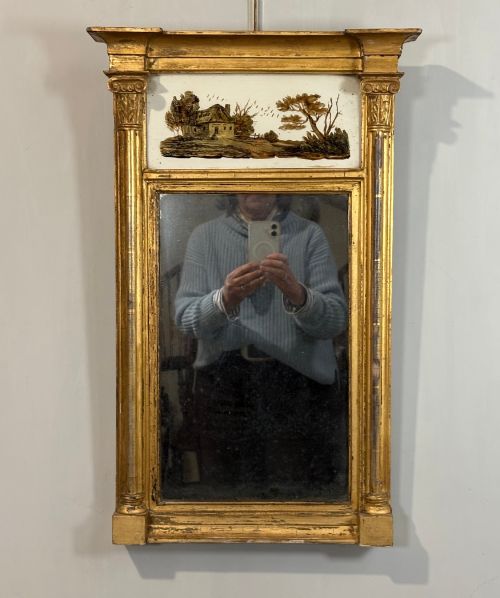
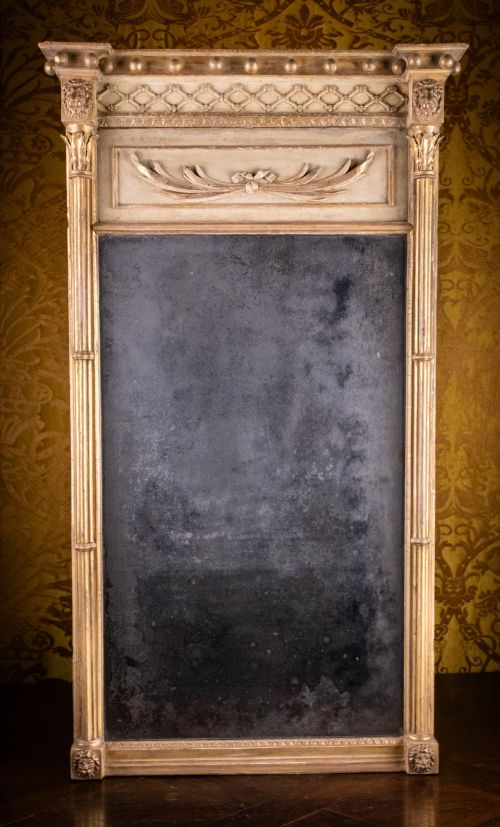
Glass plates in older pieces consist of historic mercury glass, which exhibits characteristic pooling and minor silvering losses. Upper sections frequently incorporate canvas oil paintings depicting galleons or landscapes, or reverse-painted verre eglomise panels.
Antique Trumeau Retail Price Guide 2026
Typical asking prices for trumeau among the pieces listed under this phrase on Sellingantiques today, from the lower quarter to the upper quarter. They describe what is for sale here now, not the wider market.
Some marriage mirrors feature painted symbols intended to bring lifelong harmony, though a quiet home remains the primary goal.
Factors determining quality
Quality rests on the artistic merit and original condition of the integrated oil painting or verre eglomise panel relative to the carved frame. Finely hand-painted pastoral scenes or maritime subjects elevate a piece above standard decorative mirrors.
The depth and crispness of the gesso and wood carving distinguish finer workshop output, alongside the presence of original mercury glass plates. Surface preservation, including untouched original gilt and painted finishes, dictates the integrity of the piece.
The Antique Trumeau Glossary
- Trumeau
- An architectural wall panel incorporating a mirror or painting designed to fit the space between windows. It functions as both a decorative wall hanging and an integrated artwork.
- Verre eglomise
- A cold decoration technique where artisan gilding and painting are applied to the reverse side of glass panels. This creates a reflective, metallic surface with deep lustre.
- Mercury glass
- A double-walled blown glass type created in the nineteenth century by pouring a silvering mixture containing mercury between glass layers. It displays a distinctive cloudy, dark reflection.
- Gesso
- A plaster-like mixture applied to wood frames to provide a smooth base for gilding and intricate relief carving. It allows craftsmen to achieve sharp architectural details.
- Pier mirror
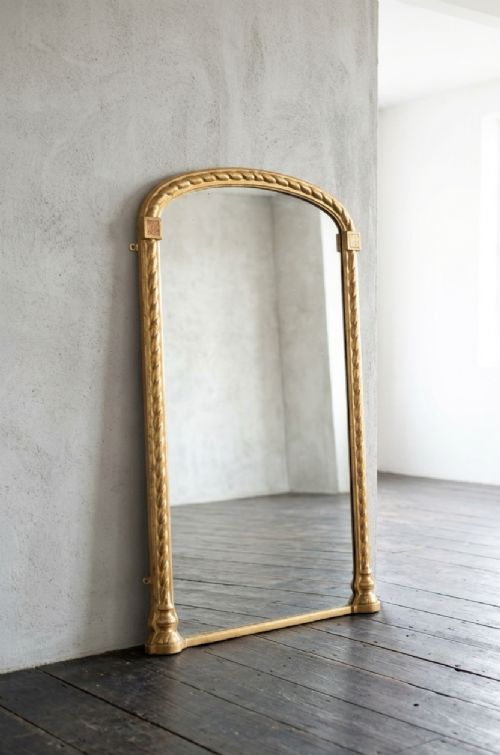
- A tall, narrow mirror specifically made to hang on the wall space between two windows. They often feature decorative crests and matching console tables.
Antique Trumeau: Frequently Asked Questions
What is an antique trumeau mirror?
An antique trumeau mirror is a traditional French architectural wall panel that pairs a vertical looking glass with an oil painting or decorated glass section above. These dual-purpose pieces were designed to hang on the pier wall between windows.
They bring height and reflected light into a room while doubling as framed artwork. Most examples date from the eighteenth and nineteenth centuries in styles ranging from Louis XVI to Regency.
How do I identify the period of a trumeau?
Period identification relies on examining the frame carving styles, construction wood types, and the characteristics of the glass plate. Eighteenth-century examples often feature Rococo asymmetry, while Louis XVI and Regency pieces display neoclassical symmetry and columns.
Checking for original mercury glass, hand-sawn timber boards, and layered gesso finish provides further clues to age. Stylistic markers like ribbon crests or Empire motifs align pieces with specific nineteenth-century decades.
Where should I place a trumeau in my home?
These mirrors suit rooms with high ceilings where their vertical proportions can anchor the space effectively. Placing them above a fireplace mantel or on a central living room wall allows them to function as a focal point.
They also work well in hallways or dining rooms to bounce natural light around the interior. Position them away from direct moisture to protect the antique painted surfaces and silvered glass.