

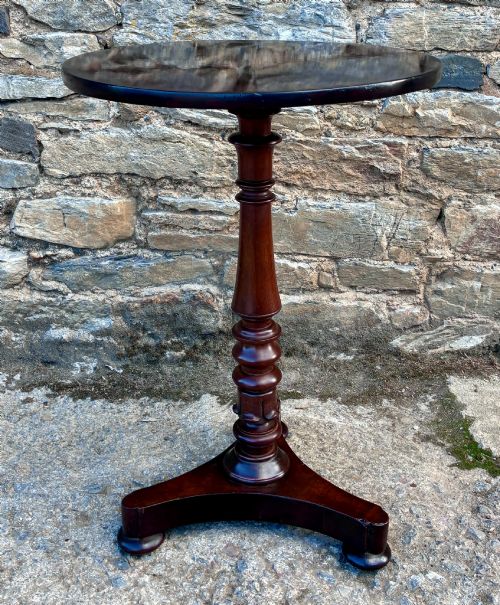
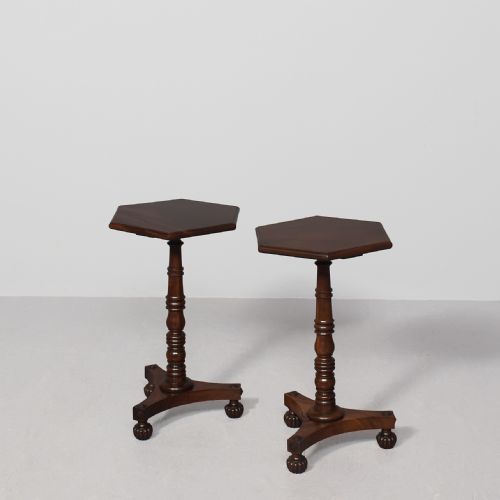
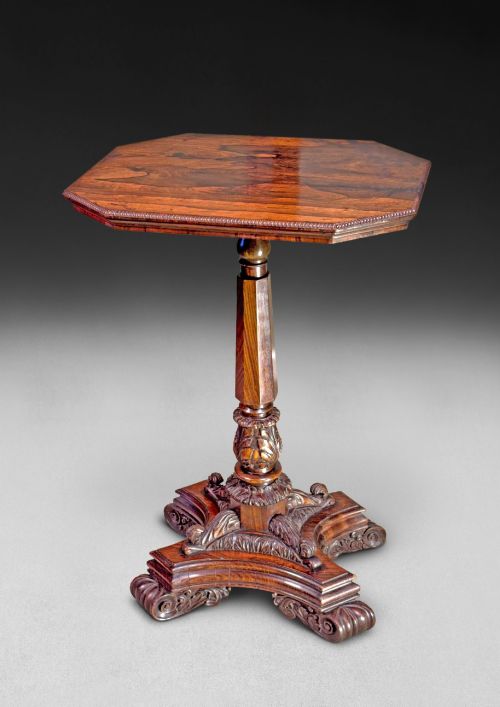
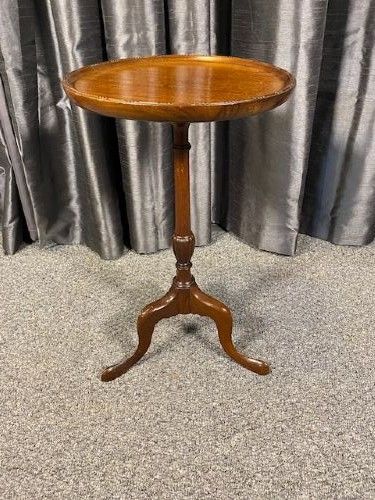




Antique Tripod Drink Table
An antique tripod drink table is a compact surface built for a glass or decanter, bringing nimble convenience to any corner.
Antique Tripod Drink Table
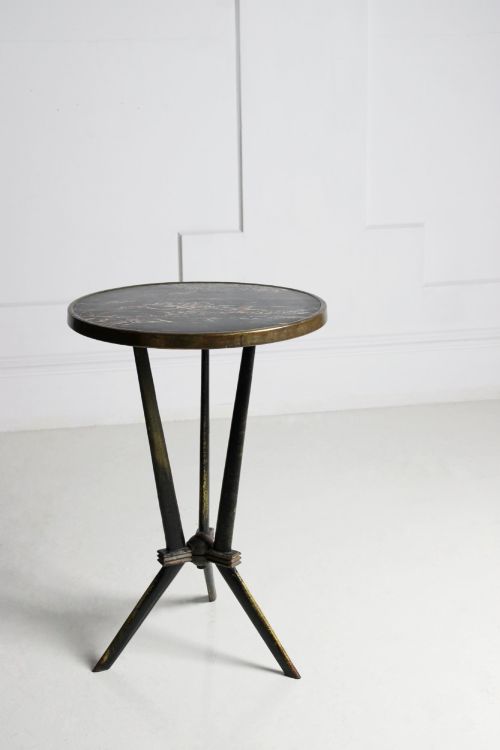
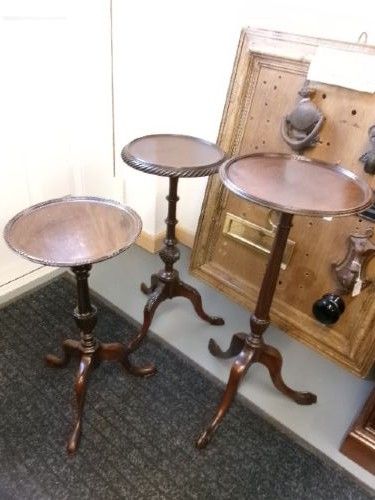
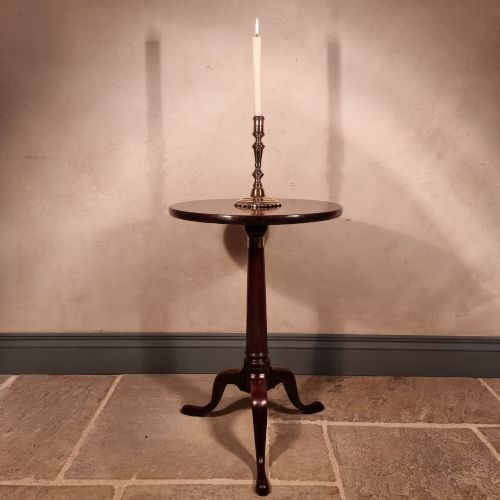
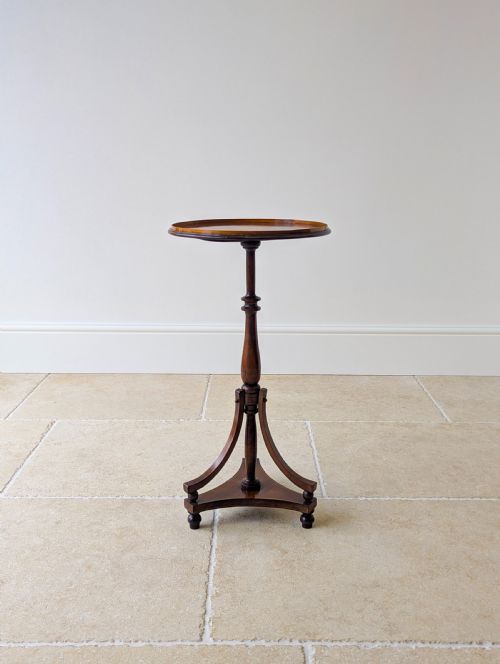
When you search for an antique tripod drink table, you are looking at small-scale occasional furniture designed to hold a single glass, bottle or lamp within arm's reach. The selection on this page leans heavily toward wine tables and cricket tables spanning the eighteenth century through to the Edwardian period and the 1930s. These pieces take various forms, from tilt-top mahogany examples to rustic oak cricket tables and specialised brass-fitted drinks designs.
Most pieces you will meet are straightforward mahogany or oak tables featuring a circular top supported by three splayed legs. You will also find regional variations like Scottish oak parlour drinking tables, Catalan shepherd's tables, and cast iron pub tables designed for commercial use. Their defining characteristic remains the three-legged base, which provides stability on uneven floors without rocking.
How they were made
Cabinet makers relied primarily on timbers such as mahogany, oak, walnut, rosewood, and satinwood to construct these small tables. Tops were frequently turned from single boards or assembled with fine joinery, sometimes featuring decorative stringing or inlay in Edwardian iterations. Supporting stems were often turned on a lathe, with some incorporating spiral fluting or baluster profiles before meeting three shaped legs.
Many examples utilise a tilt-top mechanism, allowing the surface to fold vertically when not in use so the table could be stored against a wall. Hardware such as brass fittings appeared on specialised drinks tables, while heavier utility pieces incorporated cast iron. Surface finishes applied by hand brought out the natural grain and colour of the wood.
Antique Tripod Drink Table Retail Price Guide 2026
Typical asking prices for tripod drink table among the pieces listed under this phrase on Sellingantiques today, from the lower quarter to the upper quarter. They describe what is for sale here now, not the wider market.
Listings for this phrase include mahogany, oak, walnut, rosewood, and cast iron, spanning the eighteenth century to the 1930s.
What varies in quality
The distinction between ordinary and superior pieces rests on the choice of timber and the crispness of the turning on the stem and legs. Finer tables exhibit carefully matched grain patterns on the top and well-balanced proportions between the height of the column and the spread of the tripod feet. Lesser examples may use plain, unfigured wood with clumsy joints and heavy, unrefined legs.
Mechanism design also separates the standards of production, particularly in how securely a tilt-top locks into place or how smoothly a patent brass fitting operates. Hand-carved details and delicate inlay demonstrate a higher tier of craftsmanship compared to plain vernacular utility items. Ultimately, the harmony of the silhouette dictates the standing of each piece.
The Antique Tripod Drink Table Glossary
- Tilt-top
- A tabletop mounted on a catch and pivot mechanism that allows the surface to fold vertical. This clever feature saved floor space in period drawing rooms when the table was idle.
- Wine table
- A small occasional table designed specifically to hold a glass of wine or a decanter beside a chair. They often feature raised moulded edges or carved pedestals.
- Decanter table
- A specialised low or fitted table designed to securely hold drinking vessels and bottles, sometimes incorporating metal stands. Rosewood and mahogany were favoured for these sociable items.
- Parlour drinking table
- A domestic version of a hospitality table used for social gatherings in nineteenth-century homes. These often combined sturdy local timbers like Scottish oak with tilt mechanisms.
Antique Tripod Drink Table: Frequently Asked Questions
What is an antique tripod drink table used for?
These pieces were built to hold a single glass, cup or decanter next to a seating area. They served guests in drawing rooms and parlours without taking up the floor space of a larger occasional table.
Today, they function as compact side surfaces for a single cup of coffee, a small lamp, or a glass in a tight corner. Their light weight makes them easy to move wherever a temporary surface is needed.
How do I spot an 18th century wine table?
Eighteenth-century examples typically display rich, patinated mahogany with solid timber tops and hand-turned pillars. The joinery beneath the top often shows traditional pegged construction and subtle wear consistent with age.
Later Victorian and Edwardian revivals tend to have brighter factory finishes, machine-cut components, and sometimes added decorative inlay. Examining the underside and the joints reveals the age of the construction.
Are tilt-top tables stable?
A well-made tilt-top table relies on a snug catch and block mechanism that holds the surface firm when horizontal. While the hinge allows the top to fold away, a quality pivot stays tight during normal use.
If the mechanism wears down over the decades, the top may wobble slightly when pressed. Checking the block beneath the surface will show whether the pivot pins and catches remain original and secure.
Where should I place a drink table at home?
Their small footprint allows them to tuck neatly beside an armchair, between two small seats, or in an unused corner. Because the three-legged base naturally adjusts to uneven floorboards, they sit steadily without rocking.
Avoid placing antique polished wood directly beside active heat sources or in harsh sunlight. Using coasters protects the historic finish from condensation rings left by glasses.