

Antique Triform Table
An antique triform table delivers steady three-legged balance alongside distinctive architectural presence, uniting compact utility with period flair.
Antique Triform Table
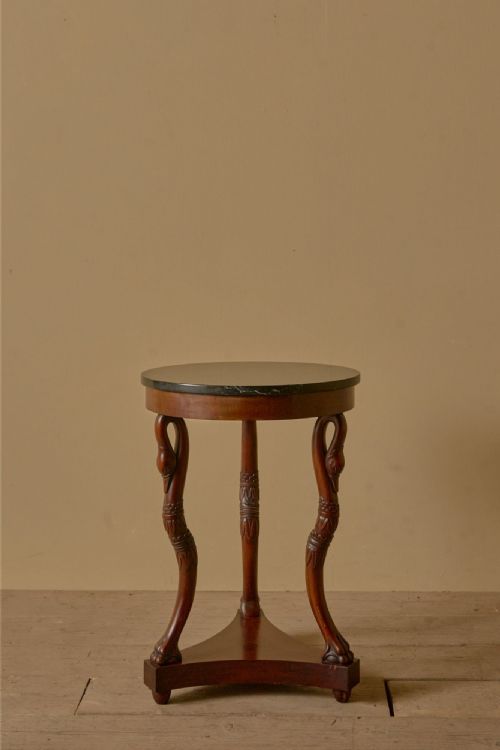
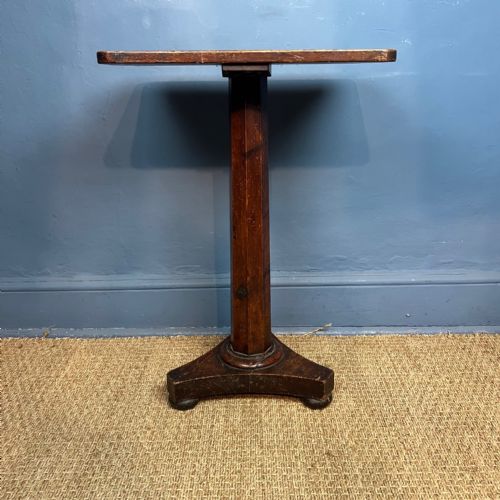
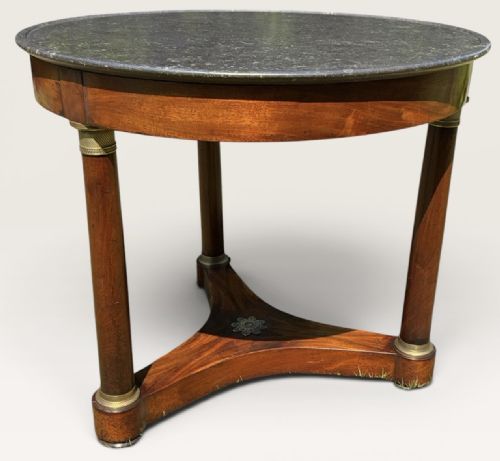
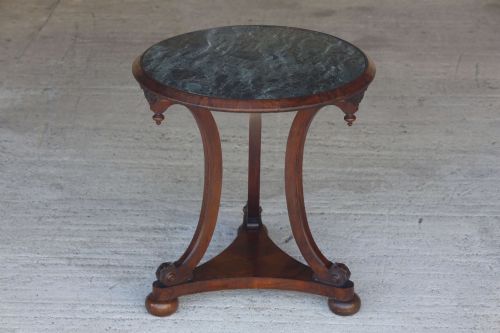
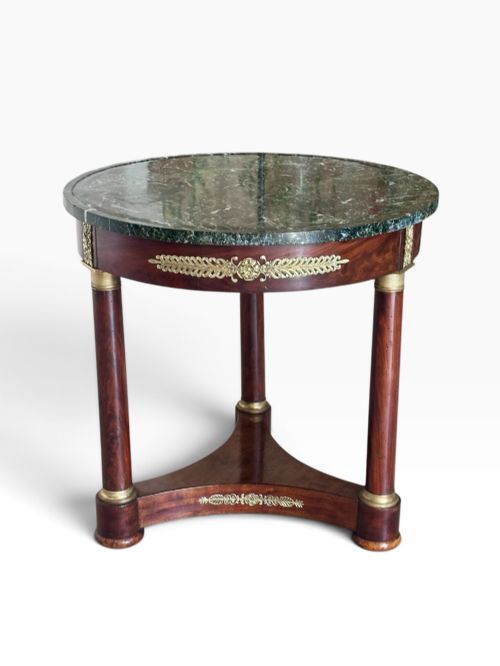
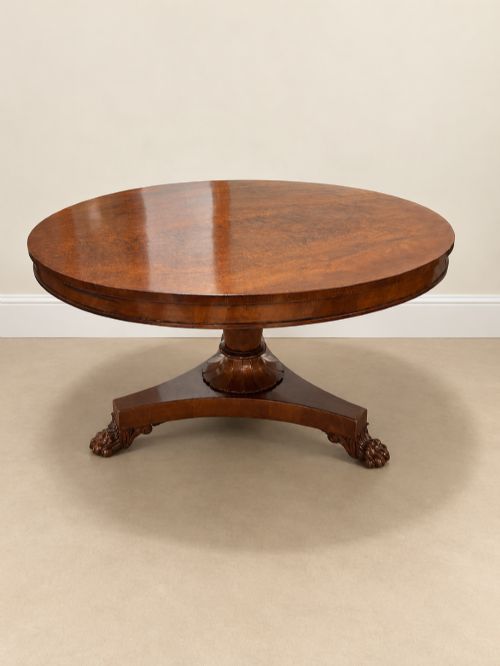
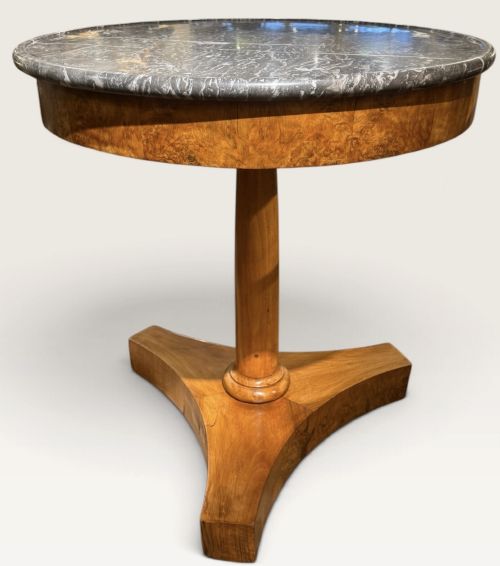
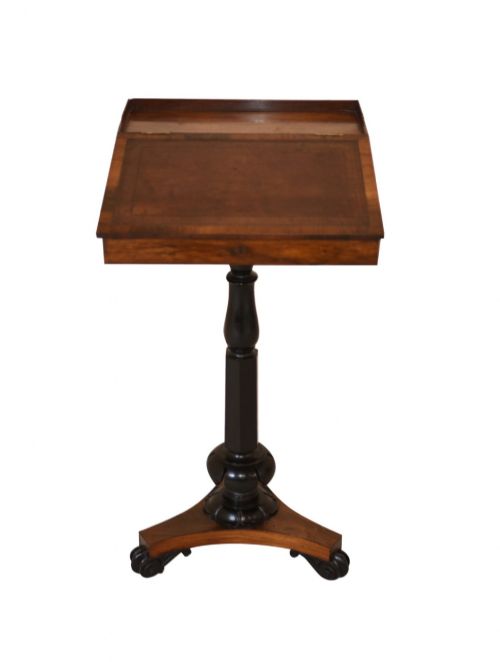
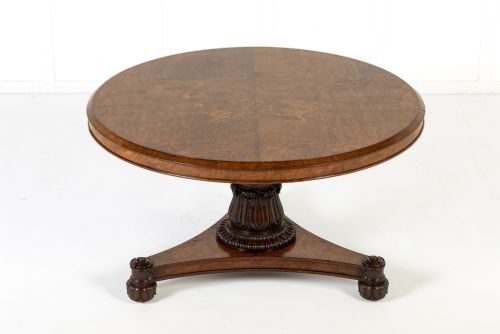
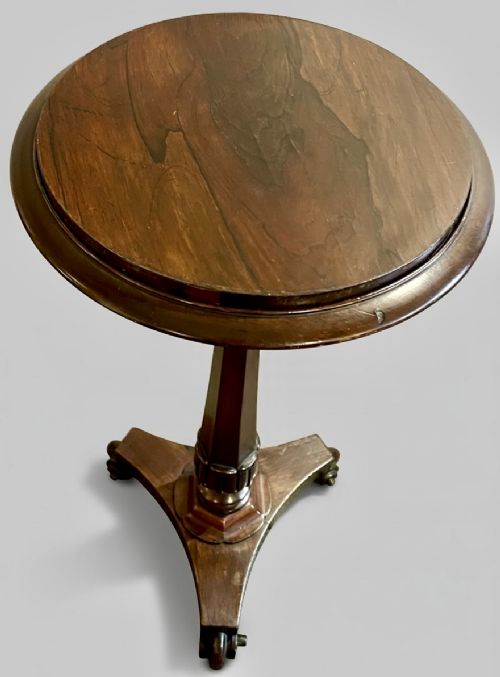
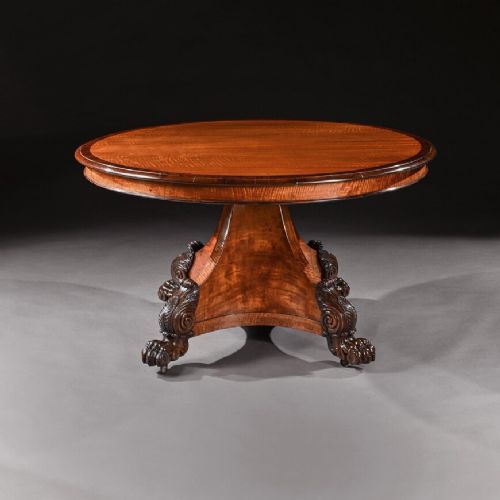
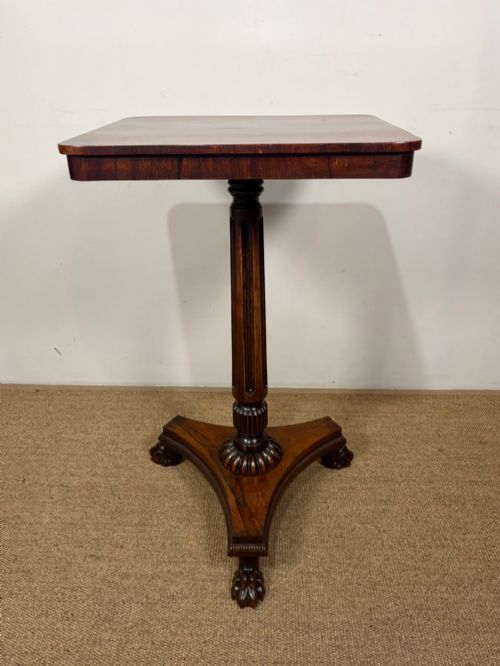
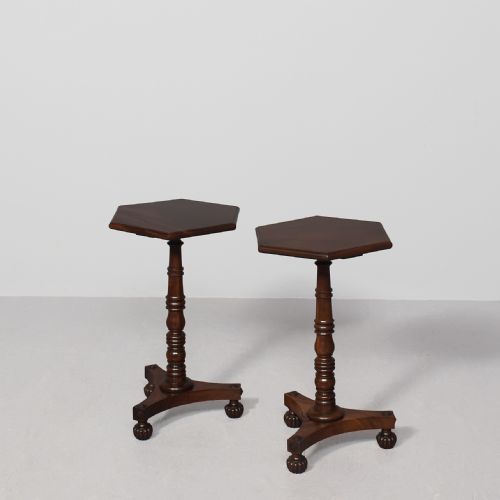
An antique triform table stands upon a three-sided or three-legged pedestal base, offering both stability and elegance in domestic spaces. These pieces function variously as centre tables, wine tables, breakfast tables, and gueridons.
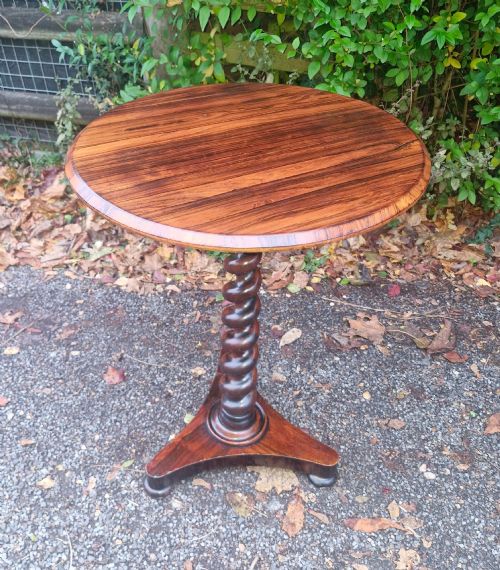
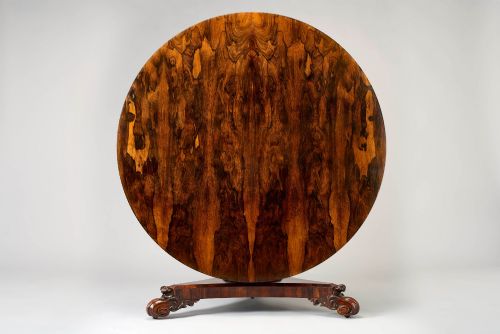
The selection ranges across Regency, William IV, and Victorian periods, alongside French Empire and twentieth-century revivals. Rosewood and mahogany dominate the timber choices, frequently paired with marble tops or brass detailing.
Buyers encounter circular, square, and dishtop configurations designed to anchor a room or serve beside seating. The three-footed format prevents wobbling on uneven floors while creating an uncluttered footprint beneath the top.
How they were made
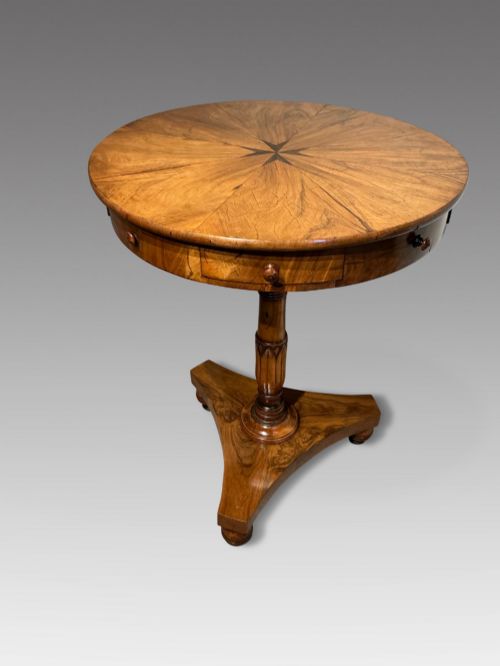
Cabinetmakers constructed these tables using dense hardwoods like mahogany and rosewood, often veneered over stable secondary woods to achieve striking grain patterns. Burr elm and satinwood appear in specific decorative iterations, bringing contrasting warmth and figure.
Pedestal bases transition downward into three scrolling or faceted feet, frequently weighted or reinforced to support heavy stone surfaces. Specimen marble and plain white marble inserts sit flush within timber frames, secured by traditional joinery methods.
Antique Triform Table Retail Price Guide 2026
Typical asking prices for triform table among the pieces listed under this phrase on Sellingantiques today, from the lower quarter to the upper quarter. They describe what is for sale here now, not the wider market.
Listings span mahogany, rosewood, burr elm, and satinwood, frequently paired with marble and giltwood across nineteenth and twentieth-century pieces.
What varies in quality
The distinction between ordinary and exceptional work lies in the choice of timber figure and the crispness of carved details on the triform base. Finer examples exhibit seamless veneer matching and substantial stone or giltwood elements that remain true over generations.
Structural integrity depends on how the central column joins the three feet and the tabletop, where robust internal blocking prevents twisting. Master workshops achieved rigid stability without adding clumsy brackets, keeping the silhouette light and balanced.
Peters of Genoa·Gillows·Walker-Lancaster
The Antique Triform Table Glossary
- Triform
- A three-sided or three-footed architectural arrangement that supports the central pedestal of the table. This geometry provides natural stability on uneven floors.
- Gueridon
- A small French occasional table, often round and supported by a single central pillar above three feet. These frequently feature marble tops and decorative veneer work.
- Specimen marble
- A tabletop composed of various coloured marbles arranged in geometric patterns or mosaics. Makers utilised this technique to display mineral variety.
- Tilt-top
- A mechanism allowing the tabletop to pivot into a vertical position when not in service. This saved floor space in smaller period rooms.
- Parcel gilt
- Woodwork decorated with partially applied gold leaf to highlight carved mouldings and decorative accents. It adds reflective contrast to dark mahogany or rosewood.
Antique Triform Table: Frequently Asked Questions
What rooms suit an antique triform table?
These pieces fit comfortably into hallways, drawing rooms, and studies where a compact footprint is required. Their finished appearance from all sides allows placement away from walls as freestanding centre furniture.
Larger breakfast or dining variations serve well in reception spaces, while smaller wine and lamp tables pair easily beside seating.
How do I maintain a marble top?
Polished stone surfaces require simple wiping with a damp cloth and mild neutral soap to remove daily dust and residue. Acidic liquids like wine or citrus should be cleaned immediately to prevent etching the polish.
Applying a specialist stone wax periodically helps protect the surface from moisture and preserves the natural lustre of the marble.
Are tilt-top tables structurally sound?
The pivoting mechanism employs a wooden catch or brass latch beneath the surface to secure the top in a horizontal position. When properly adjusted, the top locks firmly without excessive play.
Historic mechanisms remain robust provided the original blocks and pins have not suffered careless modification over time.
How do I distinguish Regency from Victorian examples?
Regency and William IV pieces tend to display restrained classical lines, bold rosewood veneers, and precise brass mounts or carved paw feet. They reflect an earlier taste for architectural purity and heavy mahogany.
Victorian iterations often incorporate more elaborate ornamentation, diverse specimen marble tops, and lighter walnut or mahogany frames reflecting changing industrial capabilities.