
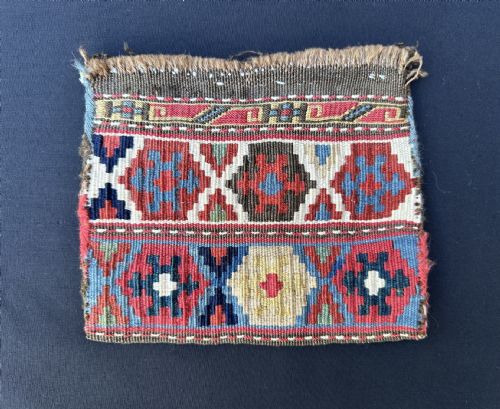
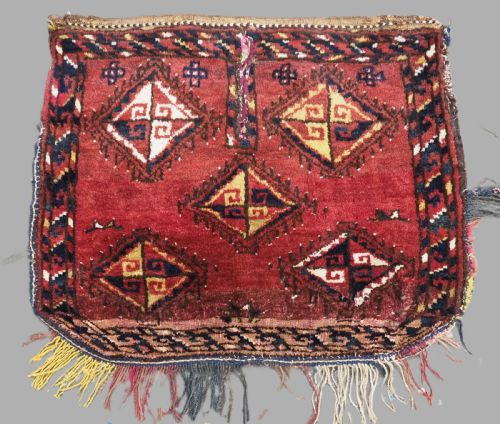


Antique Tribal Woven Bag
An antique tribal woven bag carries the nomadic history of Persian and Central Asian weavers in practical wool containers.
Antique Tribal Woven Bag
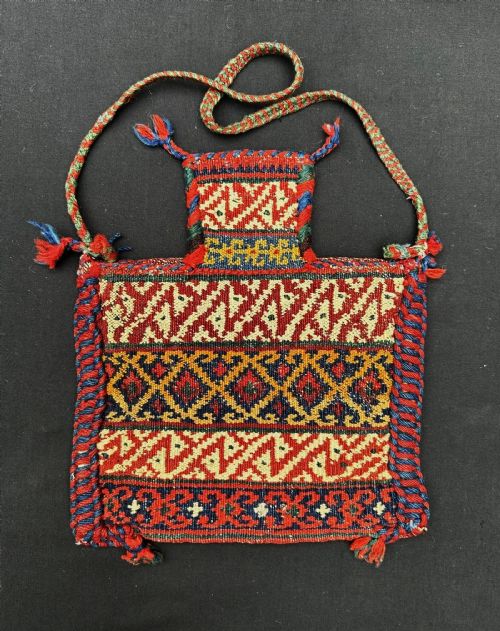
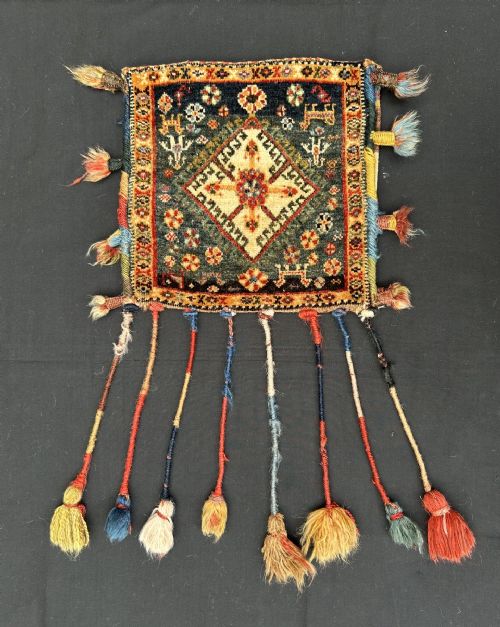
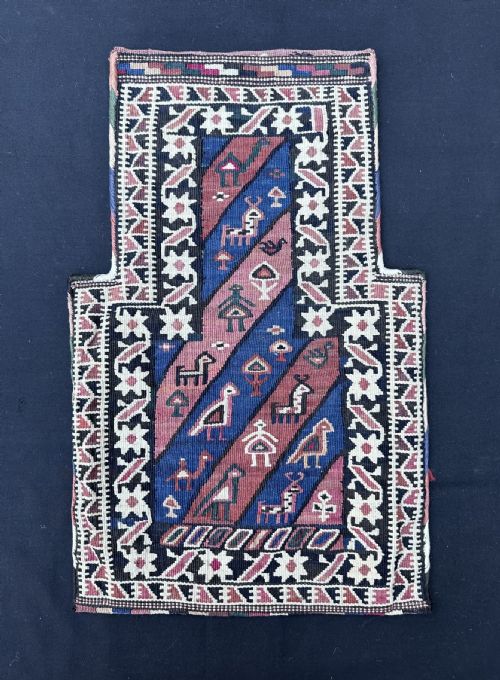
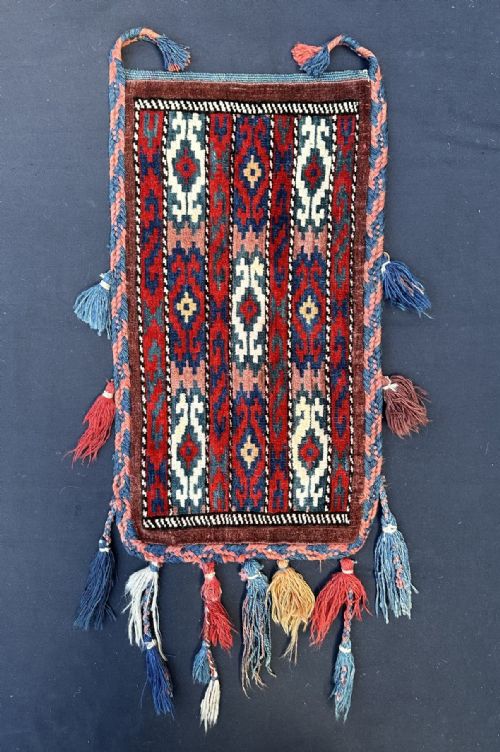
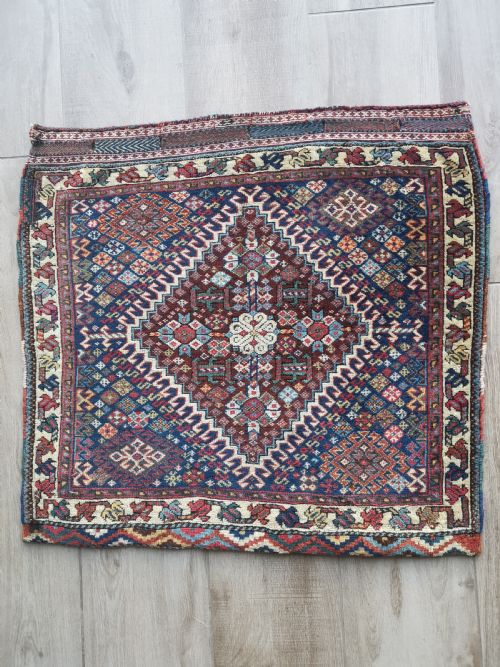
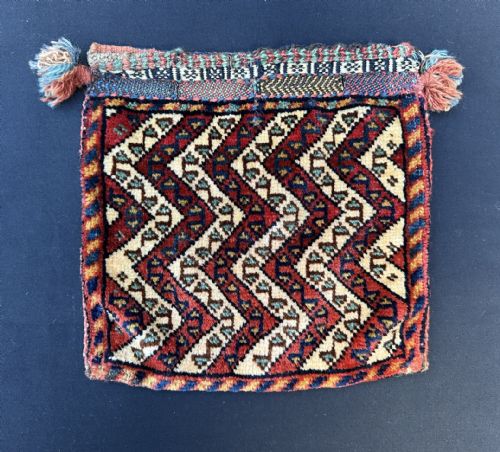
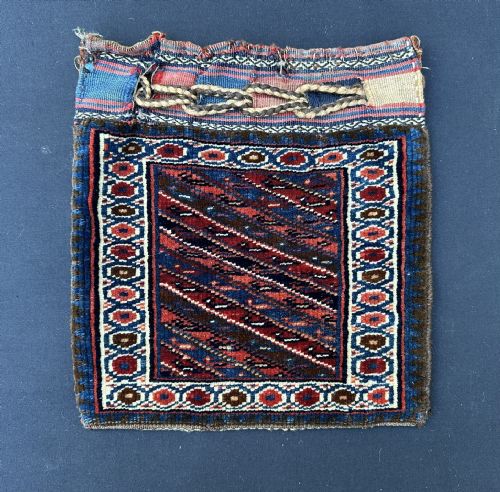
An antique tribal woven bag represents the utilitarian textile output of nomadic confederacies and tribal groups across Persia, Central Asia, and surrounding regions. These containers served specific functions within pastoral daily life, ranging from salt-bags and vanity-bags to larger storage units like chuvals and torbas.
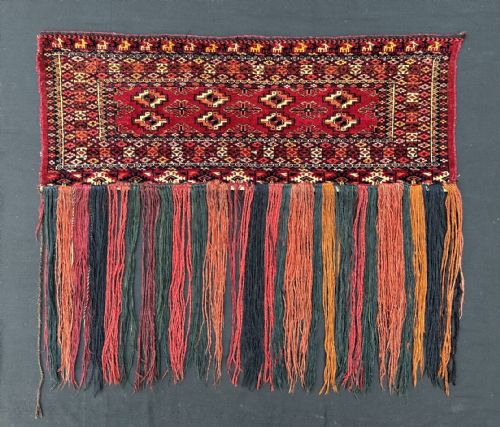
The pieces available on this page date predominantly from the nineteenth century into the early twentieth century. They originate from distinct tribal groups such as the Qashqa'i, Afshar, Baluch, Shahsevan, and various Turkmen tribes including the Tekke, Yomut, and Saryk.
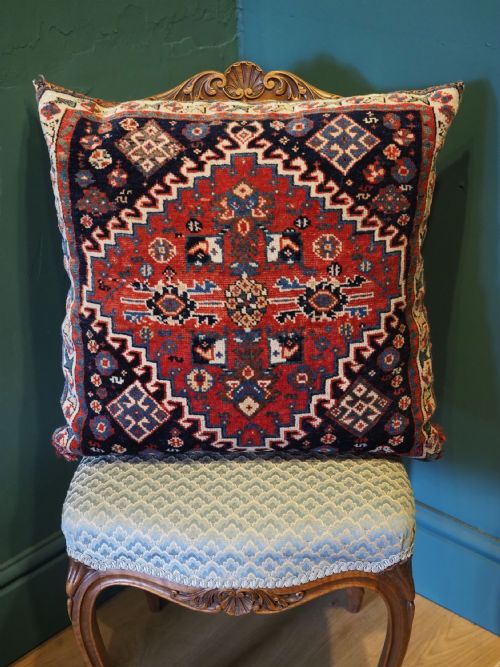
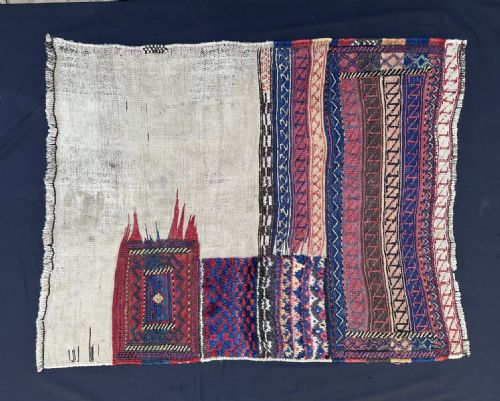
Buyers encounter complete pieces with their flat-weave backs intact alongside trimmed bag-faces repurposed as cushions. The forms reflect the specific domestic and animal-transport needs of weavers moving across steppes and mountain ranges.
How they were made
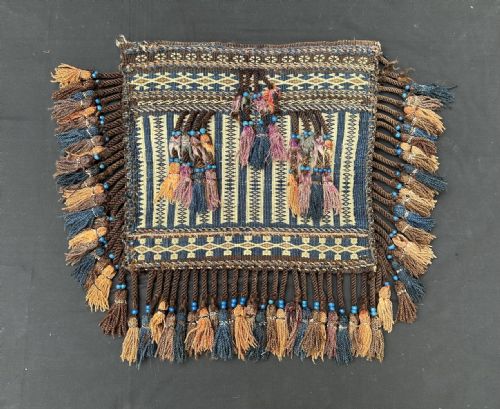
Weavers relied on hand-spun wool for the foundation and pile, dyed using natural substances to achieve rich red, blue, and brown tones. Cotton frequently served for supplementary warps and wefts, while details occasionally incorporated silk, glass beads, or cowrie shells.
Construction techniques combined piled knotting with intricate flat-weave structures such as soumak, kelim, or plain weave. This dual approach provided structural durability for items subjected to heavy daily handling and transport on animals.
Specific tribal attributions represented include Qashqai, Afshar, Baluch, Shahsevan, Yomut, Tekke, and Saryk groups.
What varies in quality
Quality rests upon the fineness of the knotting or the tightness of the flat-weave structure, which dictates the clarity of the geometric and tribal motifs. Tighter foundations allow complex secondary ornaments and gul designs to remain sharp and well-proportioned.
The integrity of the material and the survival of original components also govern the standard of a piece. Examples retaining their complete flat-weave backs, original closure mechanisms, and vibrant natural dye palettes command greater interest among collectors.
The Antique Tribal Woven Bag Glossary
- Chuval
- A large Turkmen tent-storage bag used for bedding and household goods. These pieces typically feature multiple primary guls arranged across the face.
- Torba
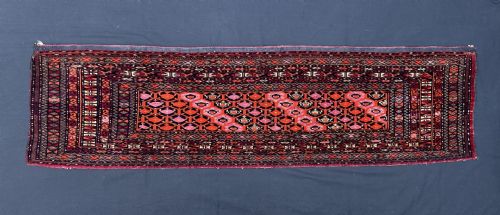
- A smaller Turkmen hanging storage bag, wider than it is high. They were traditionally displayed inside the yurt for smaller possessions.
- Khorjin
- A double saddle-bag designed to be slung over pack animals for travel. Surviving examples are often found separated into individual half-khorjins.
- Chanteh
- A small personal vanity or tobacco bag woven by nomadic women. These portable pouches often served decorative as well as utilitarian purposes.
- Gul
- A medallion motif repeated across Turkmen and tribal carpets and bags. Each design often correlates with a specific tribe or sub-group.
Antique Tribal Woven Bag: Frequently Asked Questions
What were tribal bags used for?
Nomadic groups utilised these woven containers for transporting and storing household possessions, food, salt, and personal items during seasonal migrations.
Larger bags held bedding inside tents, while smaller pouches served as vanity cases, tobacco holders, or salt containers.
How do I identify a Turkmen bag?
Turkmen pieces usually display deep madder-red grounds dominated by repeating octagonal gul medallions and crisp geometric borders.
They often take specific structural forms like the torba, chuval, or kap designed for yurt storage.
Are bag faces different from complete bags?
A complete bag includes both the decorated front and the plain flat-woven back, sometimes retaining original hanging loops or closure systems.
Many surviving pieces are isolated bag-faces that were trimmed and backed with modern fabric to be used as decorative cushions.
How should I care for a textile bag?
Keep wool textiles out of direct sunlight to prevent natural dyes from fading over time. Gentle vacuuming through a mesh screen helps remove dust without damaging the pile or flat-weave structure.