

Antique Traveling Trunk
An antique travelling trunk carries the history of movement, crafted to protect belongings across horse-drawn carriages, ocean liners, and early railways.
Antique Traveling Trunk
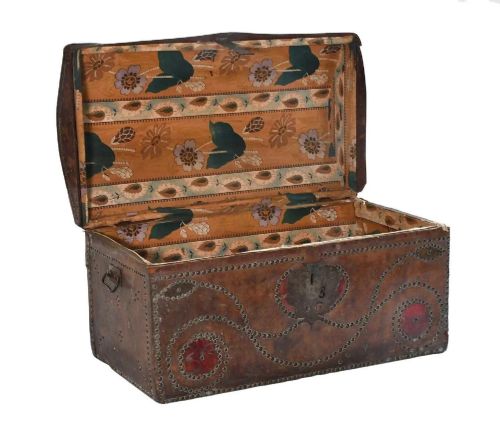
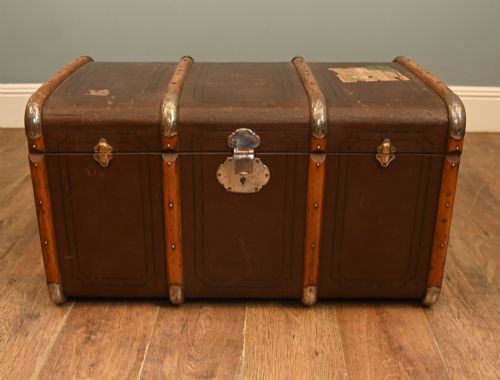
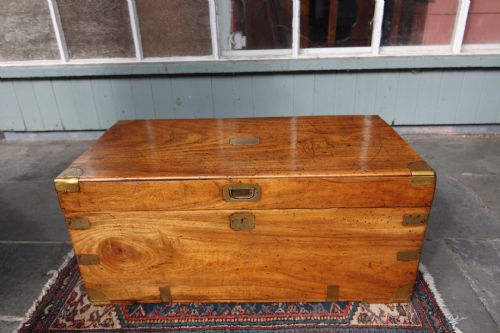
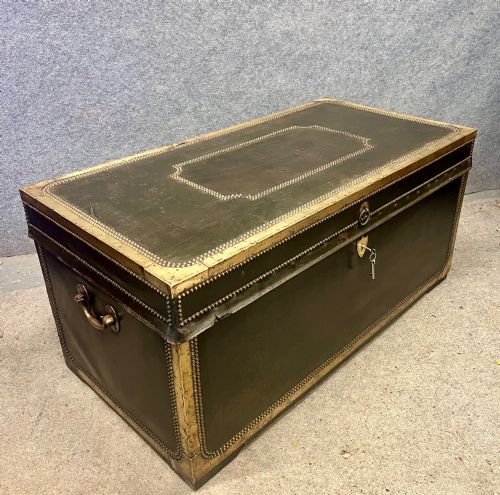
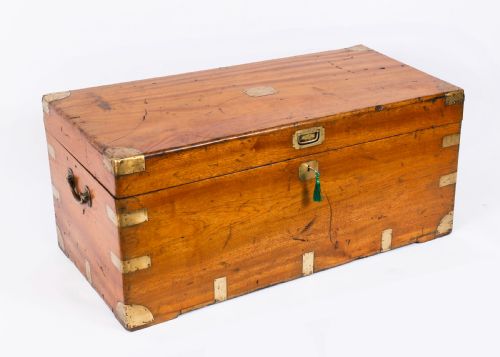
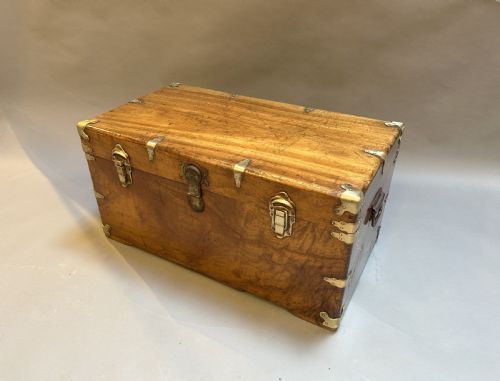
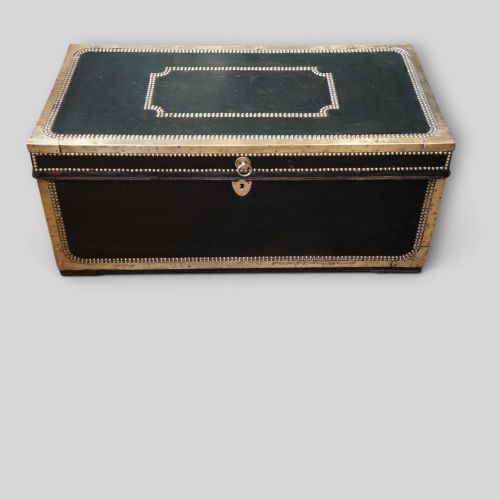
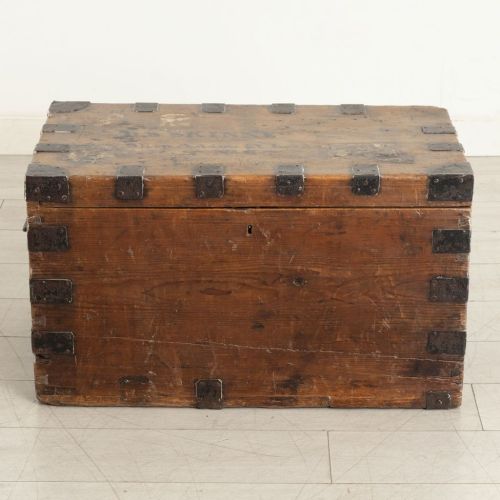
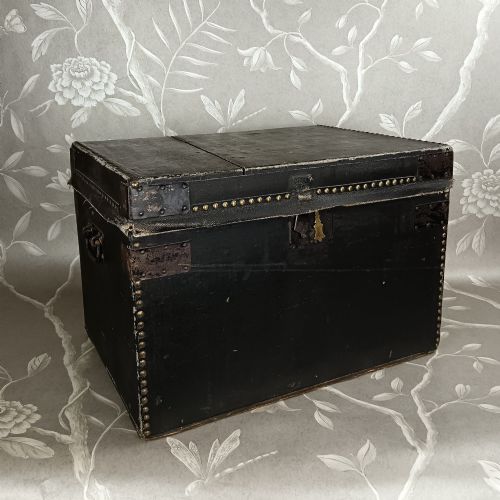
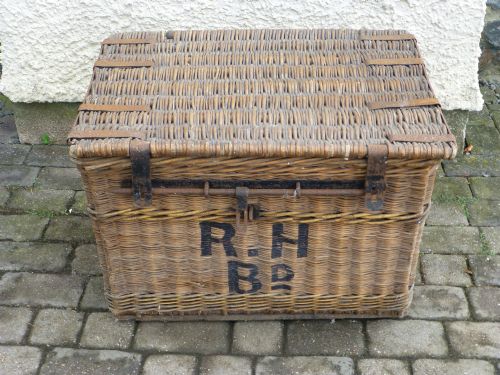
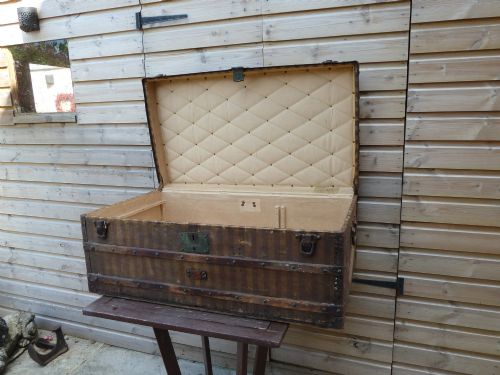
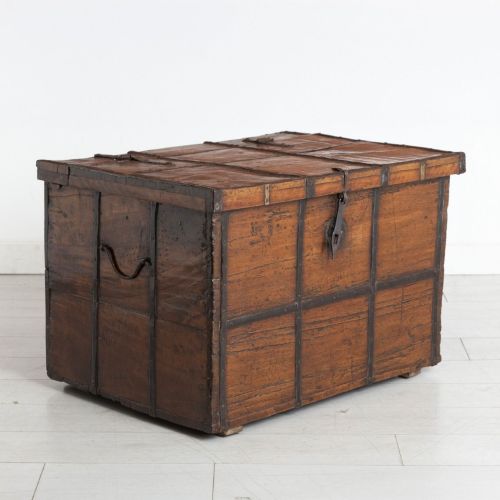
An antique travelling trunk is a robust portable container designed for personal transport during journeys across centuries of transit. The pieces appearing most frequently on this page span the 18th, 19th, and early 20th centuries, encompassing Victorian, Georgian, and Regency eras. Buyers encounter various forms, including military campaign chests, steamer trunks, hat boxes, and coach trunks.
The materials reflect the practical needs of travel and storage, ranging from sturdy pine and camphorwood to bound leather, canvas, and metal. Many examples incorporate brass studs, iron bands, and robust handles intended for hoisting onto coaches or stowing in ship cabins. These objects served utilitarian purposes for officers, merchants, and travellers before evolving into decorative storage pieces in modern homes.
How They Were Made
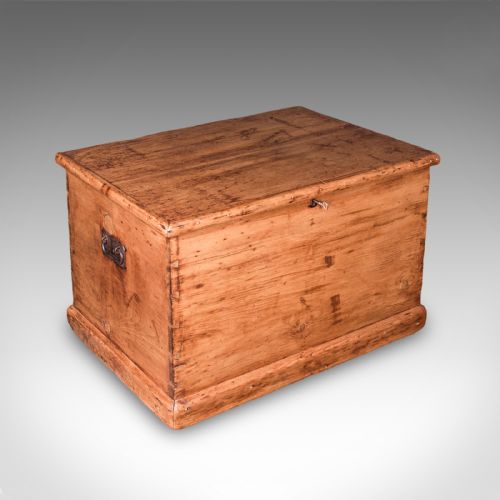
Maker construction relies on durable hardwoods like camphorwood and mahogany, combined with structural softwoods such as pine. Camphorwood served effectively for maritime and tropical journeys due to its insect-repellent properties, protecting textiles within.
Exterior surfaces frequently feature applied treatments including stitched leather, painted canvas, and sheet metal casing. Reinforcement comes from brass corner brackets, iron binding bands, and hand-driven studs that secure the materials against the rigours of transit.
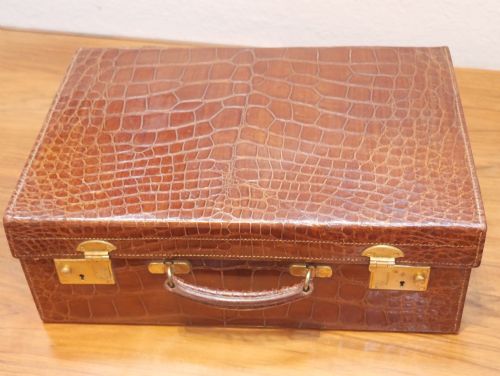
Several trunks are tall enough to hold multiple top hats, preserving the elaborate headwear of Victorian and Edwardian gentlemen on the move.
What Varies in Quality
The calibre of a travelling trunk depends on the integrity of its original hardware, such as working brass locks, recessed carrying handles, and robust internal compartments. Finer examples retain maker signatures, bespoke fitted interiors, and specialised compartments for hats or uniforms.
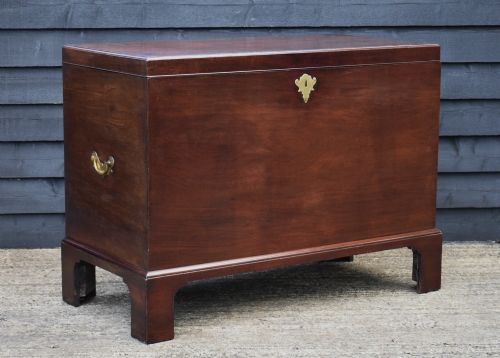
Construction methods distinguish everyday utility pieces from high-status campaign furniture. Dovetail joints, finely turned brass fastenings, and superior choice of primary timbers like mahogany indicate elevated workshop origin.
Samuel Pratt·Wm Insall of Bristol·LOUIS VUITTON·Lincoln Bennett·Pioneer·Army and Navy
The Antique Traveling Trunk Glossary
- Campaign chest
- A modular storage chest designed to dismantle easily into sections for military transport during campaigns. These pieces often feature brass binding and flush handles.
- Steamer trunk
- A lower-profile luggage trunk specifically built to fit beneath the cabin berths of ocean liners. They emerged strongly during the late 19th and early 20th centuries.
- Camphorwood
- An aromatic Asian timber frequently utilised for travel trunks because its natural oils deter moths and dampness. It remains prized for its distinct scent and stability.
- Dome top
- A curved lid design on early trunks that prevents moisture accumulation during travel. This form is common on 18th-century leather and studded examples.
- Hat box
- A specialised rigid container shaped to safeguard tall hats and top hats during transit. They frequently feature internal wooden frames or tailored leather partitions.
Antique Traveling Trunk: Frequently Asked Questions
What is an antique travelling trunk?
An antique travelling trunk is a heavy-duty container built to withstand the rigours of historical journeys, from horse-drawn carriage tours to ocean voyages.
These pieces use durable materials like leather, camphorwood, pine, and iron to protect personal belongings during transit.
How were campaign trunks used?
Campaign trunks were utilised by military officers and diplomats on the move, designed to store uniforms, documents, and essential supplies.
Their modular construction and protective brass corners allowed them to endure repeated loading onto pack animals, ships, and wagons.
How do I style a trunk at home?
Trunks make practical coffee tables, end tables, or deep storage chests in living spaces and bedrooms, adding texture and historical character.
Their flat or dome tops accommodate decorative objects while concealing blankets, books, or seasonal items inside.
How can I tell the age of a trunk?
Age is identified through construction details, hardware styles, and primary materials, such as early iron bindings and hand-studded leather on 18th-century pieces.
Victorian and Edwardian versions often display factory-made brass work, canvas coverings, or maker labels from late-period department stores.