

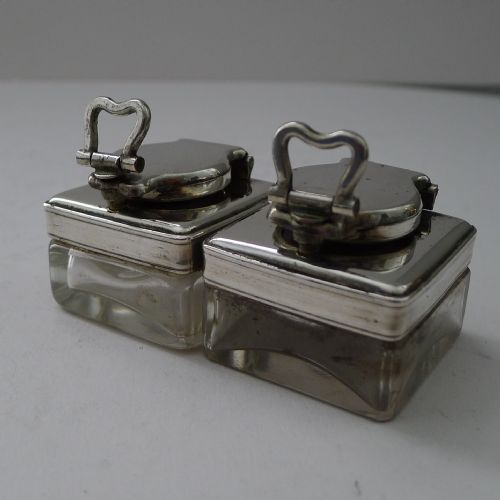


Antique Travel Accessory
An antique travel accessory is a portable piece of functional equipment from the Georgian, Victorian, Edwardian, or Art Deco periods made to be carried on the move.
Antique Travel Accessory
An antique travel accessory encompasses a diverse range of portable portable objects designed for personal grooming, writing, and refreshment while away from home. When searching for an antique travel accessory, buyers typically encounter pieces intended for writing, smoking, grooming, and timekeeping.
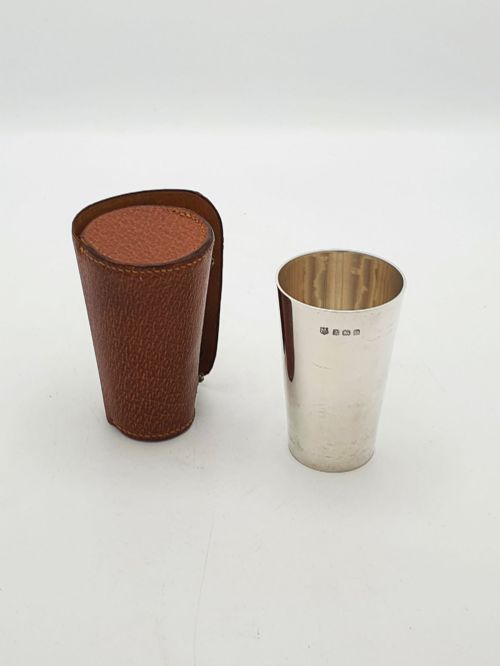
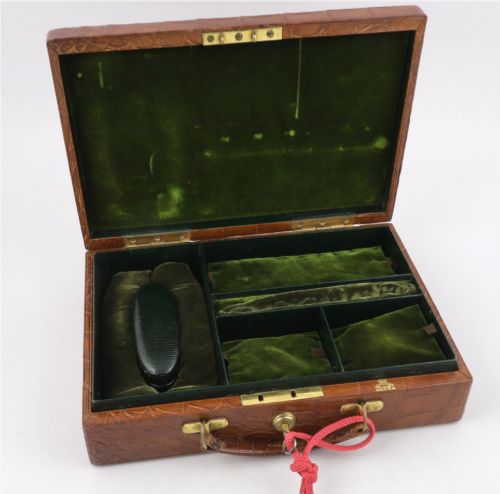
The selections span from the 18th century through the 1920s and 1930s, featuring items such as travelling inkwells, cigar cases, shaving sets, vanity cases, and jewellery boxes. Victorian and Edwardian examples dominate the offerings, alongside Georgian silver gilt pieces and Art Deco designs.
Materials vary widely from practical leather, crocodile leather, and brass to precious sterling silver and glass. These objects reflect the travel habits and social requirements of past eras, engineered to protect valuables and necessities during journeys.
How they were made
Craftsmen utilised robust core materials like brass, wood, and steel to ensure structural integrity during transit, frequently housing them within fitted leather or crocodile leather cases. Internal compartments often utilised velvet linings to cushion delicate items such as glass inkwells and pocket watches.
Precious metals including sterling silver and silver gilt were worked into items like travel beakers, shaving sets, and writing boxes, sometimes enhanced with guilloche enamel or intricate tunbridgeware decoration. Portable mounts and cases required precise metalwork and glass-glazing techniques to withstand movement.
Antique Travel Accessory Retail Price Guide 2026
Typical asking prices for travel accessory among the pieces listed under this phrase on Sellingantiques today, from the lower quarter to the upper quarter. They describe what is for sale here now, not the wider market.
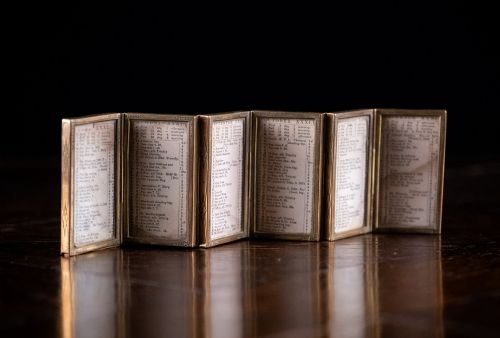
A miniature 1878 London almanac packed into a six-fold brass glazed mount proves that people needed pocket-sized trivia long before smartphones.
What varies in quality
The distinction between standard and superior pieces rests on the quality of the materials and the intricacy of the execution. Finer examples exhibit marked silver work by noted makers, superior hide selection such as genuine crocodile leather, and sophisticated mechanisms.
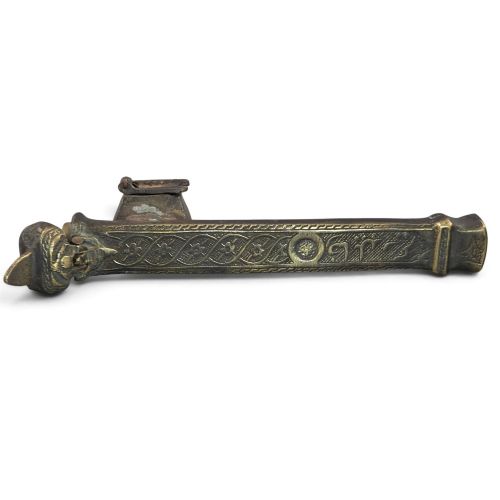
Quality also shows in the preservation of original components, such as matching glass inserts within silver-plated inkwells or intact enamel work on clock stands. Simpler utilitarian items contrast with elaborately decorated pieces featuring specialised regional craftsmanship like Armenian brasswork.
J C Vickery·Jane Brownett Alexander Jones
The Antique Travel Accessory Glossary
- Divit Qalamdan
- A traditional portable writing set comprising a container for reed pens and an attached inkwell, often associated with Ottoman or Armenian craftsmanship.
- Guilloche enamel
- A decorative technique where a precise, intricate pattern is mechanically engraved beneath a translucent enamel layer, commonly seen on vanity and clock cases.
- Tunbridgeware
- A type of British decorative woodwork characterised by tiny mosaic tiles formed from naturally coloured woods to create geometric patterns.
- Silver gilt
- Silver that has been coated with a thin layer of gold on its surface, frequently utilised on interior elements of travelling inkwells.
- Travelling inkwell
- A securely sealed portable ink reservoir designed to prevent leaks during transit, often fitted into leather or wooden travel cases.
Antique Travel Accessory: Frequently Asked Questions
What is an antique travel accessory?
An antique travel accessory is a portable item designed to assist with writing, grooming, smoking, or timekeeping while journeying away from home.
These pieces date from the 18th century to the Art Deco period and are constructed from durable materials like leather, brass, and sterling silver.
How were travelling inkwells used?
Travelling inkwells were used by writers and correspondents on the move to hold liquid ink securely without spilling inside luggage.
They feature tight seals and are frequently housed within fitted leather cases or integrated into larger writing boxes.
How do I identify a Victorian travel accessory?
Victorian pieces often display characteristic materials such as tunbridgeware walnut, heavy sterling silver, or glass paired with silver plate.
Hallmarks and the specific styles popular during the 19th century help distinguish these items from later Edwardian or 1920s examples.
What materials are common in these pieces?
Common materials include sterling silver, brass, leather, crocodile leather, glass, and velvet lining.
Many objects combine a sturdy exterior frame with soft interior elements to protect delicate glass or metal components during transit.