



Antique Trading Chest
An antique trading chest brings the heavy utility of global commerce home as a practical box built for travel.
Antique Trading Chest
When you search for an antique trading chest, you meet travel trunks, campaign chests, and storage boxes built for colonial trade and long journeys. These pieces span the nineteenth century, including Regency and Victorian eras, along with specific dates like eighteen eighty, eighteen ninety, and nineteen twenty.
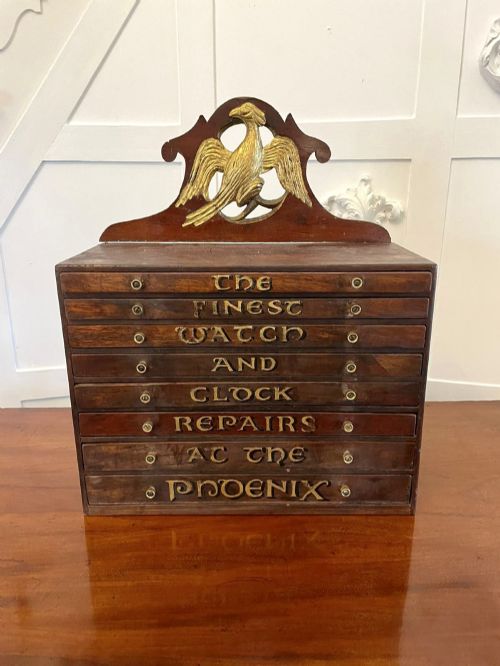
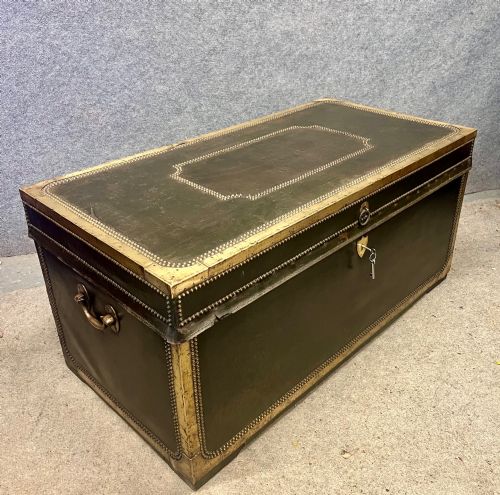
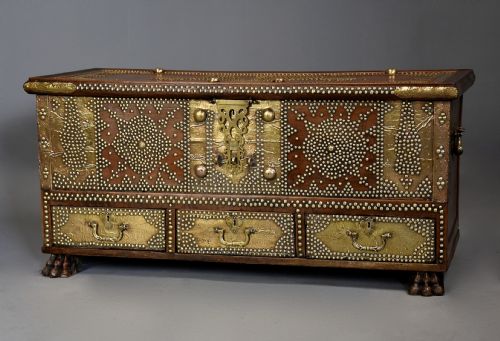
The most common forms on this page are camphor wood, leather, and brass-bound trunks associated with China Trade, Chinese Export, and Anglo-Indian styles. You also encounter specialised items such as military campaign chests of drawers, watch and clock repairer's chests, haberdashery display cases, and Zanzibar blanket boxes.
Originating from distant trade routes, these chests combine robust utility with exotic materials designed to withstand sea voyages. Collectors find them in various scales, from small storage boxes to larger painted leather trunks.
How they were made
Cabinetmakers constructed these chests using durable timbers like camphor wood, mahogany, padouk, and other hardwoods suited for maritime climates. Camphor wood provided a natural insect repellent property while remaining stable across shifting temperatures at sea.
Metalwork played a vital structural role, employing brass for protective corner brackets, bindings, and flush-fitting handles that allowed tight packing in ships' holds. Leather coverings, sometimes painted in polychrome, added an extra layer of weather resistance and decorative finish to China Trade trunks.
Many examples utilised modular designs, such as two-section military campaign chests-of-drawers that separated for easier transport by animal or cart. Iron hardware and gilt wood details appear on specific functional variants like haberdashery display cases.
Antique Trading Chest Retail Price Guide 2026
Typical asking prices for trading chest among the pieces listed under this phrase on Sellingantiques today, from the lower quarter to the upper quarter. They describe what is for sale here now, not the wider market.
Listings feature nineteenth-century pieces spanning the Regency and Victorian eras, up to nineteen twenty.
What varies in quality
The standard of an antique trading chest depends upon the integrity of its original brass hardware, the grain and condition of the camphor wood or hardwood, and the survival of secondary materials like leather and painted surfaces. Pieces retaining their original recessed handles, locks, and brackets command greater regard.
Construction methods distinguish utility items from finer export pieces, particularly in the precision of dovetail joints, the fit of sectional campaign chests, and the crispness of any applied decoration. Scale and proportion also influence desirability, especially when dealing with larger camphor-wood trunks or specialised cabinets.
The Antique Trading Chest Glossary
- Campaign chest
- A piece of furniture designed to be easily dismantled and transported for military officers on active service. These typically feature recessed brass handles and brass corner guards to protect against knocks during transit.
- China Trade
- Goods manufactured in China during the eighteenth and nineteenth centuries specifically for export to Western markets. These objects often blend Eastern materials with European forms.
- Camphor wood
- An aromatic timber harvested from the camphor tree, prized for its distinct scent and natural resistance to moths and dampness. It served as the primary material for sea chests.
- Zanzibar chest
- A heavy hardwood storage box featuring elaborate brass studding, strapwork, and central lock plates reflecting Indian Ocean trade routes. They are traditionally associated with the East African coast.
- Haberdashery cabinet
- A display or storage unit featuring multiple small drawers or glass fronts, originally used in shops to organise sewing threads, cottons, and small textiles.
Antique Trading Chest: Frequently Asked Questions
What is an antique trading chest?
An antique trading chest is a durable storage box or trunk constructed during the nineteenth century for maritime travel, colonial commerce, and military campaigns. These pieces reflect global trade routes, particularly involving China and the Indian Ocean.
They were built to protect goods and personal belongings across long sea voyages using sturdy hardwoods and metal reinforcements.
How were campaign chests used?
Campaign chests served as portable furniture for military officers and officials travelling through remote regions or on active service. They were engineered to break down into manageable sections for packing on ships and carts.
Their modular design allowed officers to maintain organised storage and writing facilities while on the move.
How do I identify China Trade pieces?
China Trade pieces are identified by the combination of traditional European furniture forms with Eastern materials like camphor wood, along with specific decorative elements such as painted leather or brass bindings. They reflect the exchange of goods between Chinese workshops and Western buyers.
Many of these items date from the Regency and Victorian periods of the nineteenth century.
Where do Zanzibar chests come from?
Zanzibar chests originate from the trade networks linking the Swahili coast, India, and the Middle East during the nineteenth century. They are characterised by heavy hardwood construction, often in padouk or teak, and dense brass ornamentation.
Local craftsmen built them to store valuable textiles, spices, and personal wealth.
How should I care for camphor wood?
Care for camphor wood by keeping it away from direct heat sources and sudden humidity changes to prevent the timber from splitting. Regular dusting with a soft cloth maintains the natural finish without needing heavy polishes.
The wood's natural aromatic oils will continue to preserve the interior space over time.