

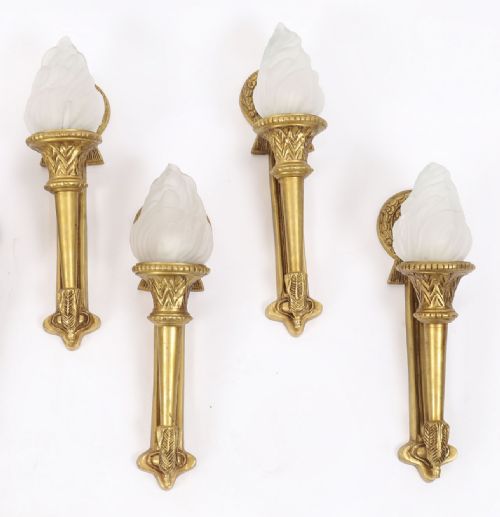


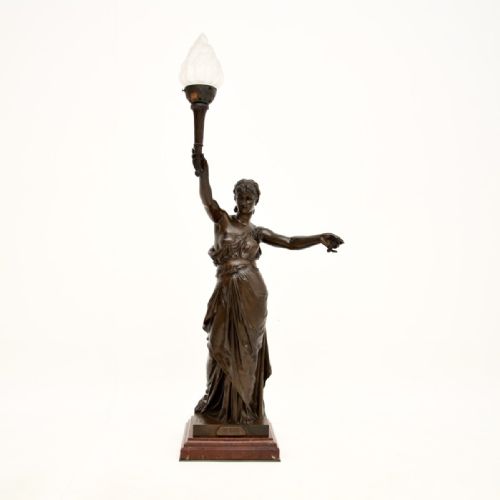


Antique Torch Lamp
An antique torch lamp brings classical drama to a room, casting warm light from bronze flames and figural pedestals.
Antique Torch Lamp
When you search for an antique torch lamp, you encounter pieces designed to imitate flaming torches, often held aloft by classical figures, mythological beings or mounted directly to walls. These lighting pieces span the nineteenth century into the nineteen-thirties, crossing Victorian, French Beaux-Arts, Gothic Revival and Art Deco styles.
You are most likely to meet wall lights, wall sconces and grand floor-standing torcheres cast in bronze, brass or wrought iron. Many incorporate frosted glass or rock crystal elements to diffuse the illumination rising from the simulated flame.
The origins stretch from British Victorian workshops to French foundries, capturing figures like Venus, Libertas and allegorical representations of peace and glory holding the light source. These objects function simultaneously as sculpture and as functional illumination for entrance halls, reception rooms and grand staircases.
How they were made
Foundries utilised bronze, brass, ormolu and gilt bronze, often employing lost-wax or sand casting methods to shape intricate figural bases and acanthus-wrapped stems. Wrought iron variants relied on blacksmiths hammering and welding heavy structural iron for castle-style wall lights.
The light-bearing elements combined moulded frosted glass, cut glass or rock crystal columns to represent flickering fire or steady beams. Patination techniques applied chemical treatments to the metal surfaces to create aged dark bronze tones or bright gilded highlights.
Antique Torch Lamp Retail Price Guide 2026
Typical asking prices for torch lamp among the pieces listed under this phrase on Sellingantiques today, from the lower quarter to the upper quarter. They describe what is for sale here now, not the wider market.
Several figures holding these lamps depict mythical mermaids and allegories of fortune rather than standard lighting stems.
What varies in quality
The distinction between standard production and exceptional work rests in the sharpness of the metal chasing and the depth of the figural modelling. Sculptures signed by known founders or artists display finer anatomical detail in hands, drapery and facial expressions.
Heavier gauge metals and genuine rock crystal or thick moulded frosted glass elevate a piece above simpler brass and thin sheet glass constructions. The integration of the electrical conversion or original burner housing also dictates the structural integrity of the lamp.
F. De Luca·Emile Picault·Jean-Jules Cambos·François-Christophe-Armand Toussaint
The Antique Torch Lamp Glossary
- Torchere
- A tall ornamental floor lamp or a decorative wall-mounted light modelled in the form of a classical torch. The form derives from historical lighting stands used in antiquity.
- Ormolu
- Finely ground high-carat gold applied to a bronze base using a mercury amalgamation technique. This finish provides a bright, durable golden lustre on nineteenth-century French pieces.
- Patinated Bronze
- Bronze treated with chemical solutions to produce a specific surface colour, commonly dark brown or green. This treatment protects the metal and highlights sculptural contours.
- Rock Crystal
- Naturally occurring colourless quartz cut and polished for decorative architectural or lighting columns. It refracts light with greater clarity than standard manufactured glass.
- Gothic Revival
- An architectural and decorative style drawing inspiration from medieval forms. Pieces display heavy ironwork, pointed arches and structural fortress motifs.
Antique Torch Lamp: Frequently Asked Questions
How do I wire an antique torch lamp?
Most antique lamps require modern internal rewiring to meet current safety standards while preserving the original exterior metal or stone components. A qualified electrician can thread modern cord through the central channel without altering the vintage bronze or iron structure.
Where possible, rewiring should utilise existing internal pathways to avoid drilling new holes in figural bases or glass columns.
Where should I place a torch floor lamp?
Floor-standing torcheres suit grand spaces such as entrance halls, high-ceilinged libraries or spacious living rooms where their height commands attention. Placing them near corners or flanking architectural doorways allows the upward-facing light to wash across walls.
Ensure the heavy bronze or iron base rests on stable flooring, as these figural pieces often carry considerable weight.
How do I tell Victorian from Art Deco torch lamps?
Victorian and nineteenth-century pieces lean heavily on classical mythology, ornate figural castings, and Gothic ironwork with elaborate surface detail. Art Deco pieces from the nineteen-thirties favour streamlined geometric forms, frosted flame glass shades, and simplified bronze or brass silhouettes.
Examining the casting style and decorative motifs quickly separates the ornate historical revival periods from later modernist designs.
How do I clean bronze and glass torch lamps?
Dust bronze surfaces gently with a soft, dry cloth to protect the original patination from wear. Avoid abrasive metal polishes that strip historical finishes off nineteenth-century bronze and ormolu.
Glass and rock crystal components can be removed carefully and washed in lukewarm soapy water, provided they are dried completely before reassembly.