

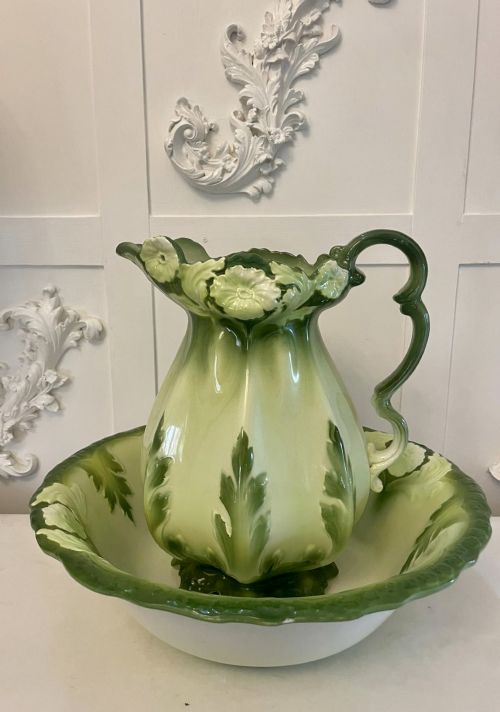
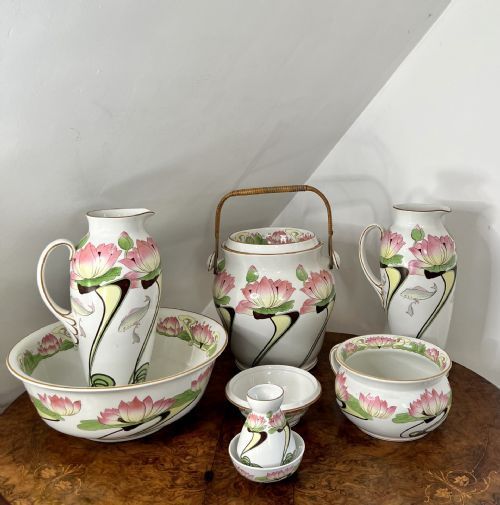
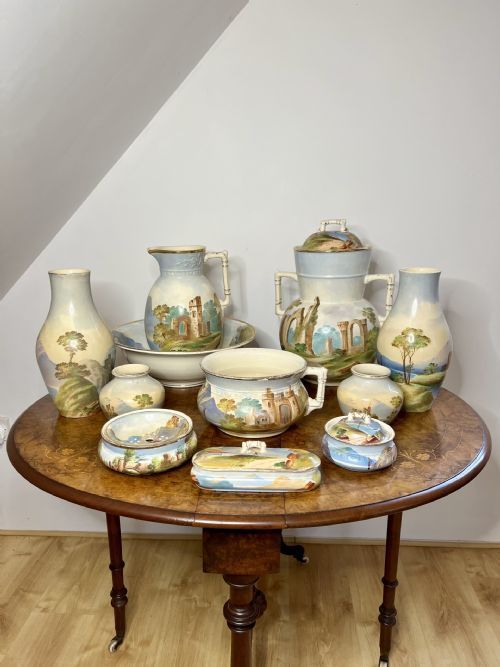


Antique Toilet Bowl
An antique toilet bowl is a piece of domestic sanitaryware or wash set ware you acquire to anchor a period bathroom scheme.
Antique Toilet Bowl
When you search for an antique toilet bowl, you encounter several forms of early sanitaryware and wash set ceramics. The listings span the eighteenth century to the twentieth century, taking in Georgian pewter basins, Victorian earthenware, and Edwardian bathroom sets.
You are most likely to meet jug and bowl sets alongside basin sets from the Victorian and Edwardian eras. These pieces include items such as the Gaudy Welsh pattern pottery toilet basin and pieces bearing transfer-printed designs.
The wider category also includes vanity jars and sanitaryware components made across periods like the nineteenth century. Each item reflects the domestic hygiene habits and bedroom washing routines of its specific decade.
How they were made
Potters shaped these vessels using earthenware and ceramic bodies, often applying a protective glaze to seal the clay. Earthenware formed the core substrate for the majority of Victorian and Edwardian wash basins and toilet bowls.
Decoration involved transfer printing, seen in blue and white patterns, alongside hand-applied gold leaf or gilt highlights. Metalworkers utilised pewter for earlier eighteenth-century examples, while vanity items incorporated cut crystal, silver, and tortoiseshell.
Antique Toilet Bowl Retail Price Guide 2026
Typical asking prices for toilet bowl among the pieces listed under this phrase on Sellingantiques today, from the lower quarter to the upper quarter. They describe what is for sale here now, not the wider market.
Listings feature items from the eighteenth century to the twentieth century, spanning Georgian pewter to Edwardian earthenware.
What varies in quality
The standard of an antique toilet bowl or wash set depends upon the crispness of the transfer print and the evenness of the glaze. Earlier pieces demonstrate the skill of the potter in shaping heavy clay bodies without distortion during the firing process.
Factory execution distinguishes standard production items from marked works by prominent potteries such as Doulton Burslem or Masons Ironstone. The inclusion of supplementary elements like matched jugs, lids, and gilt detailing elevates the finish of the set.
Jones and Sons·Doulton Burslem·Masons Ironstone
The Antique Toilet Bowl Glossary
- Sanitaryware
- Ceramic or metal fixtures designed for washing and bathroom use. This term covers basins, bowls, and related plumbing furniture.
- Earthenware
- A porous type of pottery fired at lower temperatures, requiring a glaze to achieve impermeability. It served as the primary material for most nineteenth-century wash sets.
- Gaudy Welsh
- A style of brightly coloured pottery decoration featuring cobalt blue, copper lustre, and iron-red enamel. It appeared on nineteenth-century domestic ceramics.
- Transfer printing
- A decoration technique where an engraved metal plate transfers a design onto tissue paper, which is then pressed onto the ceramic body. This method enabled mass production of complex blue and white patterns.
- Vanity jar
- A small lidded container used on a dressing table for cosmetics or personal items. These jars often combined cut crystal with silver and tortoiseshell lids.
Antique Toilet Bowl: Frequently Asked Questions
How do I date an antique toilet bowl?
Examine the base for factory marks, registration numbers, or maker stamps which often indicate the exact decade of production. Stylistic clues like transfer print motifs and glaze characteristics also help place the piece within the Victorian or Edwardian periods.
Heavier pewter basins and Georgian items rely more on material composition and manufacturing technique for dating than stamped factory ciphers.
What is the difference between a wash set and a toilet basin?
A wash set typically comprises multiple matching ceramic pieces including a large jug, a basin, and sometimes a soap dish or slop pail. A toilet basin refers specifically to the bowl component used for personal washing or sanitary purposes.
Many listings use the terms interchangeably, but complete sets include the accompanying pitcher for water delivery.
Can I use an antique wash basin in a modern bathroom?
These pieces function well as decorative display items or plant planters within contemporary interior schemes. Using them for active daily plumbing requires careful professional adaptation since antique ceramic outlets rarely match modern standard pipe fittings.
Examine the base dimensions before attempting any permanent installation into a modern vanity counter.
What does Gaudy Welsh mean on pottery?
Gaudy Welsh describes a vibrant style of nineteenth-century pottery decorated with rich cobalt blue, copper lustre, and bright enamel colours. Potters applied these palettes to ironstone and earthenware bodies to create striking contrast on household basins.
This aesthetic developed primarily for domestic export markets and remains distinct from standard blue and white transfer ware.
How should I clean antique ceramic basins?
Wash the ceramic surface gently using warm water and a mild, non-abrasive liquid soap with a soft cloth. Avoid harsh chemical cleaners or stiff scouring pads that can damage the historical glaze or wear away gilt highlights.
Pat the piece dry thoroughly to protect any vulnerable areas around unglazed foot rims.