

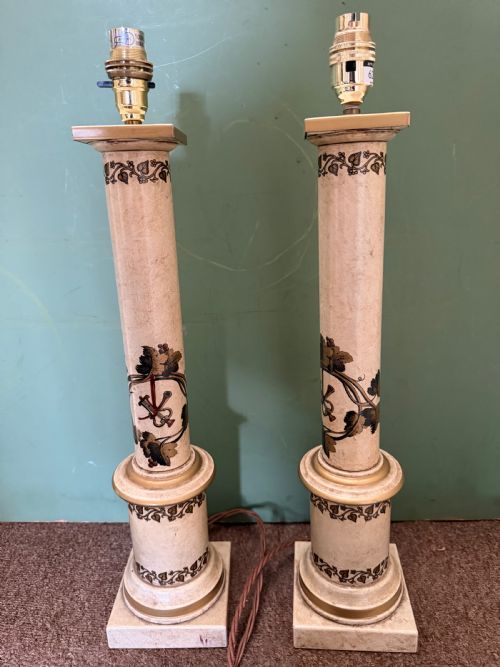


Antique Tin Lamps
These antique tin lamps bring tactile texture and heritage utility to a room, offering genuine period character.
Antique Tin Lamps
When you search for antique tin lamps, you enter a field where humble metalwork intersects with decorative lighting, spanning distinct historic eras. The selection ranges from robust 18th century pieces to later Victorian and 1920s examples.
Most pieces encountered in this category take the form of table lamps, often repurposed from utilitarian vessels such as tea canisters or formed from painted sheet metal.
Makers utilised various base materials, pairing tin and toleware with ceramic, brass, and wood components to create functional illumination for period interiors.
How they were made
Construction relies heavily on formed tin and toleware, frequently enhanced with hand-applied paint finishes to emulate more costly decorative arts.
Many items incorporate repurposed containers like tea canisters, adapted over time into table lamps alongside ceramic and earthenware bodies.
Workshops employed metal shaping and painting techniques, occasionally combining tin with brass fittings or wooden mounts to achieve stability and aesthetic contrast.
Tea canisters of the 18th century secretly dreamed of a second career holding electrical flex instead of loose leaves.
What varies in quality
Quality rests in the integrity of the original metalwork and the crispness of any painted decoration, separating workshop pieces from everyday items.
The sophistication of the conversion process also distinguishes examples, particularly how sympathetically utilitarian vessels or antique vases were adapted for modern wiring.
The Antique Tin Lamps Glossary
- Toleware
- Painted or lacquered tinplate objects, typically manufactured in imitation of Asian lacquerware or European fine metalwork. This technique creates a durable, decorative surface finish.
- Tea canister
- A lidded vessel originally designed for storing loose tea leaves, frequently converted into a table lamp base in later periods. These containers often feature painted or decorated surfaces.
- Table lamp
- A freestanding lighting fixture designed to sit on a surface, utilising electricity in modern adaptations. The category includes diverse historical vessels modified for illumination.
- Earthenware
- Porous pottery fired at a relatively low temperature, often glazed and utilised alongside metal components in lamp construction. It provides a contrasting texture to tin and brass.
Antique Tin Lamps: Frequently Asked Questions
What are antique tin lamps?
These pieces are functional lighting fixtures created from metal vessels, sheet tin, or painted toleware. They encompass various periods from the eighteenth century through to the 1920s.
Many examples began life as utilitarian items like tea canisters before conversion into table lamps. Their construction combines historic metalworking techniques with decorative surface finishes.
How were they used historically?
Originally, lighting was provided by oil, grease, or candles before spaces were electrified. Metal vessels and containers were adapted to hold fuel and wicks safely.
Over subsequent decades, many of these durable metal and ceramic objects were repurposed to accommodate electrical components while retaining their original aesthetic appeal.
How do I date these lamps?
Dating relies on stylistic clues, manufacturing techniques, and the materials used in the body and mountings. Eighteenth-century pieces differ significantly in construction from Victorian or 1920s examples.
Examining the paintwork, metal gauge, and conversion methods helps place a piece within its correct historical era, such as the Regency period or the early twentieth century.
Can I use them in modern interiors?
These lamps integrate easily into contemporary rooms by adding historic texture and a sense of heritage. Their modest scale suits side tables, desks, and reading corners.
Because many have been rewired for modern use, they function practically as daily lighting while serving as decorative focal points with distinct period character.