
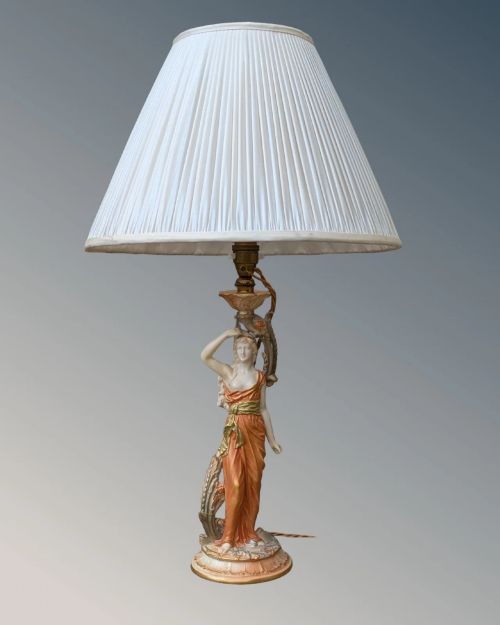


Terracotta Table Lamps
These terracotta table lamps bring character and warmth to a room, offering functional lighting shaped from fired earth.
Terracotta Table Lamps
Buyers seeking terracotta table lamps encounter a variety of forms shaped from ceramic materials, often paired with fabric elements or mounted on other supports.
The selections span different periods including the 18th century, Victorian era, 19th century, and 1920, reflecting diverse aesthetic movements.
Many examples draw on stylistic influences such as Chinoiserie, Neoclassical, Italian Revival, French Empire, Japanese Meiji, and Empire styles.
Materials and construction
Makers utilised ceramic and porcelain bodies, frequently applying paint, enamel, or polychrome finishes to the surfaces.
Mounts and structural additions often incorporated brass, wood, and tole, combining different materials into a single piece.
Lamps frequently include fabric components alongside traditional ceramic bases and fitted lamp shades.
Some lamp bases began life as vases or vessels before finding a second career holding electrical wiring and shades.
Assessing quality
The refinement of the painted decoration and the precision of the surface detail distinguish finer examples from simpler production.
The integration of secondary materials like brass or wood demonstrates the care taken in assembly and overall design.
Samuel Alcock
The Terracotta Table Lamps Glossary
- Terracotta
- Fired clay earthenware used for sculptural bases and vessels. It provides a warm, porous foundation for painted and glazed decoration.
- Chinoiserie
- European artistic style reflecting Chinese motifs and decorative techniques. It appears frequently in 18th and 19th-century decorative arts.
- Polychrome
- Decoration employing multiple colours on a single surface. This technique brings depth and visual interest to ceramic lamp bases.
Terracotta Table Lamps: Frequently Asked Questions
What are terracotta table lamps?
These pieces are functional lighting fixtures formed from fired clay and ceramic materials.
They often incorporate decorative painted finishes and period styling.
How were these lamps used?
They served as decorative illumination for tables and side surfaces in period interiors.
Their substantial bases provided both stability and a decorative focal point.
How do I live with them?
Place them on side tables or cabinets where their ceramic bases can be appreciated.
Pair them with compatible fabric shades to soften the light output.
How do I tell periods apart?
Examine the stylistic details, such as Neoclassical or Empire motifs, which indicate the design era.
Material combinations like brass mounts and painted finishes also point to specific manufacturing periods.