







Antique Timepiece Paris
An antique timepiece paris brings French precision and nineteenth-century elegance straight to your mantelpiece.
Antique Timepiece Paris
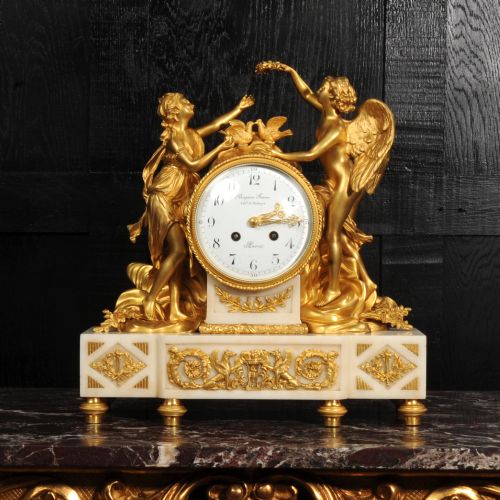
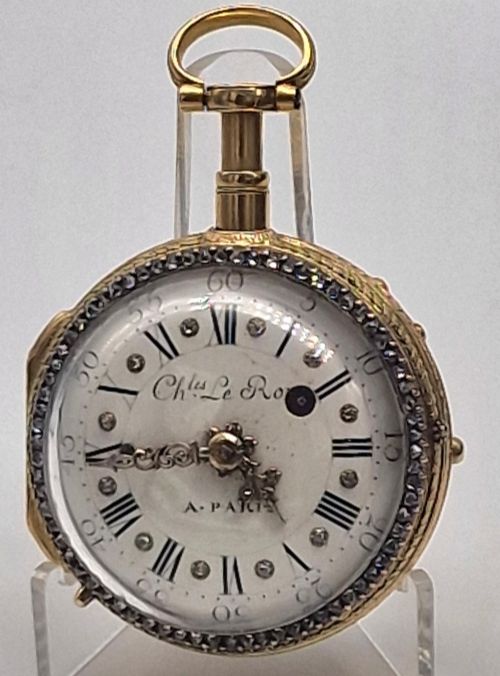
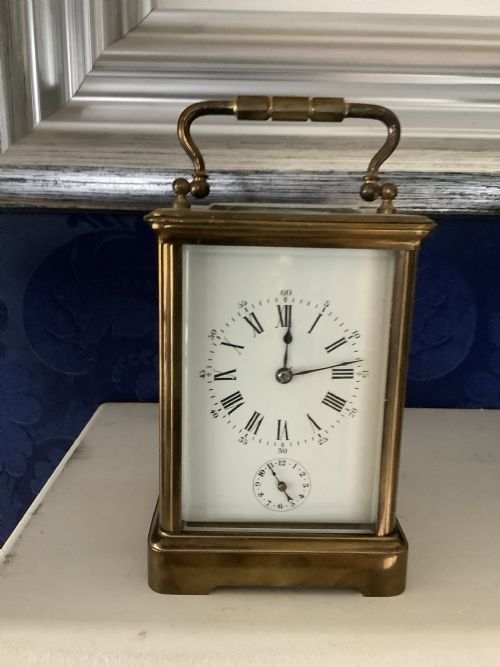
When you search for an antique timepiece paris, you encounter a selection of French horology ranging from eighteenth-century pocket watches to nineteenth-century mantel clocks and brass carriage clocks. The most common forms on this page are heavy brass carriage clocks housed in gorge or corniche cases, alongside large marble and ormolu mantel clocks.
These pieces originate from French workshops and makers working during periods such as the eighteenth century, the Victorian era, and the Edwardian period. Alongside domestic mantel clocks, the listings encompass specialised pieces like calendar clocks, pocket watches, and clock garnitures framed in glass and white marble.
Materials and construction methods
The makers of these timepieces built their movements using brass, incorporating platforms, pinwheel escapements, and bell striking mechanisms designed for eight-day operation. Cabinets and cases combined structural metals with decorative finishes including gilt bronze, ormolu, ebonised wood, rosewood, and white marble.
Cases often utilised glass panels to display the internal mechanics, while dials featured white enamel with delicate markings. Marquetry, mahogany, and gilt brass added refined surface detail to bracket clocks and carriage cases alike.
Antique Timepiece Paris Retail Price Guide 2026
Typical asking prices for timepiece paris among the pieces listed under this phrase on Sellingantiques today, from the lower quarter to the upper quarter. They describe what is for sale here now, not the wider market.
Listings feature carriage clocks, mantel clocks, and pocket watches in brass, white marble, gilt bronze, and ebonised wood spanning the eighteenth to twentieth centuries.
Distinctions in quality
Quality in these timepieces rests on the precision of the movement and the integrity of the original case housing. Finer examples display signed dials and movements from recognised makers, featuring sophisticated complications like quarter repeating mechanisms or calendar functions.
The refinement of the cast ormolu, the weight of the white marble, and the crispness of the enamel work set superior pieces apart. Original cases and glass panels preserved intact indicate a higher standard of preservation.
Charles Le Roy·Drocourt Paris·C Detouche Paris·Antoine Redier·Philippes Paris·Louis Goret·Henry Marc·Henri Jacot·Paul Garnier·Victor Paillard·AD Mougin·Malecot
The Antique Timepiece Paris Glossary
- Carriage clock
- A portable spring-driven clock designed for travel, typically fitted with a carrying handle and glass panels. These pieces often feature brass gorge or corniche cases.
- Gorge case
- A stepped brass carriage clock case style characterised by its distinctive reentrant mouldings on the pillars.
- Escapement
- The mechanism within a clock that controls the wheel train by translating rotational force into periodic impulses.
- Clock garniture
- A set comprising a central mantel clock matched with decorative sidepieces such as urns or candelabra.
- Ormolu
- Gilt bronze created by applying a mercury and gold amalgam to a bronze object, producing a rich golden surface.
Antique Timepiece Paris: Frequently Asked Questions
How do I wind a carriage clock?
Use the matching key on the winding squares located on the backplate, turning gently until resistance increases.
Take care not to over-wind the mainspring, as this can damage the internal mechanics of an eight-day movement.
Where were these clocks made?
These timepieces were produced primarily in France, often by skilled makers working in Paris workshops during the nineteenth century.
Some pieces bear retailer stamps from London houses while remaining Paris made.
What is a clock garniture?
A clock garniture is a decorative set consisting of a central mantel clock accompanied by matching side ornaments.
These sets were designed to sit symmetrically on a mantelpiece or sideboard.
How do I date a brass carriage clock?
Examine the style of the brass case, such as gorge or corniche frames, alongside the escapement design and dial signatures.
Makers active in nineteenth-century Paris often stamped their movements with serial numbers and exhibition medals.