




Antique Timber Wall Table
An antique timber wall table brings structural elegance and fine craftsmanship to a hallway or reception room.
Antique Timber Wall Table
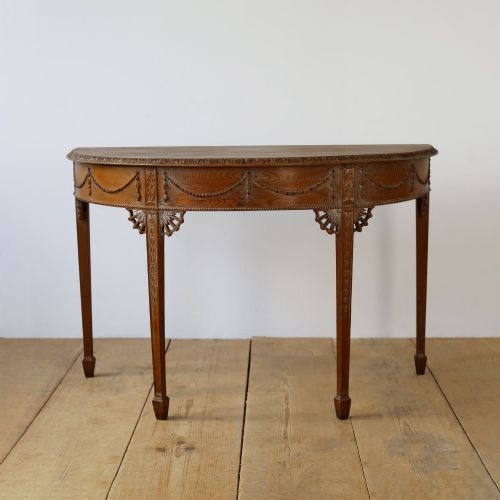
An antique timber wall table is typically encountered as a console or pier table designed to sit flat against a vertical surface, frequently accompanied by demilune shapes or console and pier forms. These pieces serve functional and decorative purposes in domestic interiors, anchoring spaces with classical proportions and rich timber surfaces.
The selection ranges from George III and Georgian examples through to Victorian, Edwardian, and later revivals, including Anglo-Indian and Swedish folk variations. Buyers most frequently encounter mahogany and walnut constructions from the eighteenth and nineteenth centuries, often manifesting as pairs or individual statement consoles.
How they were made
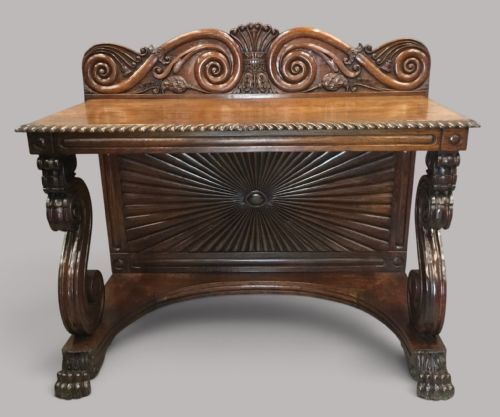
Cabinetmakers utilised solid timbers and veneers such as mahogany, walnut, oak, and padouk, shaping them into console tables with carved details or painted finishes. Joinery relied on traditional framing and assembly methods suited to supporting heavy surface loads while maintaining slender profiles.
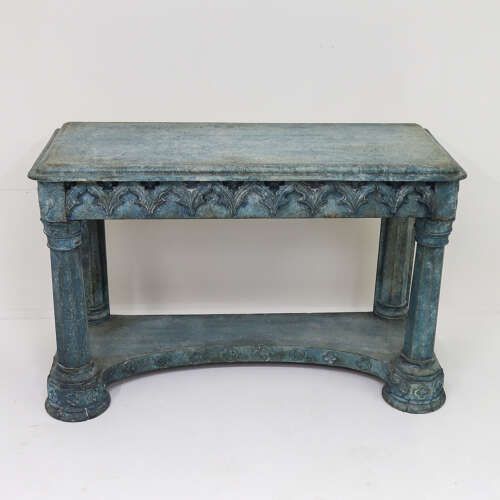
Surfaces were frequently finished with polished patinations, whilst specific examples incorporate brass fittings, glass elements, or painted decoration in styles ranging from Gothic Revival to Swedish folk art.
Antique Timber Wall Table Retail Price Guide 2026
Typical asking prices for timber wall table among the pieces listed under this phrase on Sellingantiques today, from the lower quarter to the upper quarter. They describe what is for sale here now, not the wider market.
Swedish folk artisans occasionally took matters into their own hands, creating charmingly idiosyncratic console tables that owe nothing to London fashion.
What varies in quality
The degree of refinement in timber selection and carving execution dictates the standing of an antique timber wall table. Finer examples display carefully matched figured veneers, crisply rendered classical carving, and exceptional natural colour within the timber.
Proportional harmony and the integrity of the original construction differentiate simpler provincial pieces from high-status commissions, such as large pairs designed for grand Georgian interiors.
The Antique Timber Wall Table Glossary
- Demilune
- Half-moon shaped, referring specifically to console tables designed with a semicircular top and flat back for placement against a wall. This silhouette was particularly popular during the Georgian and George III periods.
- Console table
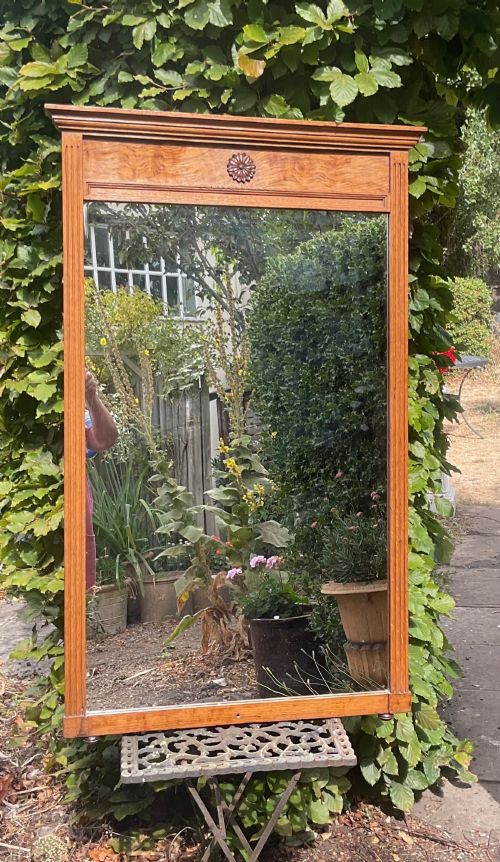
- A table supported by wall brackets or legs, designed to stand against a vertical surface. They often feature decorative carving and were traditionally placed beneath wall mirrors.
- Pier table
- A table designed to stand against the wall between two windows, frequently paired with a matching pier glass mirror above. They share similarities in form with console tables.
- Padouk
- A heavy, durable tropical timber with a reddish hue, utilised in Anglo-Indian cabinetmaking during the nineteenth century. Its dense grain allows for sharp and intricate carving.
- Figured mahogany
- Mahogany timber exhibiting attractive, natural grain patterns such as flame or curl, highly prized by cabinetmakers for decorative surface effect.
Antique Timber Wall Table: Frequently Asked Questions
What is an antique wall table?
An antique wall table is a flat-backed furnishing designed to stand against a wall, encompassing console and pier table forms.
These pieces were traditionally utilised in hallways, drawing rooms, and formal reception spaces to display decorative objects or pair with mirrors.
How do I style a console table?
A console table works best positioned in an entrance hall or living space against a clear stretch of wall, often anchored beneath a mirror or artwork.
Keep the surface balanced with lamps or ceramics, allowing the timber grain and historical form to remain the primary visual focus.
What woods were used?
Cabinetmakers constructed these tables from a variety of timbers including mahogany, walnut, oak, padouk, and painted wood.
Selection depended on the period and origin, with figured mahogany and walnut favoured for formal English pieces and native timbers used in regional or folk examples.
How can I tell the period?
Dating relies on stylistic markers such as George III proportions, Victorian mass, or Edwardian revival details, alongside construction techniques.
Examining the timber type, secondary woods, and decorative vocabulary helps place a piece within its historical context.