
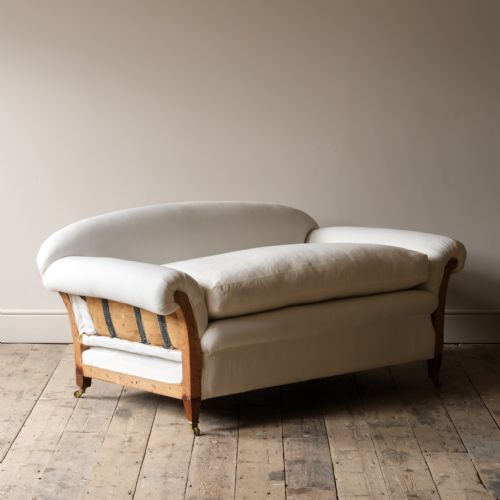
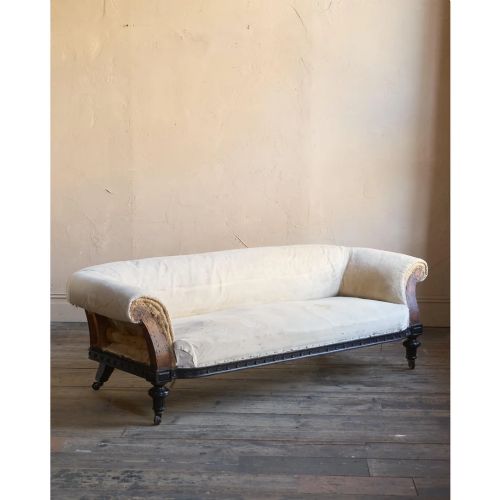


Antique Timber Framed Settee
An antique timber framed settee offers enduring structural comfort, bringing traditional craftsmanship and generous seating proportions into a modern interior.
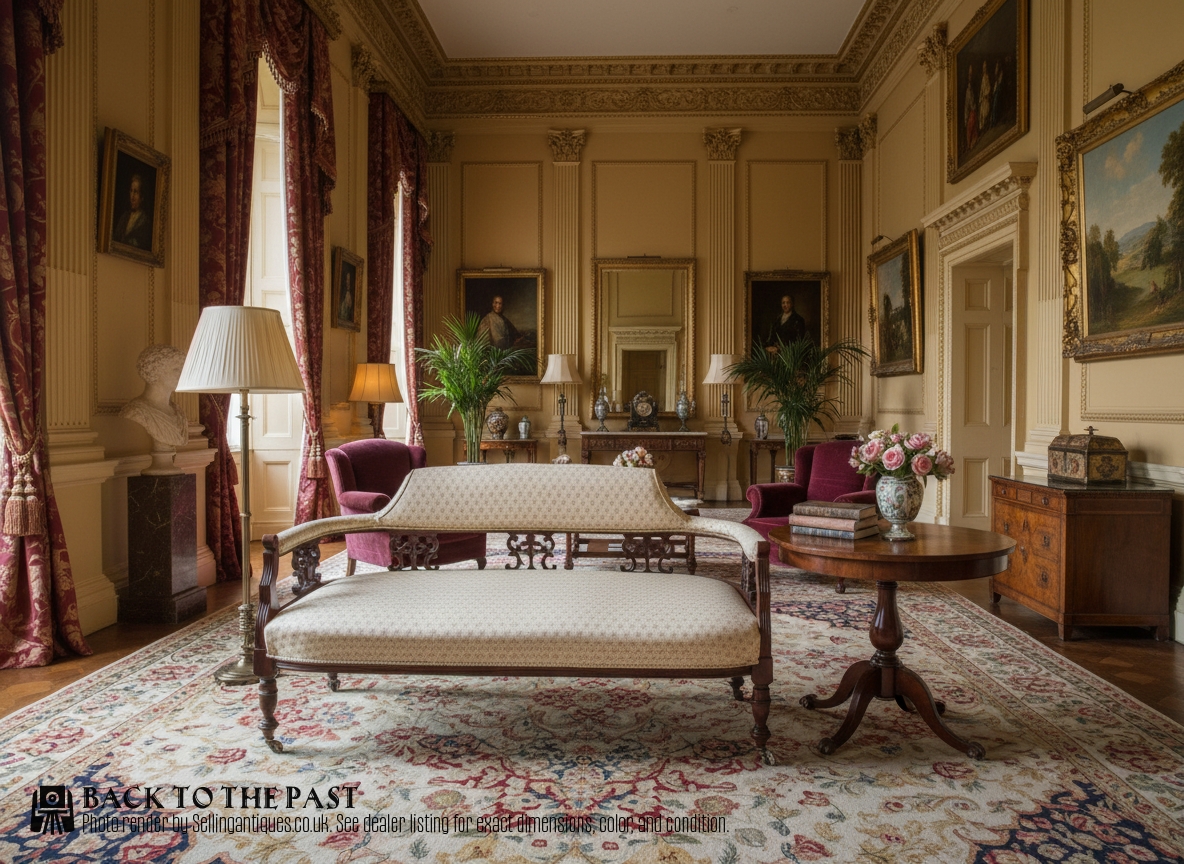
Antique Timber Framed Settee
An antique timber framed settee represents a solid wooden framework combined with upholstered seating, designed for domestic reception rooms and grand halls. These pieces range from formal Georgian and Regency designs to relaxed early twentieth century country house seating.
The most common examples on this page date from the nineteenth century, alongside eighteenth century pieces and early twentieth century country house variations. Makers utilised exposed wood frames in mahogany, walnut, and rosewood to define the silhouette of each settee.
Forms include deep seated two seater sofas, Chesterfield styles, and large drawing room settees. Buyers encounter both English country house pieces and continental influences such as Louis XVI style frames and French carved walnut couches.
Materials and construction methods
Makers built the structural frames of these settees using hardwoods like mahogany, walnut, rosewood, and simulated rosewood. These timbers provided the necessary strength for exposed show frames and carved structural supports.
Upholstery techniques combined traditional stuffing with coverings of fabric, calico, hessian, and brass detailing. Show frame settees left the polished timber fully visible around the upholstered sections to showcase the grain and carving.
Current listings feature pieces spanning the eighteenth to the twentieth century, constructed from mahogany, walnut, and rosewood.
Assessing quality and craftsmanship
Quality in an antique timber framed settee rests on the crispness of the timber carving and the architectural proportions of the frame. Finer examples display meticulous joinery and carefully selected wood veneers that hold their finish over centuries.
The integrity of the exposed show frame separates standard production from superior workshop output. Original timber surfaces with deep patination indicate better preservation than heavily refinished frames.
The Antique Timber Framed Settee Glossary
- Show frame
- A wooden structural framework left exposed around the upholstered parts of a settee to display the grain and carving. This design element defines many nineteenth century drawing room pieces.
- Chippendale
- A style of eighteenth century furniture design characterised by carved mahogany and classical detailing. Pieces from this tradition often feature intricate woodwork on the arms and legs.
- Simulated rosewood
- A painted or stained finish applied to a secondary timber to imitate the appearance of costly rosewood. Cabinetmakers utilised this technique during the Regency period.
- Chesterfield
- A traditional sofa design featuring rolled arms and deep buttoned upholstery. This form provides a formal silhouette within domestic interiors.
- Mahogany
- A durable hardwood prized for its rich reddish brown colour and stability in furniture construction. It remains a primary material across Georgian and Victorian seating.
Antique Timber Framed Settee: Frequently Asked Questions
What periods do these settees come from?
The pieces span the eighteenth, nineteenth, and early twentieth centuries. Specific eras represented include the George III period, the Regency era, and the Edwardian epoch.
Craftsmanship evolved from formal eighteenth century carved mahogany designs to relaxed deep seated country house upholstery by the nineteen thirties.
How were timber framed settees originally used?
These settees served as principal seating in drawing rooms, grand halls, and country house reception spaces. They provided formal comfort for entertaining guests and family gatherings.
Deep seated variants were positioned near fireplaces or within reading rooms for extended daily relaxation.
What materials cover these antique frames?
Upholstery materials range from historic calico and hessian foundations to decorative woven fabrics. Brass tacks and decorative nailing often secure the textile edges to the wooden frame.
Original coverings are occasionally preserved, though many pieces have been reupholstered to suit contemporary interiors.